BYD announces its first solid-state vehicle for 2027
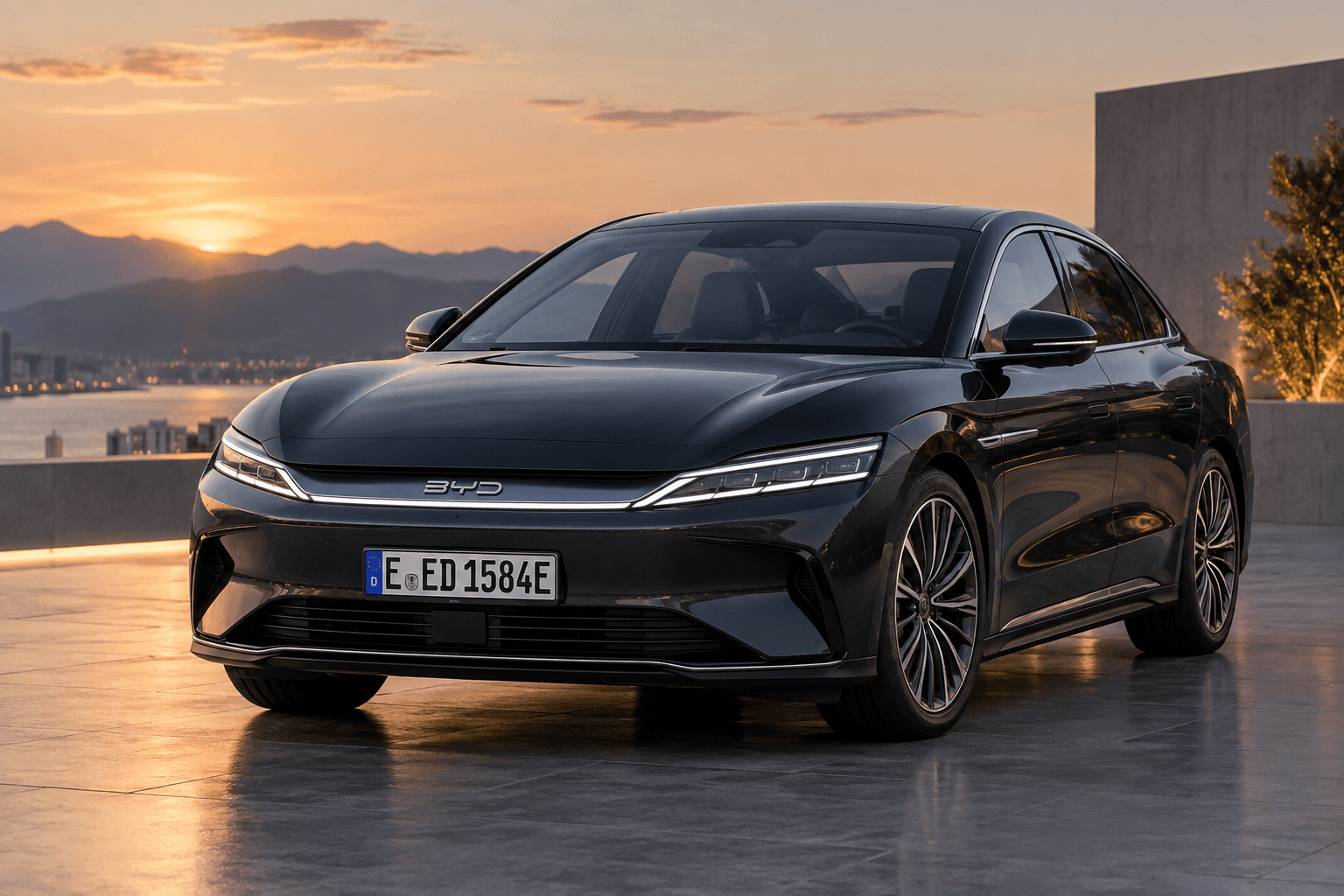
BYD plans to unveil its first model with a solid-state battery next year. Stella Li, Executive Vice President of the Chinese manufacturer, confirmed the plans. She did not yet specify which vehicle will receive the new cell technology.
It also remains unclear whether BYD will deliver a regular production vehicle in 2027. A limited-production model or demonstration vehicle that allows the manufacturer to test the technology under real-world conditions would also be conceivable.
The year 2027 is confirmed, but the exact production status of the first BYD with a solid-state battery is not yet clear.
Yangwang considered a possible technology demonstrator
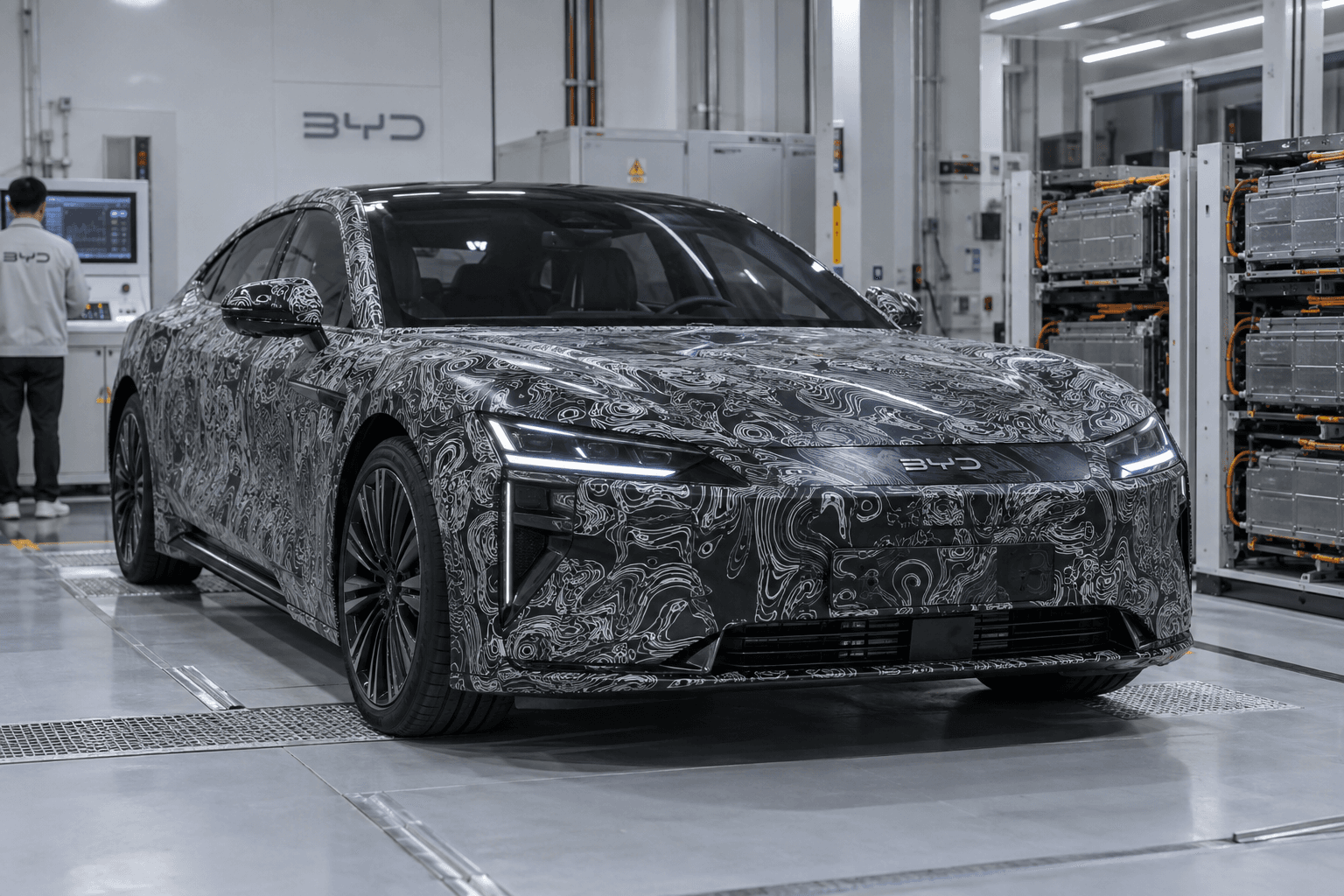
A luxury sedan from BYD's Yangwang brand that has not yet been fully unveiled is considered a possible candidate. Such a flagship would be a plausible starting point because new battery technology is initially expensive and easier to make financially viable in high-priced vehicles.
There had already been indications of a Yangwang prototype with a BYD solid-state battery. However, official confirmation of the specific model is still pending. Its capacity, range, charging power and production volume also remain unknown.
What solid-state batteries are expected to improve
In a solid-state battery, the electrolyte, which is currently usually liquid, is replaced wholly or partially by a solid electrolyte. This can enable higher energy density and reduce the proportion of highly flammable liquids. Depending on the cell design, shorter charging times and lower battery weight could also be possible.
However, these benefits are not guaranteed. Cell chemistry, thermal management, mechanical design and the quality of mass production remain crucial. Maintaining a durable connection between the electrodes and the solid electrolyte is considered particularly challenging.
The biggest obstacles to mass production
- Production costs: New materials and processes are initially significantly more expensive than established LFP cells.
- Service life: The cells must remain stable and powerful even after many charging cycles.
- Scaling: Laboratory cells cannot automatically be manufactured in the millions with consistent quality.
- Terminology: Only the technical specifications will reveal whether BYD is using a fully solid-state cell or a transitional technology that retains some liquid components.
BYD is pursuing several battery paths in parallel
In the short term, solid-state technology will not replace BYD's established Blade Battery. LFP cells are inexpensive, thermally robust and now dominate large parts of the Chinese market. The high share of LFP in China's battery market demonstrates how important this chemistry remains for affordable electric vehicles.
At the same time, BYD is working on extremely high charging rates for conventionally designed batteries. The announced BYD Seal 06 with Flash Charging shows that short charging times do not necessarily have to wait for solid-state batteries.
A clear hierarchy is therefore emerging: LFP will remain the high-volume technology, especially fast-charging batteries will serve the next generation of vehicles, and solid-state cells will probably make their initial debut in the premium segment.
BYD's timeline puts it ahead of many competitors
| Manufacturer | Announced timeframe | Current status |
|---|---|---|
| BYD | 2027 | First model announced, production status unclear |
| Toyota | 2027 to 2028 | Electric vehicle with solid-state technology planned |
| Honda | Around 2030 | Preparing for commercialization |
| Mercedes | Around 2030 | Development and vehicle testing underway |
| Hyundai | Not yet specified | Technology under development |
Such timelines should be understood as development targets. Delays are possible at any time with a fundamentally new cell technology, particularly during the transition from small pilot facilities to industrial production.
European launch remains uncertain
For Germany, Austria and Switzerland, the announcement does not mean that sales will begin in the near future. BYD could initially offer its first solid-state model only in China or produce it in limited numbers. Broad availability in Europe would not be guaranteed in any case if the vehicle were an expensive Yangwang flagship.
Nevertheless, the announcement is significant. If BYD does present a vehicle close to production readiness in 2027, it will increase pressure on established automakers and battery companies. The decisive factors will not be spectacular individual figures, but price, service life, charging performance and reliable mass production.