BYD will put its solid-state battery on the road in 2027
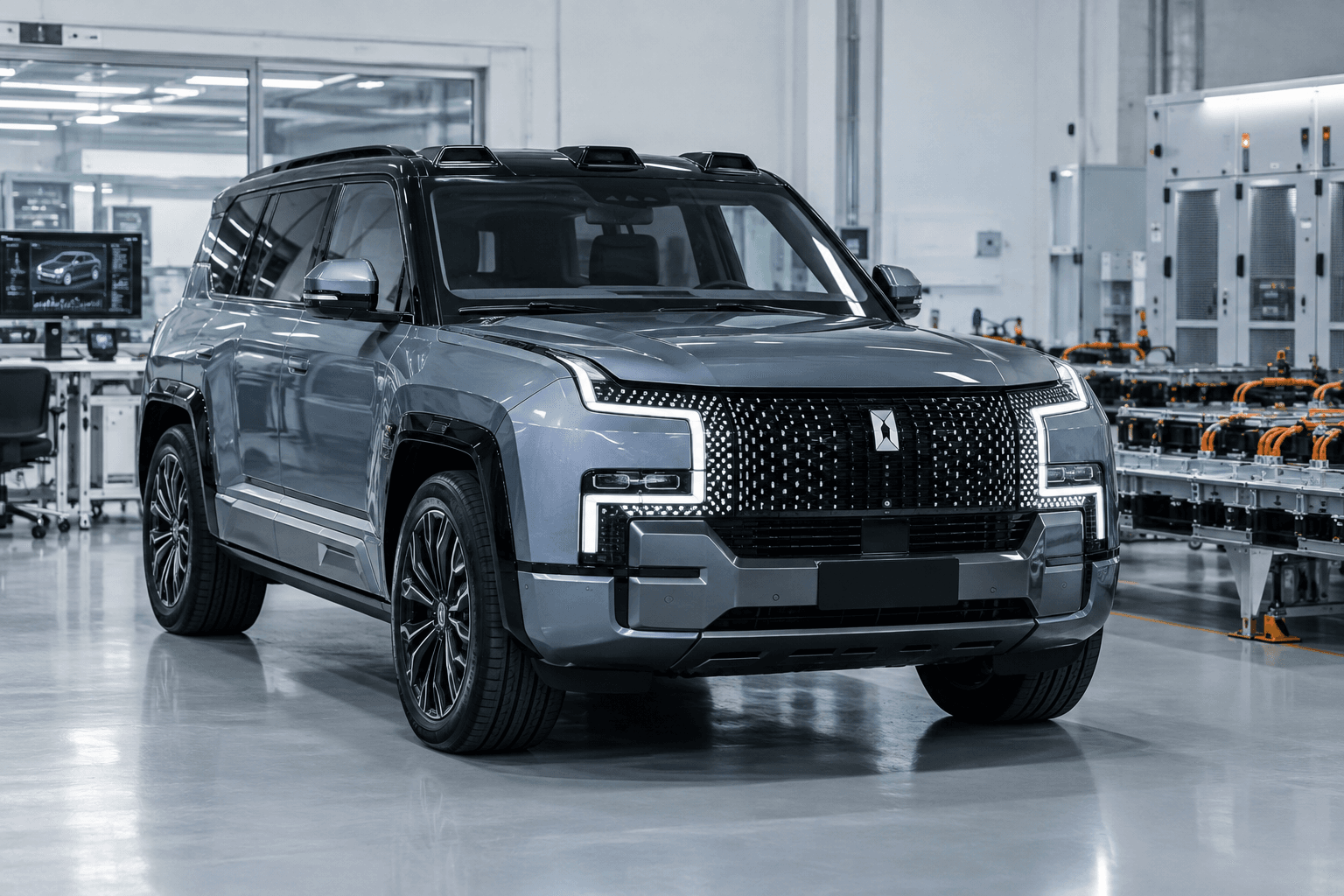
BYD is firming up plans for its next battery generation. According to BYD executive Stella Li, a drivable prototype with a solid-state battery is expected as early as 2027. A model from the luxury brand Yangwang is planned as the technology demonstrator.
However, this does not yet amount to an announcement of an electric car that customers can order. The first vehicle is primarily intended for demonstration purposes and to show that the cells work not only in the laboratory but also in a complete car.
The 2027 date marks the start of vehicle testing, not the launch of large-scale production.
Why the solid-state battery is so interesting
At cell level, modern LFP cells achieve an energy density of roughly 200 Wh/kg. Solid-state cells are expected to reach a significantly higher figure in the long term—ideally, it could be around twice as high. However, reliable technical data for BYD’s planned cell is not yet available.
Higher energy density opens up two development paths. A manufacturer can make the battery smaller and lighter while maintaining the same range, or store considerably more energy in a similar amount of space. Less weight → lower energy consumption and potentially better performance.
| Feature | Today’s LFP technology | Solid-state battery development target |
|---|---|---|
| Energy density | Roughly 200 Wh/kg at cell level | Significantly higher, with around twice the density conceivable in the long term |
| Electrolyte | Liquid electrolyte | Solid electrolyte |
| Production readiness | Proven in millions of vehicles | Currently at the pilot-project and prototype stage |
| Costs | Easy to scale and comparatively inexpensive | Likely to be very high initially |
Solid electrolytes also promise safety advantages because they can reduce certain risks associated with liquid electrolytes. However, that does not automatically make a battery risk-free. Cell chemistry, manufacturing quality, cooling, and battery management remain crucial.
Mass production remains the biggest hurdle
Producing individual solid-state cells is only the first step. A production car requires thousands of cells with consistent properties, manufactured with high yields, long service lives, and competitive costs.
Stable interfaces between the electrodes and solid electrolyte are particularly challenging. Mechanical stresses caused by charging cycles and temperature fluctuations must also be managed over many years. Manufacturers and battery developers worldwide are currently working on precisely this transition from the laboratory to mass production.
BYD has a strong foundation for this. The group develops and manufactures its own batteries while also advancing established solutions. These include the growing share of LFP batteries in the Chinese market and BYD’s planned 1,500 kW charging network.
Yangwang is the logical technology demonstrator
New battery technology usually debuts in expensive vehicles. High cell costs matter less in this segment, while range, performance, and exclusivity are important selling points. BYD’s premium brand Yangwang is therefore well suited to an initial demonstrator.
It is not yet clear which model will receive the solid-state battery. The brand already uses sophisticated technology, while its current batteries are demonstrating their durability. One example is the Yangwang U7 in a 30,000 km endurance test.
What the timeline means for Europe
The 2027 demonstrator could be followed by the first commercially available vehicles two to three years later. A market launch from 2029 or 2030 is therefore conceivable in principle, but this timeframe has not been confirmed. No details about the model, price, production volume, or European availability have been released so far.
In Germany, Austria, and Switzerland, the technology is initially likely to be relevant only for expensive, limited-production vehicles. Whether solid-state batteries later make their way into the compact-car segment will depend primarily on production costs and reject rates.
The announced prototype is therefore an important development milestone, but it is not yet a reason to postpone buying an electric car today. LFP and NMC batteries are mature and widely available, and they too continue to improve in terms of charging performance, energy density, and service life.