BYD pushes the Yangwang U7 to the extreme
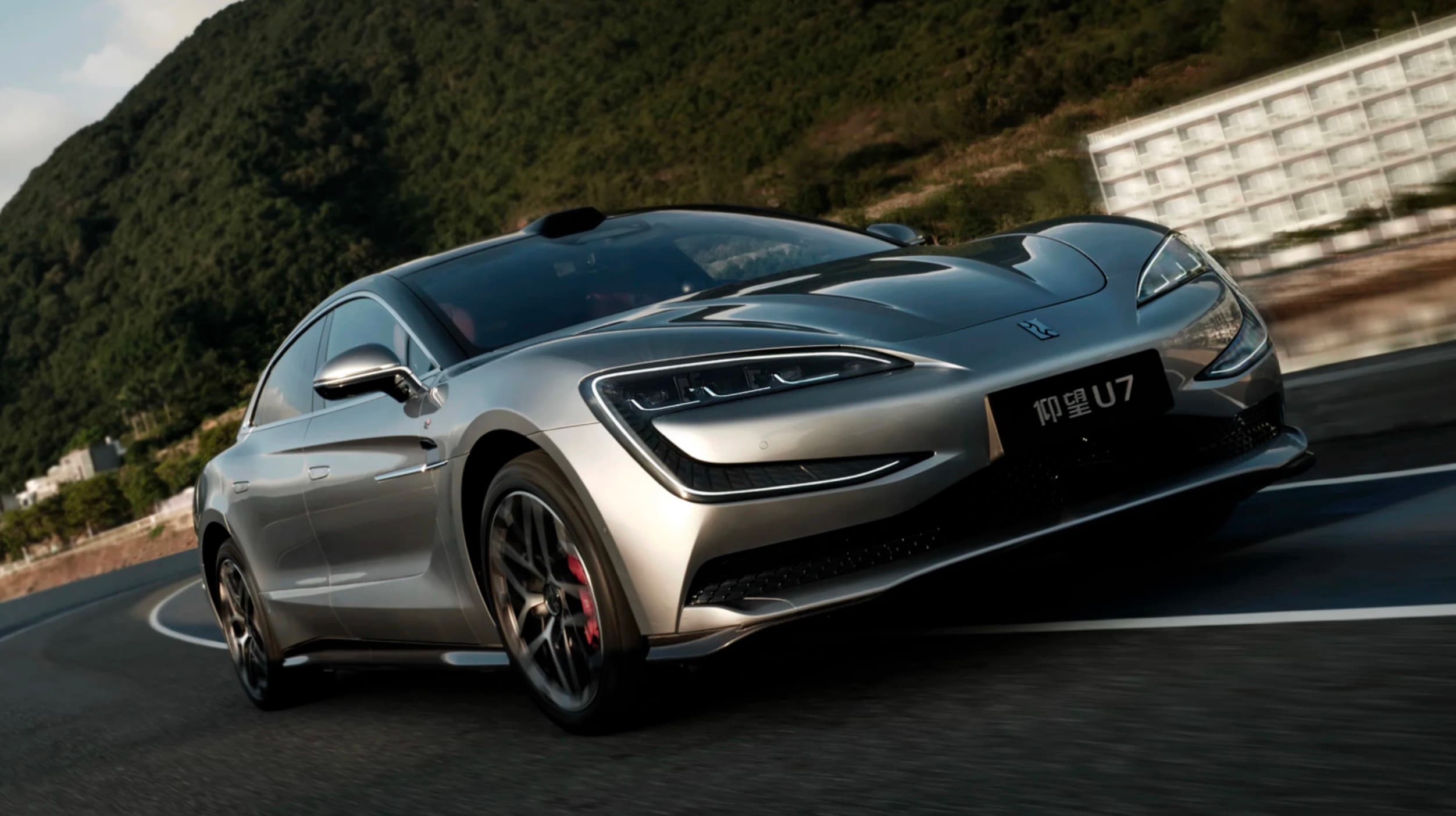
According to BYD, the Yangwang U7 has completed an extraordinary durability test: 30,000 km without stopping, apart from the necessary charging breaks. The drive reportedly took a total of 8 days, 19 hours and 58 minutes. BYD cites an average speed of 240 km/h, clearly placing the exercise in the “stress test” category rather than everyday driving.
The objective is clear: to demonstrate that the powertrain, thermal management and, above all, the battery remain stable under sustained load. At high speeds in particular, the battery and power electronics operate close to their continuous-load limits. If an EV does not suffer heat-related performance degradation under those conditions, that is at least a strong indication of a robust design.
More than 350 charging sessions, with BYD calling it “Flash Charging”
During the endurance test, the U7 was reportedly charged more than 350 times. BYD calls this “Flash Charging” but omits the most important detail: the charging power used during these stops. In BYD’s terminology, however, “Flash Charging” refers to extremely high peak rates, in some cases exceeding 1 MW, depending on the platform and battery.
For everyday use in the DACH region—Germany, Austria and Switzerland—this distinction is important: even if the technology supports such peaks, real-world charging times ultimately also depend on infrastructure, charger authorization, cooling and the charging curve. Nevertheless, the test shows that frequent DC charging does not necessarily have to be harmful, provided the cell chemistry and thermal controls are designed for it.
98.7% remaining capacity after the stress test
At the end, the battery reportedly retained 98.7% of its capacity, representing a loss of around 1.3%. BYD also reports no failures or problems over the entire distance. That sounds impressive, but it should be assessed realistically: a promotional endurance test like this is not automatically representative of a vehicle’s normal service life, because the test conditions, measurement methodology and battery preconditioning have not been disclosed.
At the same time, the real-world implications are clear: high thermal loads and extremely frequent fast charging are typical worst-case scenarios. If a system remains stable under those conditions, it is a good indication that it has robust reserves in less demanding situations, such as highway commuting, vacation travel or fleet operation.
Heat as an additional stress factor
The test took place in southern China, where the average temperature was reportedly above 36 °C. At temperatures like these, the demands on cooling and battery management increase because the battery requires active temperature control not only while driving but also during fast charging. Put simply: high loads plus high ambient temperatures → demanding thermal management, without which performance and charging speeds decline.
How Yangwang, Denza and BYD fit into the brand strategy
Yangwang is BYD’s luxury brand, positioned above both the core BYD brand and Denza. The U7 represents “maximum technology”: high performance, premium build quality and ambitious charging and performance targets. For Europe, the key question will be how this positioning translates into pricing and the service network.
Anyone following BYD’s premium strategy can also find further analysis of Denza here, including the Denza N8 with its focus on Flash Charging and the Denza Z as a preview of the brand’s performance ambitions. For more technical context on high-voltage systems and rapid charging, see our comparison of 800 volts versus 400 volts.
What the test tells us
Overall, this is a strong demonstration of system durability, even though important details are missing. What matters is not so much the “30,000 km” figure itself, but the combination of sustained high-speed driving, heat and a very large number of DC charging sessions. If BYD later substantiates this durability with transparent data on charging power, the charging curve and its measurement methodology, the test will become even more meaningful.
| Metric | BYD figure (Yangwang U7 test) |
|---|---|
| Distance | 30,000 km |
| Duration | 8 days, 19 hours, 58 minutes |
| Average speed | 240 km/h |
| Charging sessions | more than 350 ("Flash Charging") |
| Average temperature | above 36 °C |
| Remaining capacity after test | 98.7% |