Official EPA range for the Tesla Model Y L is better than expected
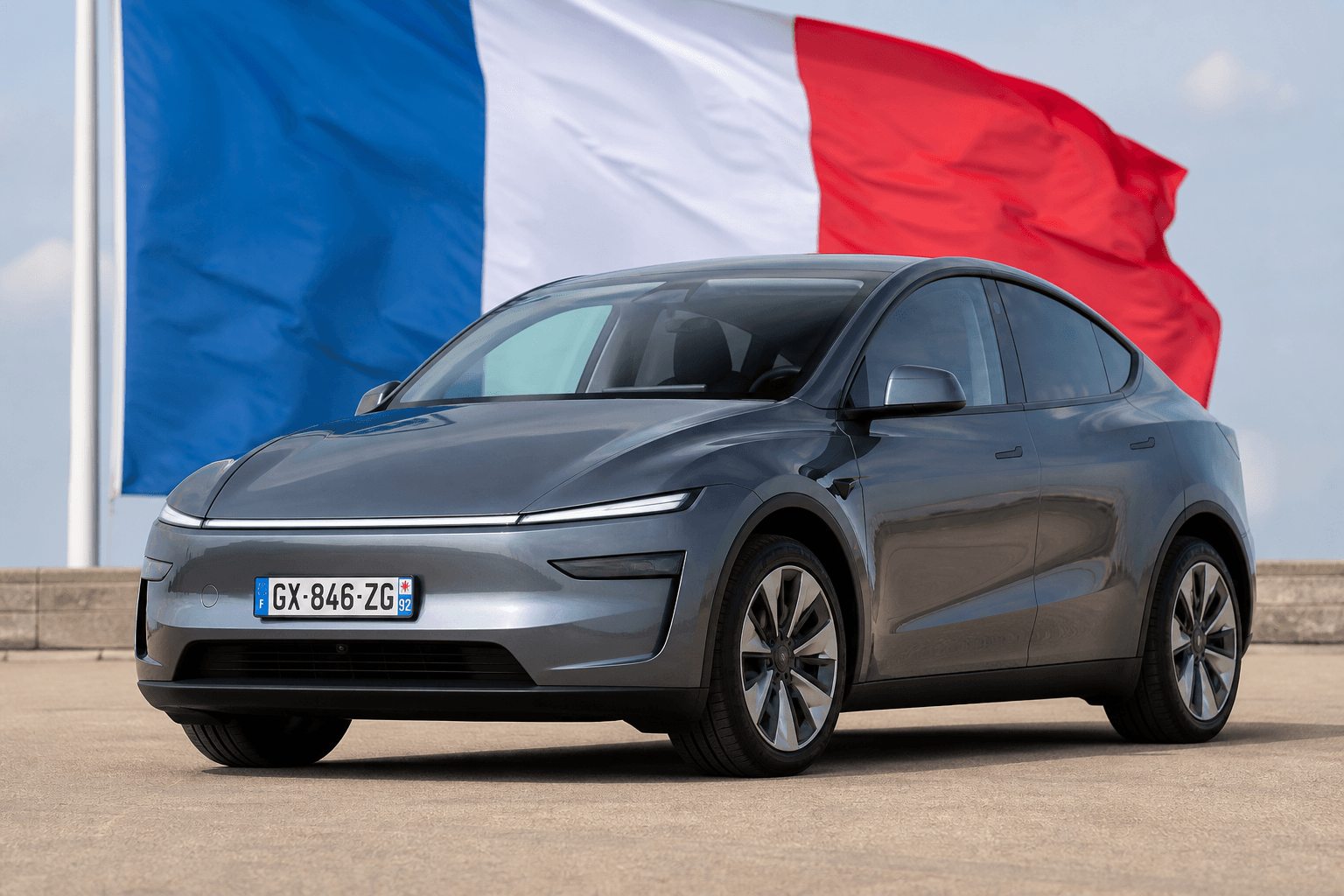
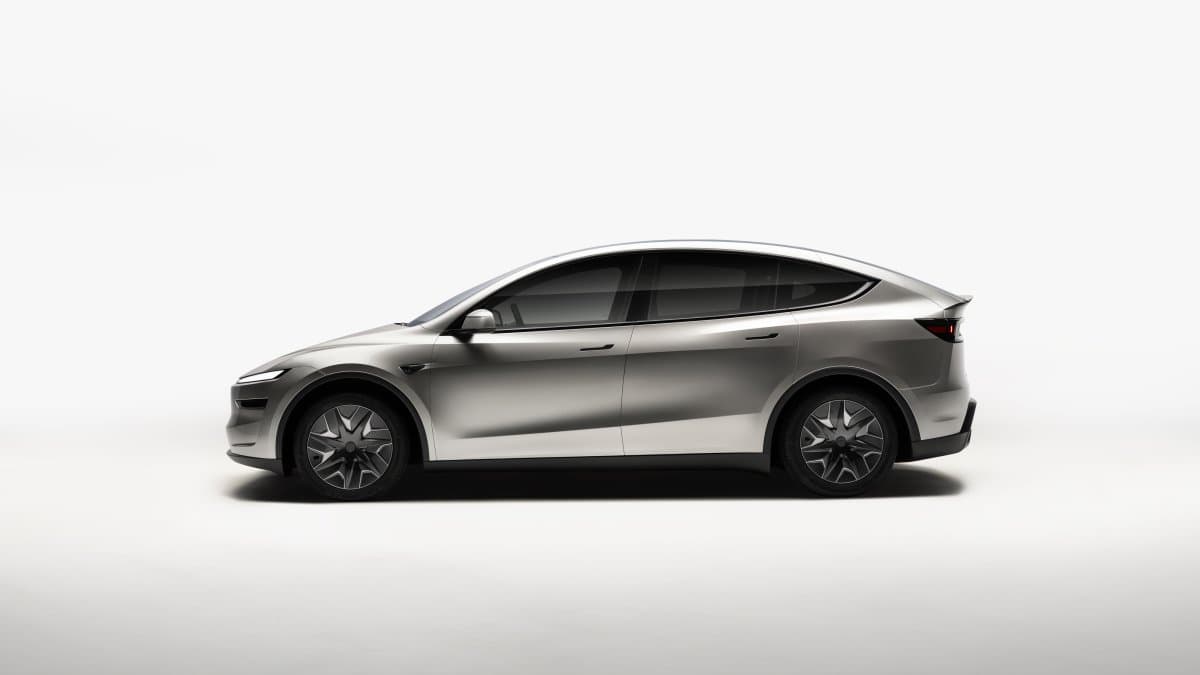
Tesla has added a new long-wheelbase version of the Tesla Model Y in the U.S.: the Model Y L, a stretched crossover with a third row of seats. The official EPA range ratings have now been released, and they are slightly better than Tesla’s original estimate in the configurator.
This matters to buyers in the U.S. because EPA figures have a major impact on everyday use as well as eligibility and comparison lists. For the DACH region—Germany, Austria, and Switzerland—it primarily indicates how efficiently Tesla has handled the extra length and weight from an aerodynamic perspective.
Official EPA figures in km by wheel size
The Model Y L Premium AWD’s range is listed with two wheel options. Converted to kilometers, the figures are:
| Variant (EPA) | Wheels | Range |
|---|---|---|
| Model Y L Premium AWD | 19-inch | around 534 km |
| Model Y L Premium AWD | 20-inch | around 528 km |
Remarkably, according to the EPA, moving from 19- to 20-inch wheels costs the Model Y L only around 6 km of range. With many EVs, the consumption penalty is significantly greater because the wheels’ width, weight, and aerodynamics have a larger impact.
Comparison: standard Model Y vs. Model Y L, also based on EPA figures
A direct comparison between the regular Model Y Premium AWD and the Model Y L Premium AWD is also interesting. The published EPA figures paint the following picture:
| Model (EPA) | Wheels | Range |
|---|---|---|
| Model Y Premium AWD | 19-inch | around 526 km |
| Model Y L Premium AWD | 19-inch | around 534 km |
| Model Y Premium AWD | 20-inch | around 488 km |
| Model Y L Premium AWD | 20-inch | around 528 km |
At first glance, it seems counterintuitive that a larger, three-row vehicle can travel farther on paper than the shorter version. That is precisely why it is worth examining the technical factors involved.
Why does the Model Y L lose so little range with 20-inch wheels?
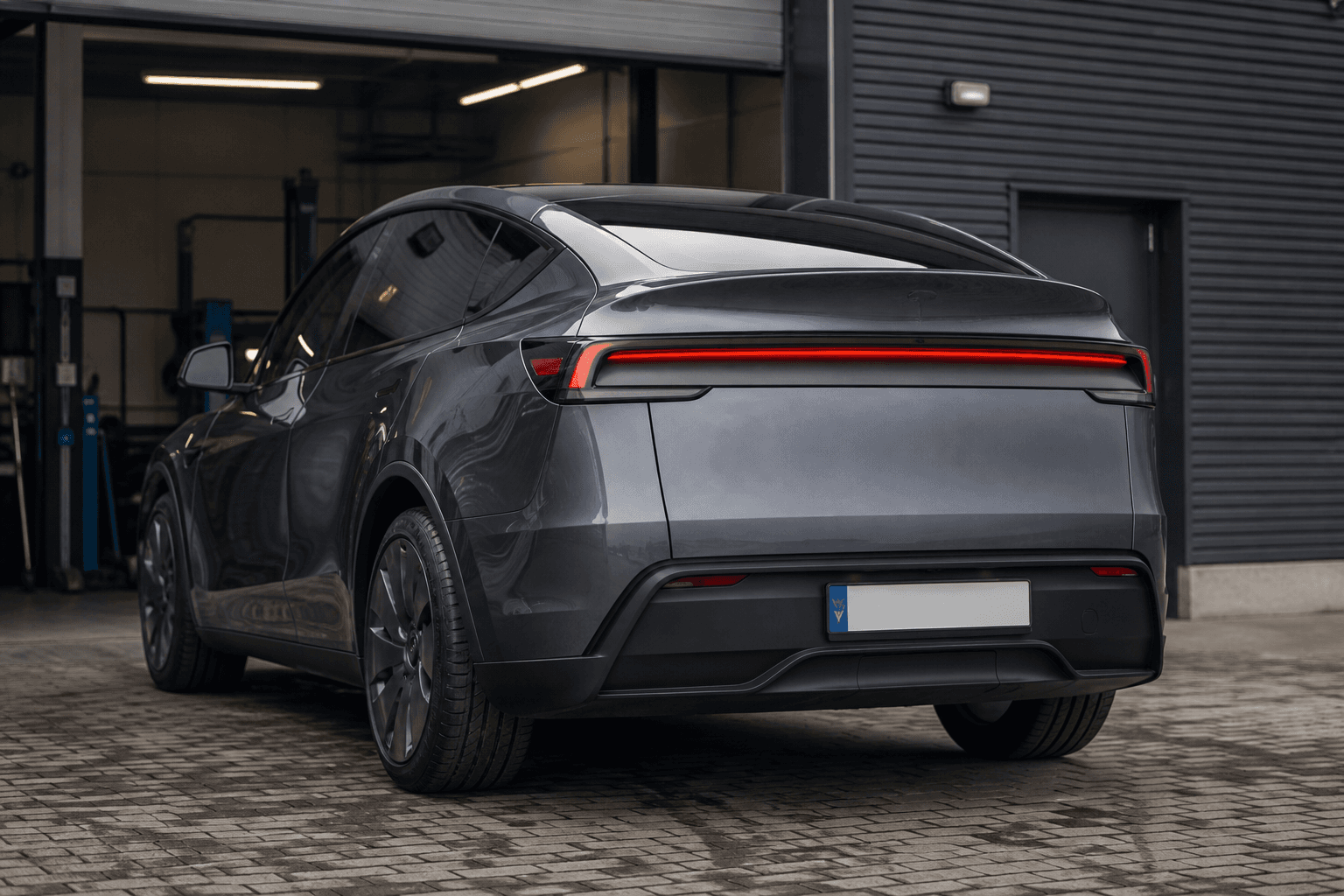
Tesla attributes the efficiency partly to aerodynamic optimizations. One detail is a rear spoiler integrated into the bodywork, which is intended to improve efficiency and increase range. At the same time, the brake light has been moved into this area, freeing up space at the rear and potentially providing more headroom in the third row.
The bottom line is that more space does not automatically have to mean “higher consumption” if drag and airflow separation are managed effectively. At highway speeds in particular, aerodynamics often have a greater impact than a few extra kilograms → making them crucial for real-world long-distance driving as well.
Everyday impact: What drivers will actually notice
- Wheel choice without a major penalty: Those who want better looks and slightly more grip appear to “pay” less in lost range with the Model Y L than with many other configurations.
- More seats, but still suitable for long trips: Families and shuttle services in particular benefit if the third row does not become a drag on range.
- Efficiency remains part of Tesla’s DNA: The figures are consistent with what we have come to expect from Tesla’s powertrain and thermal management.
Three-zone climate control in the Model Y L: useful for comfort and efficiency
The Model Y L is also said to feature three-zone automatic climate control. That may sound like a comfort feature, but it can also make sense from an energy perspective: instead of heating or cooling the entire cabin equally, the temperature can be controlled more precisely by seating area. In winter and summer, this can help use energy more selectively, although the actual impact depends heavily on the outside temperature, driving profile, and number of occupants.
What this means for Germany, Austria, and Switzerland
The published figures are U.S. EPA ratings, so they cannot be compared directly with WLTP. In Europe, the official basis for comparison is WLTP, the Worldwide Harmonised Light Vehicles Test Procedure, which often reports higher ranges than the EPA. Even so, the overall direction is intriguing: the Model Y L does not appear to be a conventional “more space, fewer kilometers” compromise, but rather a thoroughly optimized variant.
If everyday range is generally a concern for you, our overview of EV range anxiety may also be helpful. And if you want to know how efficiently the “regular” Model Y performs in testing, take a look at our article on the Tesla Model Y Standard in an efficiency test.
The Tesla Model Y L shows that more interior space does not automatically have to mean less range when aerodynamics and climate control are consistently optimized.
At the same time, Tesla remains an interesting player when it comes to everyday power supply: the Model Y now also supports V2L via an adapter, which can make the vehicle even more useful when traveling and camping.