Li Auto advances its own battery technology
Li Auto is taking significantly more control over the batteries for its electric vehicles. The Chinese manufacturer now develops the cell materials, cell structure and battery management system itself, while Sunwoda handles series production. This is intended to gradually reduce its previous dependence on market leader CATL.
However, a complete split is not yet on the cards. Some models will continue to launch with CATL cells and will only be switched over once Li Auto and Sunwoda have built up sufficient production capacity. This illustrates how challenging it is to change cell suppliers while vehicle production is ongoing.
Li Auto develops the battery cells itself, but they are manufactured by Sunwoda.
These models will receive the new battery cells
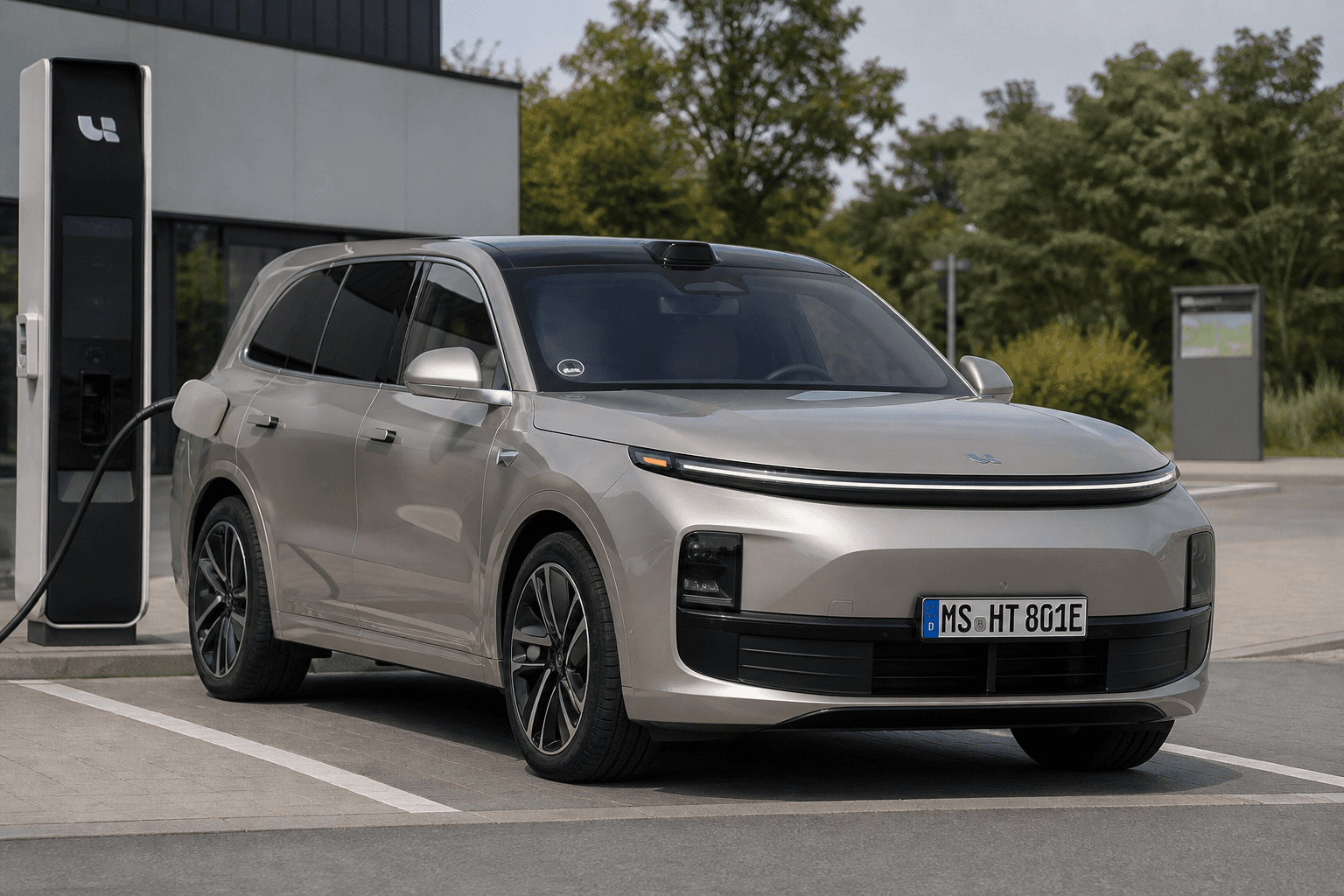
Li Auto’s own cell designs are already being used in the L8, L6 and i8 model lines. The rollout is set to expand to additional vehicles in the fourth quarter of 2026.
| Model | Battery status | Planned timing |
|---|---|---|
| L8, L6 and i8 | In-house cell designs already in use | Current production |
| Mega Home | Switch from CATL to proprietary 5C cells | First deliveries in November 2026 |
| i9 | Launch with CATL, later switch planned | Dependent on cell production |
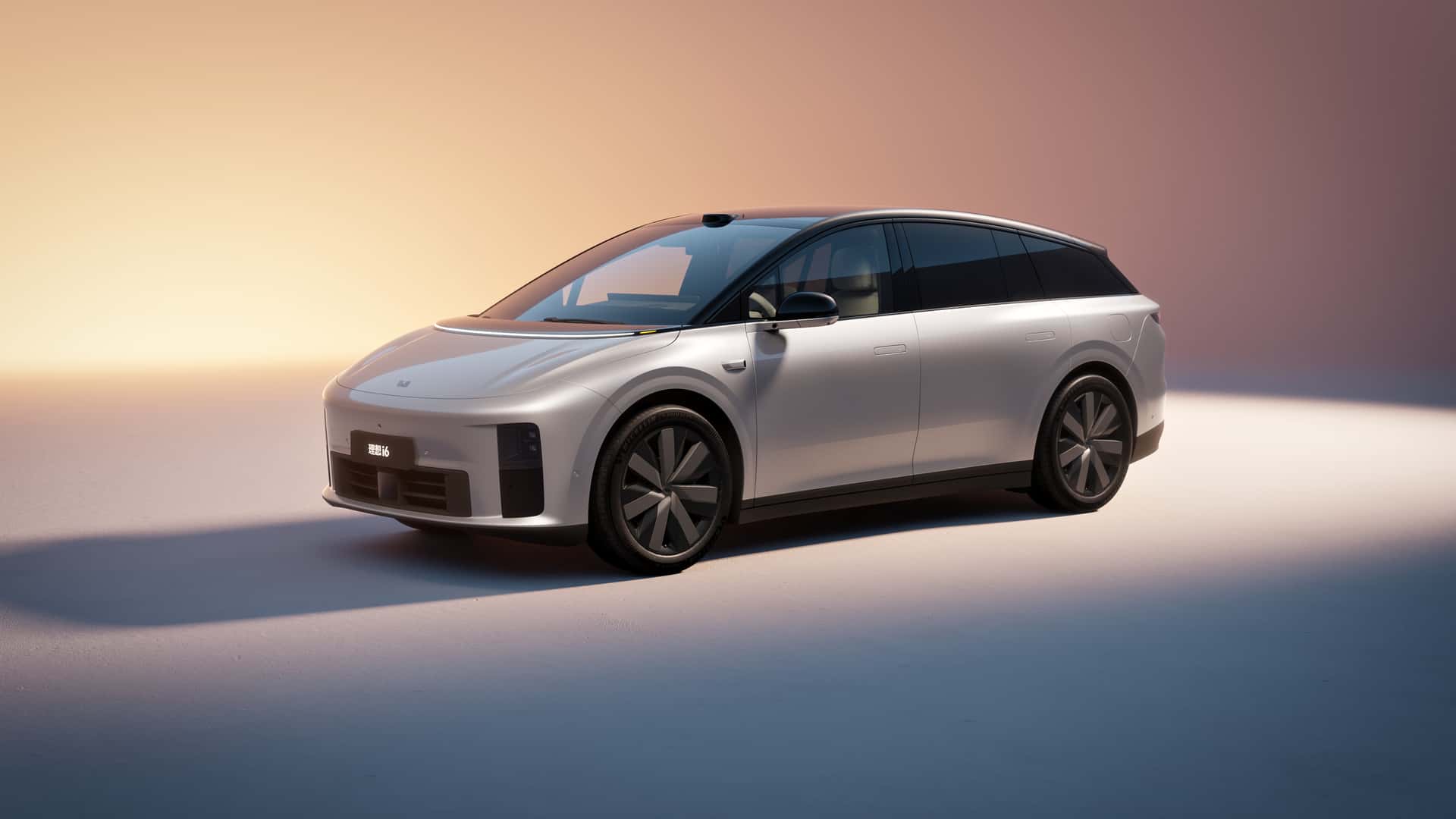
| i6, model year 2026 | Proprietary 5C battery and Mach chip | Deliveries from early November 2026 |
According to the manufacturer, stocks of the CATL 5C ternary cells previously used in the Mega Home electric van are nearly exhausted. New orders are therefore expected to be delivered with Li Auto’s own cell design. The larger i9 will initially continue using CATL cells and switch later.
What 5C means for everyday charging
The designation 5C describes the potential charging power relative to battery capacity. For a 100 kWh battery, this would theoretically equate to as much as 500 kW. Under ideal conditions, a full charge could therefore be possible in around 12 minutes.
In practice, average power is lower because temperature, state of charge, cell protection and the charging curve all play crucial roles. The vehicle must also be able to handle the power, and a suitable fast-charging station must be available. Consequently, 5C cells alone do not guarantee an extremely short charging stop.
A high C-rate is also not automatically equivalent to a particular electrical system voltage. Our comparison of 800-volt and 400-volt systems explains the roles played by voltage, current and infrastructure.
Sunwoda becomes more strategically important to Li Auto
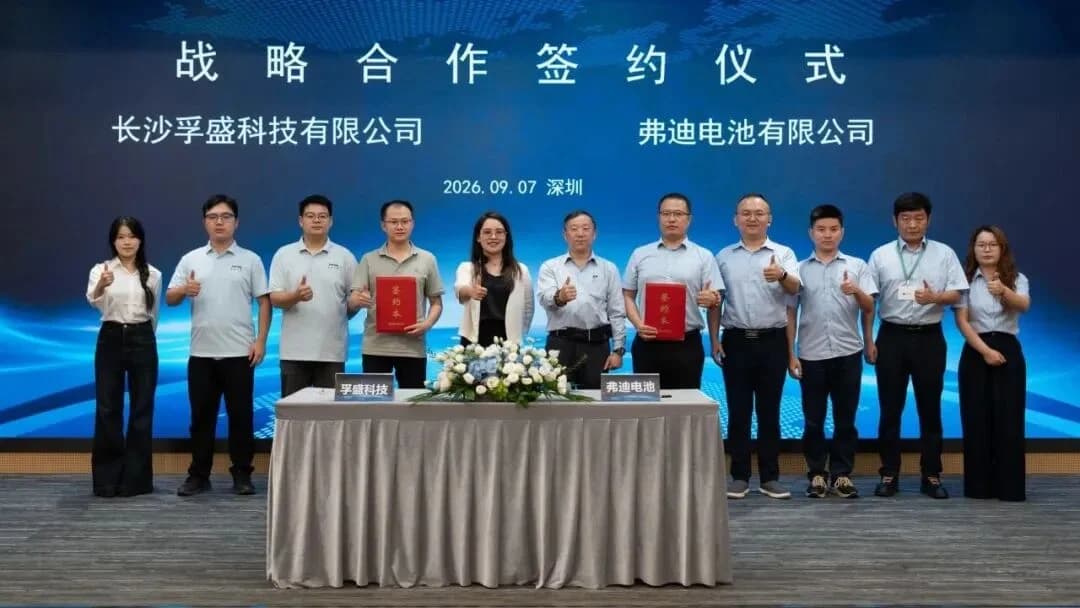
Li Auto has worked with Sunwoda since 2017 and is now deepening the partnership financially. In early September, the automaker announced an investment of 2.65 billion yuan, equivalent to more than €300 million. Together with existing indirect holdings, its stake in Sunwoda EVB will rise to 11.17%.
This will make Li Auto the battery manufacturer’s second-largest shareholder. The arrangement resembles an extended manufacturing operation: Li Auto controls the specifications, cell design and battery management, while Sunwoda contributes its industrial manufacturing expertise. For the automaker, this means greater influence over costs, performance and development cycles.
As a result, CATL is losing a significant share of its previous business with Li Auto. As recently as April, the automaker was one of the cell manufacturer’s four largest customers. Nevertheless, CATL remains a dominant player in a Chinese battery market where LFP cells are also rapidly expanding their market share.
Li 6 brings the cell strategy to Europe
For Europe, the most relevant model is the i6, which is expected to be marketed there as the Li 6. Its European premiere is scheduled for the Paris Motor Show in October 2026. Sales are expected to begin later in the fourth quarter.
While Li Auto has grown in China primarily through SUV models equipped with range extenders, the company plans to offer only battery-electric vehicles in Europe. This means the new cell strategy will directly enter a market where charging speed, efficiency and a robust warranty are particularly important purchasing factors.
However, important questions remain unanswered for prospective buyers in the DACH region—Germany, Austria and Switzerland. Specific prices, launch dates for those three countries and details of European charging performance have yet to be announced. It also remains to be seen how quickly Li Auto can establish a viable service and sales network.
More control, but no abrupt end to CATL
Li Auto is not making a hard switch between suppliers but is instead building a second battery supply chain over which it has greater control. For now, CATL will continue to supply individual models, while Sunwoda gradually scales up production of Li Auto’s cells.
For the Li 6, this could become a technical differentiator. Ultimately, however, what matters is not the 5C rating alone, but also a stable charging curve, low degradation and reliable fast-charging performance at different temperatures.