BYD expands the Blade Battery beyond cars
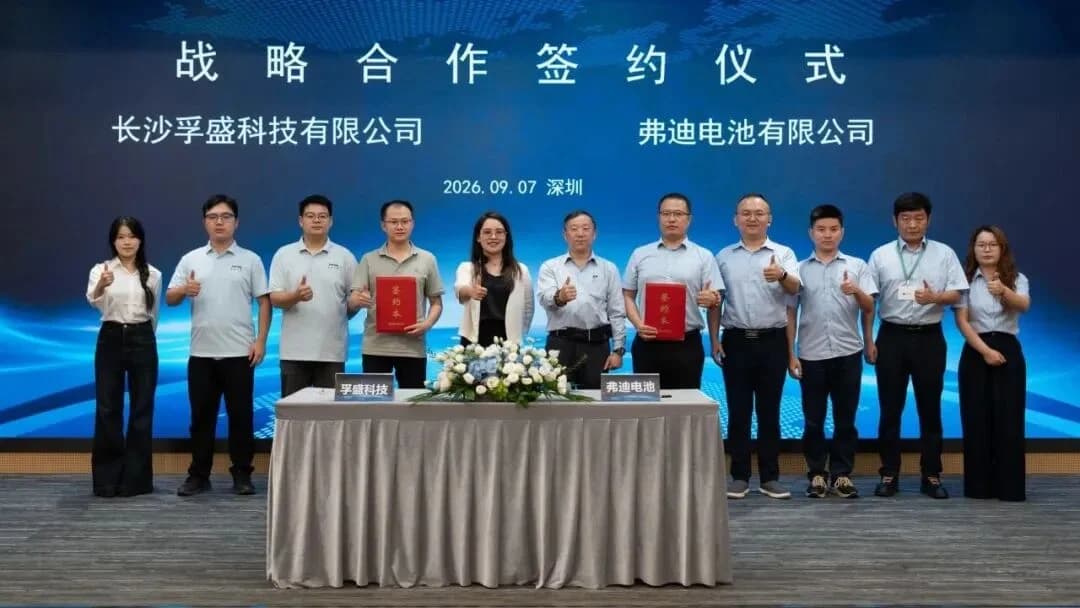
BYD plans to use its Blade Battery in industrial locomotives in the future. To this end, its battery division FinDreams Battery entered into a partnership with Changsha Fusheng Technology on September 7, 2026.
The companies plan to develop battery systems for locomotives used at industrial sites, mines and shunting yards. The focus is therefore on vehicles that operate on clearly defined routes for internal transport or moving railcars.
According to the agreement, the new systems are intended to meet automotive standards. However, no specific information has yet been provided on capacity, charging power, voltage or planned production volumes.
Why battery locomotives are attractive for industrial sites
Industrial locomotives often operate on short, predictable routes and regularly return to fixed operating points. This makes it easier to install suitable charging infrastructure and makes battery-electric powertrains fundamentally attractive for such applications.
Compared with a diesel locomotive, an electric powertrain can reduce local exhaust emissions and noise levels. This is a practical advantage, particularly inside buildings, in mines and in densely developed industrial areas. Whether the planned systems will also be able to recover energy during braking will depend on the vehicles’ final design and control technology.
Predictable routes and fixed charging points could make battery locomotives a practical alternative for internal rail transport.
How the partners are dividing the development work
FinDreams Battery will be responsible for the batteries and will provide development and manufacturing support. Changsha Fusheng is expected to integrate the batteries into complete energy systems, combining battery management, power electronics and vehicle control systems.
This integration is particularly important for rail vehicles. High tractive forces, long operating hours and frequent load changes impose different requirements than use in a passenger car. The term automotive standards therefore does not automatically mean that an existing car battery will be installed in a locomotive without modification.
Blade Battery is well suited to robust industrial applications
The Blade Battery is fundamentally based on LFP cells in an elongated cell format. LFP chemistry is considered thermally stable and is attractive for applications where safety, cycle life and predictable costs are more important than maximum energy density.
This cell chemistry is becoming significantly more important in China. LFP’s share of batteries installed there recently reached 84.6%, as shown in our overview of the Chinese battery market. For locomotives, however, BYD will need to combine the cell chemistry with robust cooling, a suitable enclosure and software tailored to rail operations.
Electric trucks are already providing practical experience
BYD already uses the Blade Battery in heavy commercial vehicles. In June 2026, the company delivered 100 electric T31 dump trucks, each equipped with a 424 kWh battery.
The electric Q3 tractor unit also uses Blade batteries and is expected to be presented at the IAA trade show in Germany. BYD is also working on particularly high-powered charging infrastructure. This includes the planned BYD charging network offering up to 1,500 kW, although no technical connection with the new locomotive batteries has yet been confirmed.
BYD remains China’s second-largest battery supplier
Between January and July 2026, BYD installed around 72 GWh of electric-car batteries in the Chinese market. This represented a market share of 18%, although volume was 13% lower than in the same period of the previous year.
| Manufacturer | Installed capacity | Market share | Change |
|---|---|---|---|
| CATL | 186 GWh | 46% | up 22% |
| BYD | 72 GWh | 18% | down 13% |
CATL remained the clear market leader with 186 GWh and a 46% share. For BYD, applications in mining, industry and rail transport therefore open up additional markets beyond conventional electric cars.
The key technical specifications are still missing
So far, neither the financial scope of the partnership nor delivery volumes or specific locomotive models have been disclosed. No timeline has been announced for testing, series production or commercial operation either.
It is therefore not yet possible to assess the range, operating time per shift or charging time the systems will provide. However, the partnership shows that BYD is increasingly applying its battery expertise to heavy commercial vehicles and industrial applications.