BYD reports 10,000 ultra-fast chargers—and that is a major statement
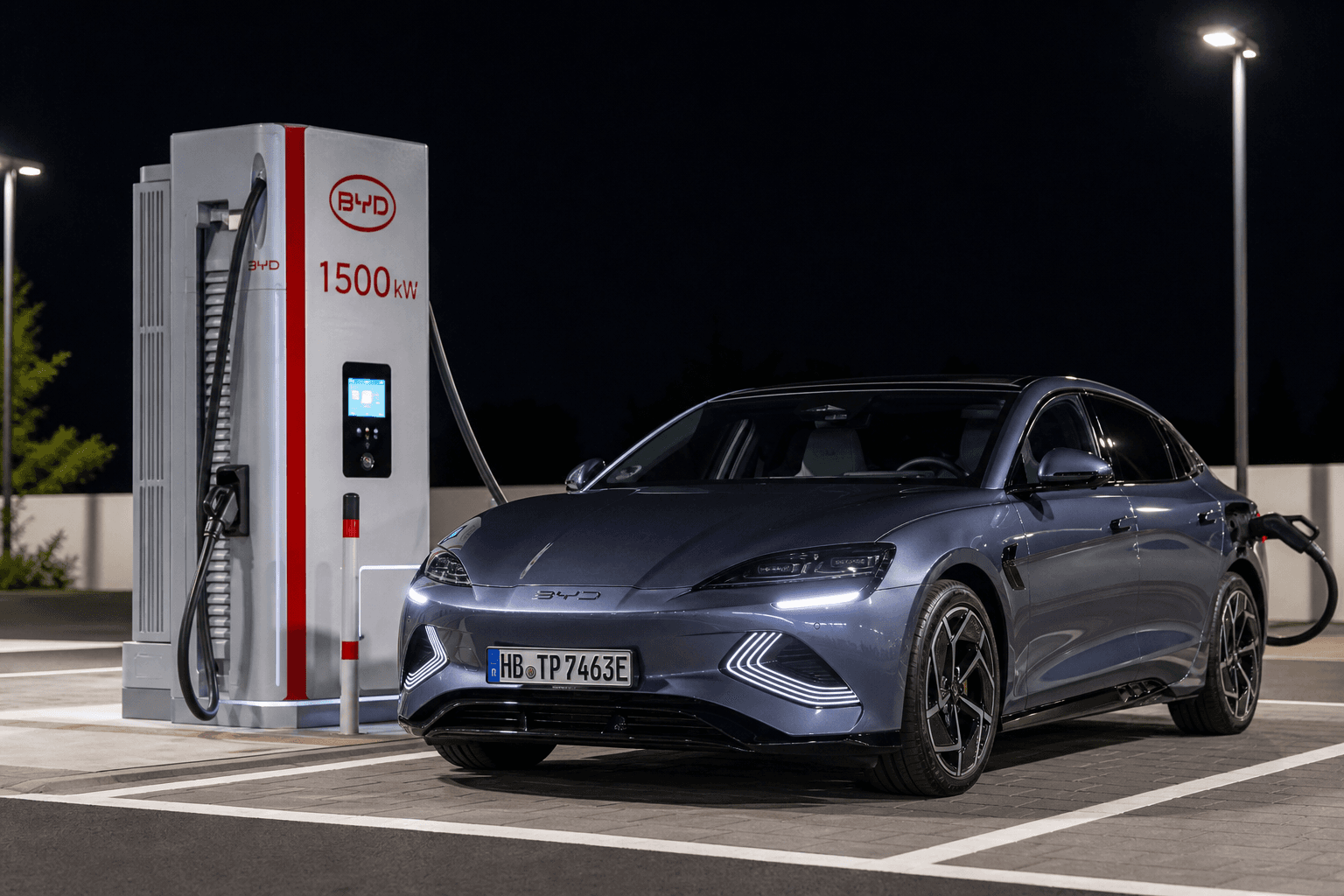
BYD says it has installed 10,000 “Flash Charging” stations delivering up to 1,500 kW in just five months. The rollout only began this spring, so the pace is remarkable even by Chinese standards. The target is clear: 20,000 stations by the end of the year, and given the current rate of expansion, that does not seem unrealistic.
Important context: This is charging hardware designed for extremely high peak power. Whether that power is actually available in everyday use depends, as always, on several factors, including the vehicle architecture, battery temperature, cell chemistry, and the particular charging window.
Why 1,500 kW only matters if the car and battery can handle it
In China, the fast-charging conversation is noticeably shifting away from “under 20 minutes” toward “a few minutes.” BYD is pairing its Flash Charging network with its latest battery and vehicle platforms, including technology centered on the further-developed Blade Battery. The stated charging times are around 5 minutes from 10% to 70% and approximately 9 minutes from 10% to 97%.
What matters here is not so much the marketing figure but the system-level approach: A battery capable of extremely fast charging is of little use if the infrastructure cannot supply the necessary power. That is why BYD is building a network alongside its vehicle lineup that is specifically designed for these high charging rates.
Real-world impact if it works
- Shorter stops on long journeys, more like “a quick top-up” than “planning a charging break.”
- Higher throughput per charging bay because cars leave sooner.
- New requirements for grid connections, buffer storage, and load management, because 1,500 kW is in a different league from traditional high-power charging (HPC).
325 cities in China and a clear highway plan
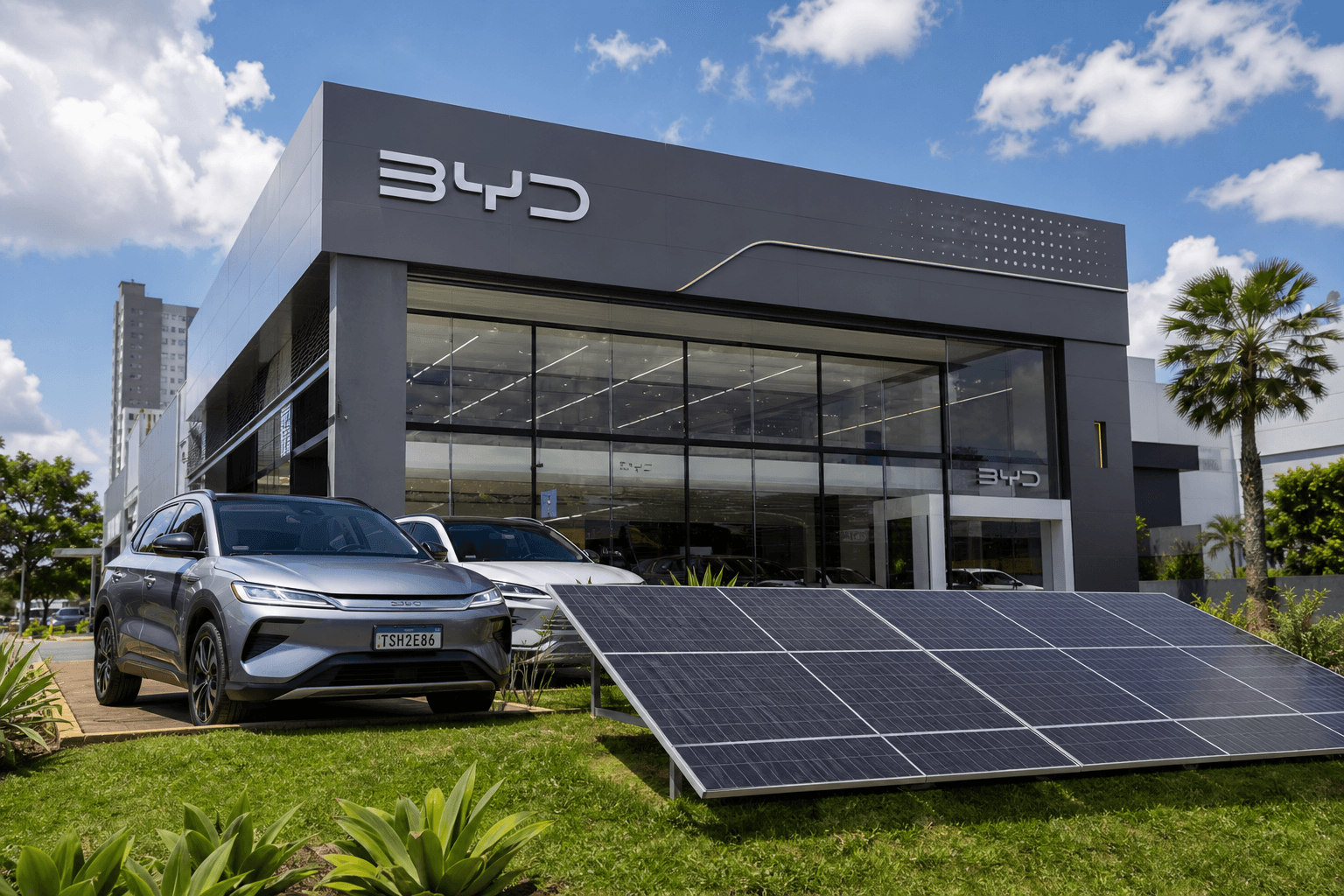
According to BYD, the current network covers 325 cities in China. By the end of the year, the planned split is 18,000 urban charging points and 2,000 along highways. The highway share is particularly important because charging power and location density directly determine how suitable EVs are for long-distance travel.
BYD is working with Sinopec, a state-owned energy company that can provide sites and infrastructure in many locations. This is a classic way to rapidly scale available space, grid connections, and operations.
Is it coming to Europe, and what does it mean for the DACH region?
According to its own statements, BYD is also planning installations outside China, including 3,000 charging points in Europe and another 3,000 in other regions. The first locations are reportedly already open. For Germany, Austria, and Switzerland—the DACH region—the key question is how BYD will integrate them into existing charging ecosystems: access via app and card, roaming, pricing, and locations along major routes.
At the same time, Europe is increasingly focusing on high-performance platforms because high kW figures at the charger are of little benefit without suitable vehicle technology. If you are interested in the topic more broadly, our comparison 800 V vs. 400 V: Which EV architecture will you need in 2026? is also worth reading.
How this compares with Tesla and the current state of HPC
Over the years, Tesla has shown with its Supercharger network that reliability, location density, and ease of use are often more important in everyday driving than the maximum peak figure. At the same time, Tesla’s infrastructure is also evolving, including new generations with higher charging power. The major difference with BYD right now is its uncompromising focus on extremely high peak power, paired with compatible vehicles.
Tesla drivers may also be interested to see the ecosystem around the vehicle continuing to expand. One example is bidirectional use: The Tesla Model Y is getting V2L—here is what is behind the adapter. While that is a different topic from HPC, it points in the same direction: more energy functions directly integrated into the car.
Assessment: Progress is real, but the details will be decisive
Installing 10,000 chargers rated at 1,500 kW in five months is a powerful indication of how quickly charging infrastructure can be scaled in China when manufacturers, energy partners, and the government are all working toward the same goal. For Europe, the key question will be whether BYD can maintain anything close to that pace here and how such high-power sites can be integrated into our grids from both a technical and an economic perspective.
At least as important is which vehicles can actually draw that power in practice without battery temperature or the charging curve bringing the show to an early end. Anyone who wants to see where BYD is heading with fast charging should also keep an eye on its latest Flash Charging models, such as the BYD Seal 06, which charges in 9 minutes thanks to its Flash Battery.