Genesis GV90 Features a Retractable OLED Display
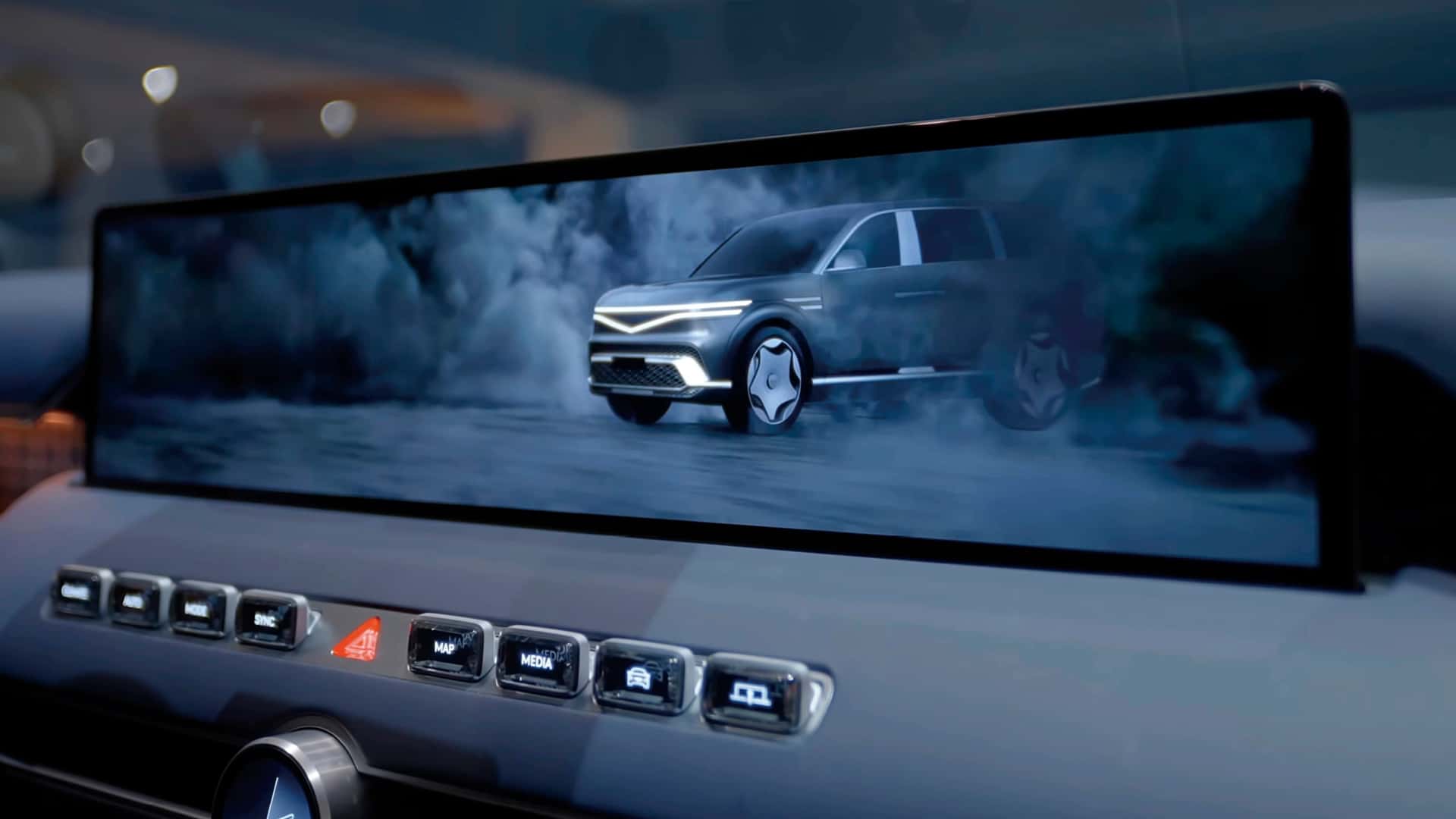
In the Genesis GV90 electric luxury SUV, the screen does not simply extend sideways. When the vehicle is parked, the OLED display rises by around 90 mm, revealing a significantly larger screen area. This transforms the standard cockpit into a media hub for streaming services and live content.
While driving, the visible screen measures 23.6 inches diagonally. When the vehicle is parked, the entire 24.6-inch panel is available. The difference in diagonal size may seem small, but Genesis says the usable display area increases by around 70%.
| Feature | While driving | When parked |
|---|---|---|
| Visible diagonal | 23.6 inches | 24.6 inches |
| Position | Retracted | Raised by around 90 mm |
| Primary purpose | Driving information and controls | Streaming and media |
| Usable screen area | Standard size | Around 70% larger |
Sophisticated Technology Behind the Showpiece
A moving screen requires motors, gears and guide rails. These components add weight and complexity and can cause additional vibrations on poor roads. Genesis therefore mounts the entire unit directly to the structural crossmember behind the dashboard.
According to the manufacturer, the mechanism was tested over 100,000 cycles. Its operating noise is said to remain below 40 dB at different temperatures. Functional testing was also conducted at temperatures as low as -30°C, making it relevant even for cold winter regions in Germany, Austria and Switzerland.
The retractable display is remarkable not so much for its size as for the engineering effort devoted to stability, quiet operation and safety.
Safety Limits the Screen While Driving
The display remains retracted while the vehicle is moving. This is intended to prevent it from unnecessarily obstructing the driver’s view ahead. At the same time, the unit must not extend into the deployment area of the front passenger airbag.
This is an important difference from permanently mounted XXL screens. Genesis deliberately separates the large media view from driving mode: vehicle moving → more compact display, vehicle parked → full screen area. This limits the showpiece feature to situations in which it can actually be used sensibly.
Most Practical While Charging
In everyday use, the screen is likely to be particularly useful during longer charging stops. People waiting in the car can pass the time with movies, TV shows or live content, provided the relevant services are offered in their market. Availability, data connectivity and potential subscriptions will be crucial for the European market.
The approach fits a broader industry trend in which manufacturers increasingly treat the interior as a digital living space. Hyundai is working on a significantly redesigned cockpit for the Ioniq 5, while Audi is integrating features such as a power nap mode for charging stops into its electric cars.
A Luxury Feature With Genuine Utility
No one strictly needs a motorized movie-theater display in a car. In an electric luxury SUV such as the GV90, however, such a feature can still fit the overall concept, provided it remains quiet, stable and reliable over time. The extensive durability testing in particular shows that Genesis does not regard the mechanism merely as a short-lived auto-show gimmick.
Whether the display will become an important selling point for buyers in the DACH region—Germany, Austria and Switzerland—remains to be seen. Its most useful role is less about movie nights in the garage and more about charging stops and longer waits. The GV90 therefore combines spectacular interior design with an understandable everyday use case.