BMW Gen6 impresses a Chinese expert jury
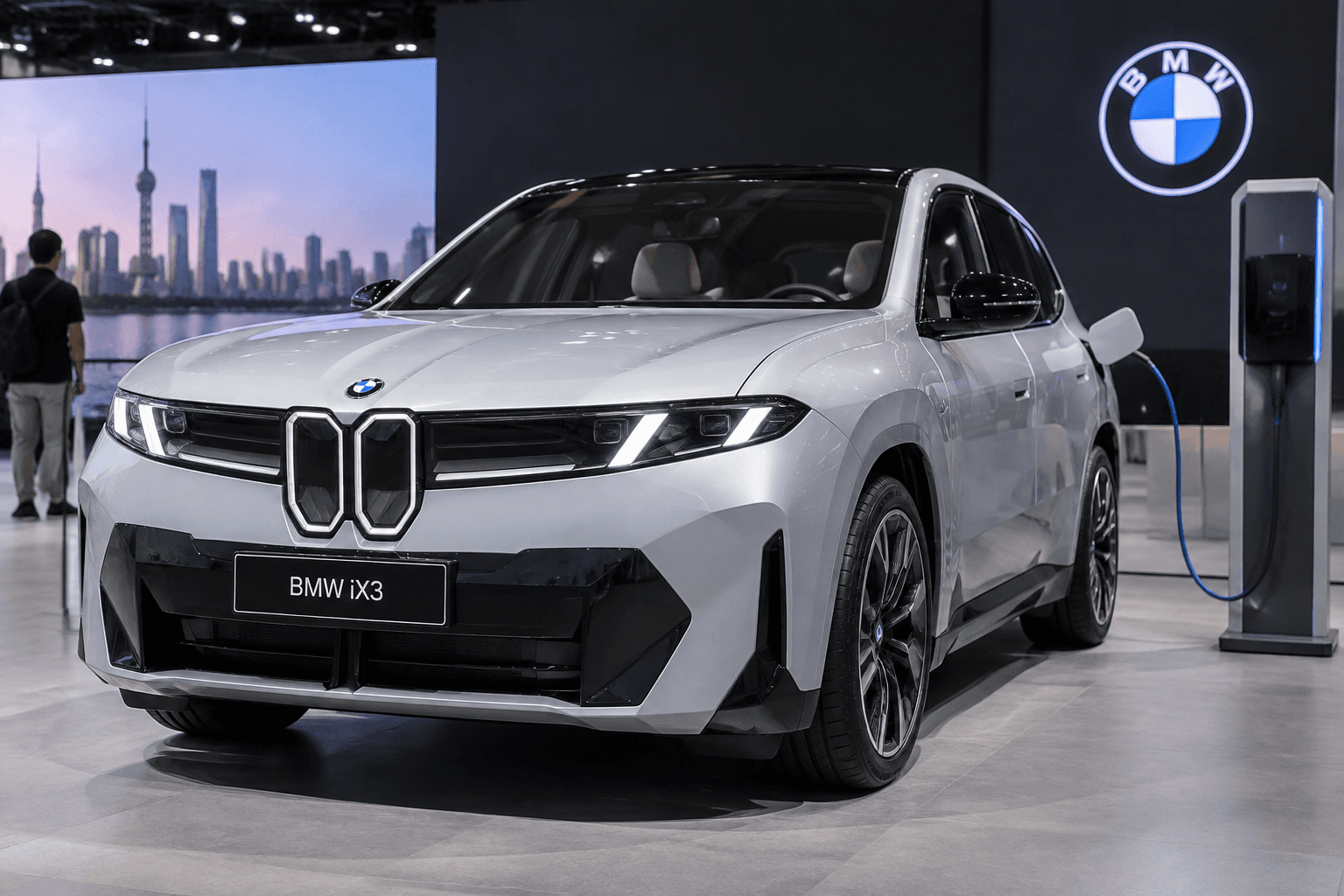
BMW has received a major award for its Gen6 high-voltage battery at the 2026 World New Energy Vehicle Congress. The battery system for the Neue Klasse was honored as a “Global New Energy Vehicle Innovative Technology”.
What is particularly noteworthy is the market in which the award was presented. This year, BMW was the only automaker from outside China to receive a technology award from the congress. The new battery technology is therefore gaining recognition in the very market where manufacturers are advancing especially quickly in charging performance, software and costs.
The award is not a sales success, but it is an important technical endorsement for BMW’s Neue Klasse.
What the Gen6 battery changes technically
For Gen6, BMW is using newly developed cylindrical cells with a high-nickel cathode. The cells are integrated directly into the battery pack without a conventional module structure. This cell-to-pack design uses the available installation space more efficiently and can increase the energy density of the entire pack.
| Technology | Gen6 implementation | Everyday significance |
|---|---|---|
| Voltage architecture | 800 volts across the entire battery portfolio | Foundation for high charging power and lower electrical losses |
| Cell format | Cylindrical cells with a high-nickel cathode | More energy within the available installation space |
| Battery design | Cell-to-pack without conventional modules | Better use of the installation space in the vehicle floor |
| Charging functions | Bidirectional charging planned | Energy could also be supplied back to other systems in the future |
| Control system | BMW Energy Master for hardware and software | Central management of energy flows within the vehicle |
The 800-volt architecture is particularly relevant for short charging stops. At the same power level, a high system voltage allows lower currents, which can reduce heat losses and the need for especially heavy cables. However, the actual time savings still depend on the charging curve, battery temperature and charging station, as shown by our comparison of 800-volt and 400-volt systems.
Energy Master connects the battery, drivetrain and charging system
The Energy Master plays a key role. BMW develops both the hardware and software for this control unit itself and installs it directly on the high-voltage battery. It coordinates the flow of energy between the battery, electric motors and vehicle electrical system.
The system can also work with charging infrastructure designed for either 400 volts or 800 volts. As a result, a Gen6 vehicle is not restricted to the most advanced fast chargers. 800-volt charging station available → maximum technical benefit; older infrastructure → charging remains possible in principle.
Bidirectional charging is also part of the Gen6 concept. Whether and to what extent customers will be able to use energy for their home, the power grid or external devices will depend not only on the vehicle, but also on the wallbox, software and regional regulations. Technical preparation alone therefore does not guarantee every conceivable application.
More than 500 innovations filed for patent protection
According to BMW, the company has filed patent applications for more than 500 innovations as part of the transition from Gen5 to Gen6. The figure shows how extensively the manufacturer has reworked the battery, electronics, integration and control systems. On its own, however, it says nothing about durability or real-world charging times.
The crucial question will be how the technology performs in production vehicles. The Neue Klasse is set to be gradually expanded into additional segments. In the future, this is also expected to include more compact models such as the planned BMW iX1 with Neue Klasse technology.
Why the award in China matters
BMW is under considerable pressure in the Chinese market. In the second quarter of 2026, the brand’s deliveries there fell by almost one-third. Local manufacturers are attracting buyers not only with aggressive pricing, but increasingly with high-performance battery systems and closely integrated digital services as well.
BMW is therefore adapting its vehicles and software more closely to local expectations in China. The Neue Klasse iX3 and i3 are expected to be offered there with features including a longer wheelbase, an adapted digital ecosystem and specially calibrated driver-assistance systems. Gen6 technology plays a central role in the long-wheelbase BMW i3.
Technical momentum, but success is not guaranteed
The recognition in China strengthens BMW’s claim that it is moving closer to the technological forefront in battery and charging performance. Above all, the overall combination of an 800-volt architecture, cell-to-pack integration, an in-house control system and bidirectional charging appears coherent.
Whether this will also translate into higher sales, however, will depend on vehicle pricing, software quality, the charging network and actual on-road efficiency. The Gen6 battery provides a promising foundation. In the demanding Chinese market, BMW must now turn this advantage into compelling production models.