BMW i3 Long Wheelbase: New Interior, Clear Focus on China
At the Chengdu Auto Show, BMW has unveiled the interior of the new BMW i3 Long Wheelbase (LWB) for the first time. The model is specifically tailored to the Chinese market and uses the Neue Klasse as its technical basis, including sixth-generation eDrive.
The i3 LWB was already publicly unveiled at the 2026 Beijing Auto Show. Production in China is scheduled to begin in January 2027. Of particular relevance to the DACH region—Germany, Austria and Switzerland—this is not a direct European update to the previous i3, but a China-exclusive variant focused primarily on interior space and a high-tech cockpit.
Panoramic iDrive+: A Look at BMW’s New Cockpit
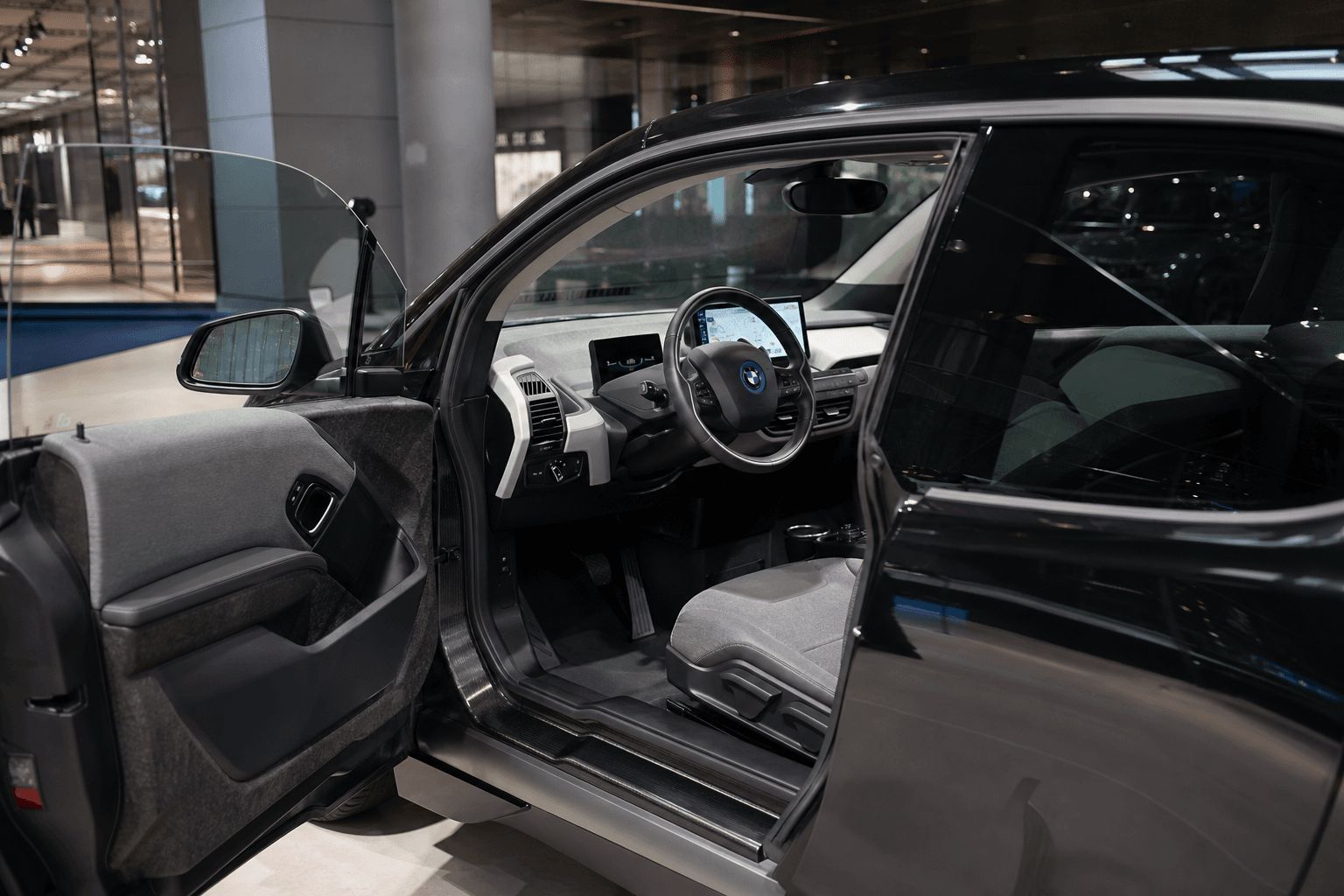
Inside, BMW has opted for a bright white-and-gray color scheme and its new Panoramic iDrive+ control and display concept. In everyday use, the crucial factor is not simply screen size, but how quickly information can be absorbed and how little distraction is created when navigation, charging plans or driver-assistance systems are active.
Key components include a bezel-free 17.9-inch central display, a 43.3-inch panoramic screen in the driver’s field of vision and a 3D head-up display. There is also a redesigned multifunction steering wheel intended to retain conventional controls for frequently used functions.
Equipment: Comfort Features Expected in China
To meet the Chinese market’s expectations for an executive-class vehicle, the i3 LWB includes features such as three-zone automatic climate control, electrically adjustable multifunction seats and a Harman Kardon sound system. Particularly on longer journeys and in frequent urban traffic, these are the kinds of features that make more of a difference in practice than individual design details.
Body and LWB Concept: More Space, Greater Everyday Practicality
The new i3 Long Wheelbase has a wheelbase of more than 3 m while retaining BMW’s characteristic proportions, with a short front end and long wheelbase. Notably, BMW specifies a 31 L frunk and a 420 L trunk. This is a clear advantage in everyday use, as charging cables, a tire repair kit or smaller items can be kept separate from the main luggage compartment.
On the exterior, BMW integrates the driver-assistance sensors behind the lighting modules. Semi-concealed door handles and an illuminated “M” emblem on the C-pillar are also planned for the Chinese market. These details are aimed less at European restraint and more at local premium tastes.
Technology: 800 Volts, 108 kWh Battery and Sporty Acceleration
The i3 LWB uses an 800-volt architecture combined with the sixth-generation eDrive system. In general, 800 volts makes high charging power easier to achieve and allows the technology to operate with lower currents at the same power output. However, how quickly the i3 LWB actually charges will ultimately also depend on the cell chemistry, thermal management and charging curve—not just the voltage.
BMW quotes 4.7 seconds from 0 to 100 km/h. The battery is said to have a capacity of 108 kWh. The Launch Edition is rated at 906 km of range, while the standard version is expected to offer up to 912 km. Such figures are typically high under Chinese testing cycles and therefore cannot be compared directly with Europe’s WLTP figures, but they clearly show where BMW is setting the benchmark.
What It Means for the DACH Region: Lessons for Europe
Although the LWB model is aimed at China, it offers an interesting indication of what lies ahead: BMW is bringing Neue Klasse technology, an 800-volt system and a highly digitalized cockpit to a conventional sedan body style. In the medium term, these same elements will also shape the everyday experience in Europe, from charging times to the control interface.