Windrose Launches Compact 70 kW ePTO Integrated Directly Into the Electric Axle
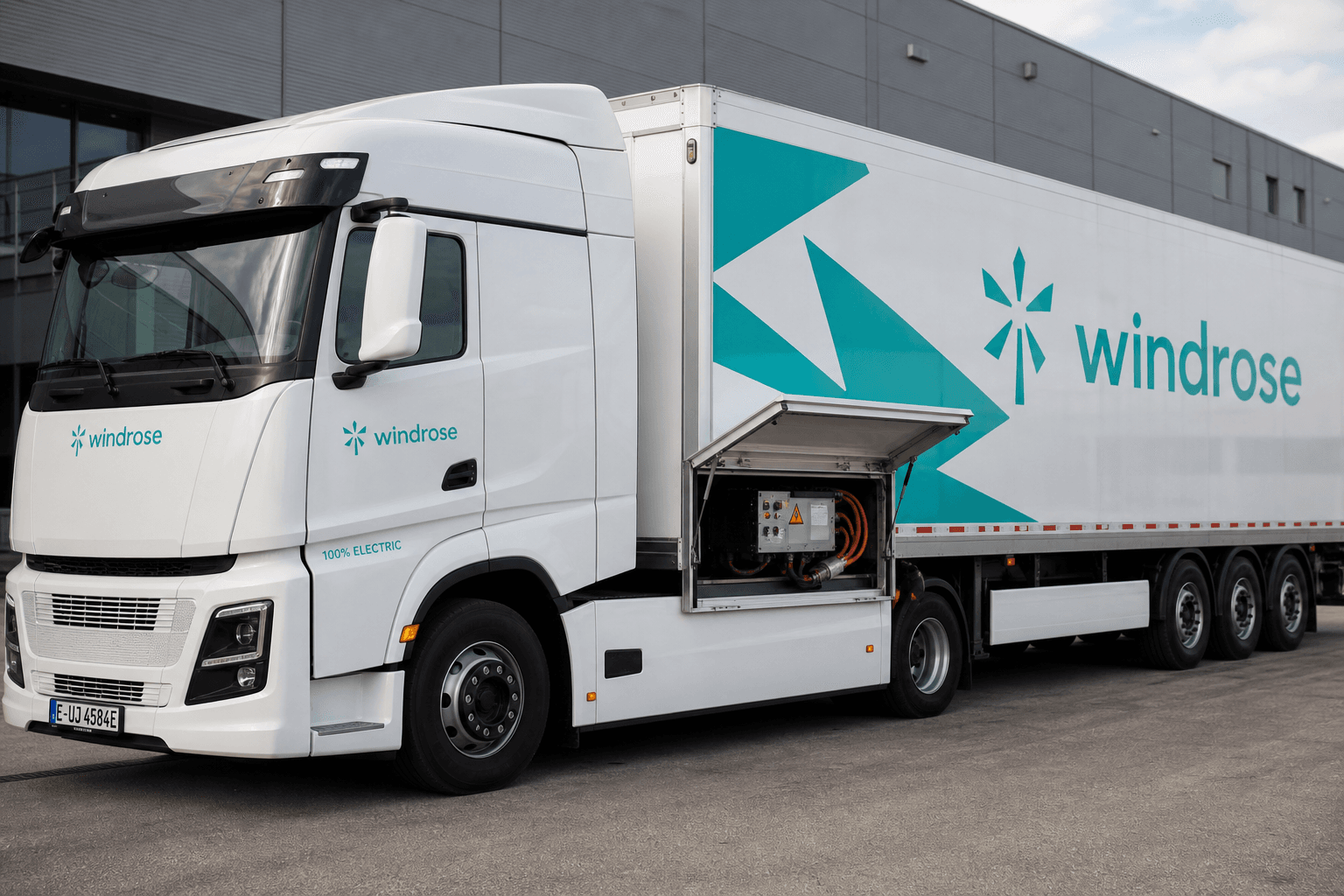
Windrose, an electric tractor-trailer manufacturer from Antwerp, has unveiled a fully electric power take-off (ePTO) that provides up to 70 kW of power. What makes it special is that the module is designed to be very compact and is integrated directly into the electric axle developed by Windrose. The aim is to power typical auxiliary equipment in heavy-duty commercial vehicles without an auxiliary combustion engine—meaning no exhaust emissions and no diesel idling.
The manufacturer says the system is based on its 800-volt platform. This high-voltage architecture is an important advantage in the heavy-duty segment because it enables high power output at lower currents, potentially reducing the load on cables, inverters, and thermal-management systems.
What Is a PTO, and Why Is It Not Straightforward in an Electric Truck?
Put simply, a PTO is a truck’s mechanical power take-off, used to operate external equipment. Classic examples include dump-truck hydraulics, loader cranes, aerial work platforms, snowplows, and the hydraulics of specialized trailers such as car transporters.
In a diesel truck, this power often comes from the engine or transmission: the engine runs while the vehicle is stationary, and the PTO supplies mechanical energy to a pump or other equipment. This principle no longer applies to a battery-electric truck because there is no combustion engine providing torque while idling. Instead, energy from the traction battery must be converted into the required mechanical or hydraulic work using power electronics and a separate electric motor.
In practice, this becomes particularly complicated when an electric truck does not use a conventional transmission layout to which a PTO can simply be connected. Some manufacturers address this by retaining established drivetrain architectures with suitable interfaces. Other designs, such as independently operating electric motors without a transmission, often require a more specialized solution that must nevertheless remain compatible with the vast existing fleet of semitrailers, pumps, and truck bodies.
Why an Integrated ePTO Is Appealing to Fleets
With its integrated ePTO, Windrose is primarily targeting fleets that require substantial auxiliary power, such as car transporters with ramps, lifting systems, and hydraulics. The key issue is not only power output but also everyday compatibility with the existing trailer ecosystem: If an electric truck can operate specialized equipment without major modifications, the barriers to switching are significantly reduced.
The real-world impact is clear: powering auxiliary equipment electrically means no local emissions during loading and unloading, as well as potentially less noise and fewer maintenance points than with separate diesel-powered auxiliary units. This can be a genuine advantage at logistics sites with stricter environmental requirements or nighttime operating windows.
Typical Applications Where an ePTO Matters
- Car transporter trailers (ramps, lifting systems, hydraulics)
- Dump trucks and walking-floor trailers (hydraulic pumps)
- Loader cranes and aerial work platforms
- Municipal equipment such as snowplows or street sweepers
Assessment: Competitive Pressure, but Also an Opportunity for Electric Trucks
Discussions about electric tractor-trailers often focus on range and charging power. In practice, however, body-mounting capability, interfaces, and auxiliary equipment are just as likely to determine whether a vehicle works in daily fleet operations. A powerful ePTO can make a highway-focused truck considerably more versatile and expand its range of applications.
The issue is also relevant to Tesla because a large share of the market consists of applications that are currently closely tied to conventional PTO standards. This is less a disadvantage for Tesla than a reminder: Any manufacturer seeking to scale in the heavy-duty market must cover not only the drivetrain but also the work functions that diesel trucks have provided as standard for decades.
What We Know So Far and What Remains Unclear
Windrose has clearly communicated the key specifications: 70 kW, a compact module, integration into the electric axle, and an 800-volt architecture. Details that are crucial to fleets remain unclear, however, including continuous power under load, interface standards, possible hydraulic configurations, weight and efficiency figures, and the service concept.
Even so, the concept addresses a real need. If the production ePTO proves reliable and integrates smoothly with existing trailers and truck bodies, it will be exactly the kind of “unassuming” technology that makes electric trucks significantly more attractive in everyday use.
Recommended Reading on Fast Charging and High-Voltage Systems
We explain why 800 volts can make a difference in everyday use here: 800V vs. 400V: Which EV Architecture Will You Need in 2026?.