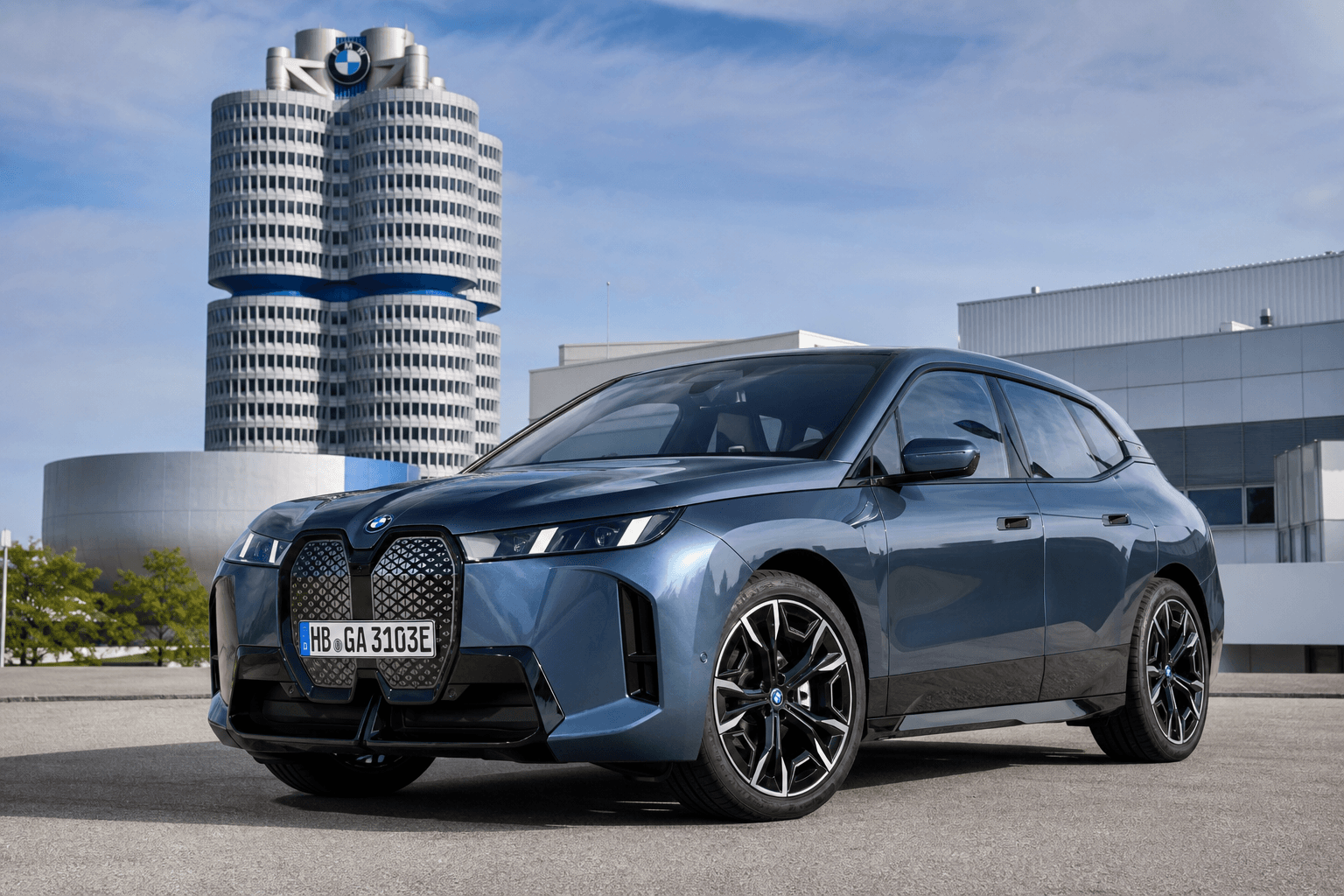
BMW reshuffles its plans for the second half of the decade
BMW is apparently taking another fundamental look at its future product strategy. Specifically, the question is which models will actually make it into series production in the second half of the 2020s. The backdrop is a market environment that varies significantly by region, making traditional one-size-fits-all strategies less attractive.
For buyers in the DACH region—the German-speaking markets of Germany, Austria and Switzerland—this primarily means that BMW wants to retain the option of adapting models and powertrains more closely to regional realities. This could ultimately bring the “right” variants to showrooms more quickly, but it could also mean that individual niche projects arrive later or not at all.
Why BMW is applying the brakes while also seeking to accelerate
Developments in China are considered a key challenge. According to the report, demand there is weaker, while pressure is growing from new manufacturers that compete aggressively on technology and price and are increasingly expanding beyond China. This is making global model programs noticeably harder to plan.
There are also political and economic factors that weigh particularly heavily on a global group: stricter trade barriers in the US, currency fluctuations and tighter regulations in Europe. In such an environment, flexibility becomes a competitive advantage—not only in pricing, but also in platforms, supply chains and powertrain selection.
New Group CEO Milan Nedeljković describes the upheaval in the industry as “dramatic” and emphasizes that BMW no longer wants to assume automatically that the same offering will work equally well everywhere. Instead, the company intends to refine its approach in several areas, including adapting more quickly.
Technology neutrality: What BMW means in practice
According to the report, BMW intends to continue pursuing a technology-neutral approach. This means that not every market will electrify at the same pace or with the same priorities. BMW is therefore examining which powertrains and model variants make economic sense in each region, and which technologies should not be planned as a one-way street.
For Europe, the shift toward electric vehicles remains central, not least because of CO2 requirements and demand in many countries. At the same time, from a manufacturer’s perspective, it makes sense to preserve flexibility in other regions where infrastructure, customer expectations or regulations may differ. According to the quoted statement, this range of requirements can even exist within individual markets.
A luxury SUV positioned as a G-Class rival is reportedly on hold
According to the report, internal information suggests that one model has already been postponed: a planned luxury SUV with the internal designation G74, which had been discussed as a potential rival to the Mercedes G-Class. It has reportedly not received final approval, and the project has been put on hold for now.
More interesting than the name is the technical direction: The SUV was originally said to have been planned as an electric concept based on the “Neue Klasse”. Later, an implementation based on the flexible CLAR architecture with multiple powertrain options was apparently under discussion. Such changes in direction fit a strategy intended to reduce risks in uncertain markets.
Partnerships and platforms: BMW explores new options
The reassessment also includes the question of where new partnerships could pay off, both economically and technologically. In the current environment, this is not a sign of weakness but often a valuable lever: economies of scale, faster development and reduced dependence on individual supply chains are becoming more important.
The extent to which BMW relies on its own solutions will also depend on how quickly the Neue Klasse with 800-volt technology gains traction across the broader market. This is where it will be decided whether BMW can establish its EV expertise in high-volume models with strong margins and a high level of everyday usability.
What this means for the DACH market and BMW EVs
For Germany, Austria and Switzerland, the key question is less whether BMW will electrify than how quickly it will do so and with what mix of vehicles. With the Neue Klasse, the Group is clearly focused on EVs, but it does not want to commit to configuring every model range identically worldwide.
This is particularly relevant when it comes to charging and platform technology: Many customers will notice the benefits of 800 volts because high charging rates are easier to achieve when the overall system is designed accordingly. Readers looking for more detail can find a practical assessment of when the difference really matters in everyday use in our comparison of 800V vs. 400V in EVs.
Overall, BMW’s direction appears to be an attempt to make its model planning more resilient to geopolitical and market-specific shocks. For EV enthusiasts, that is not necessarily bad news: As planning certainty declines, a strong, scalable electric platform becomes even more important. This is precisely where BMW will have to deliver in the coming years.