Xpeng Launches SUV Offensive: G9L in September, Mona L05 in Q4
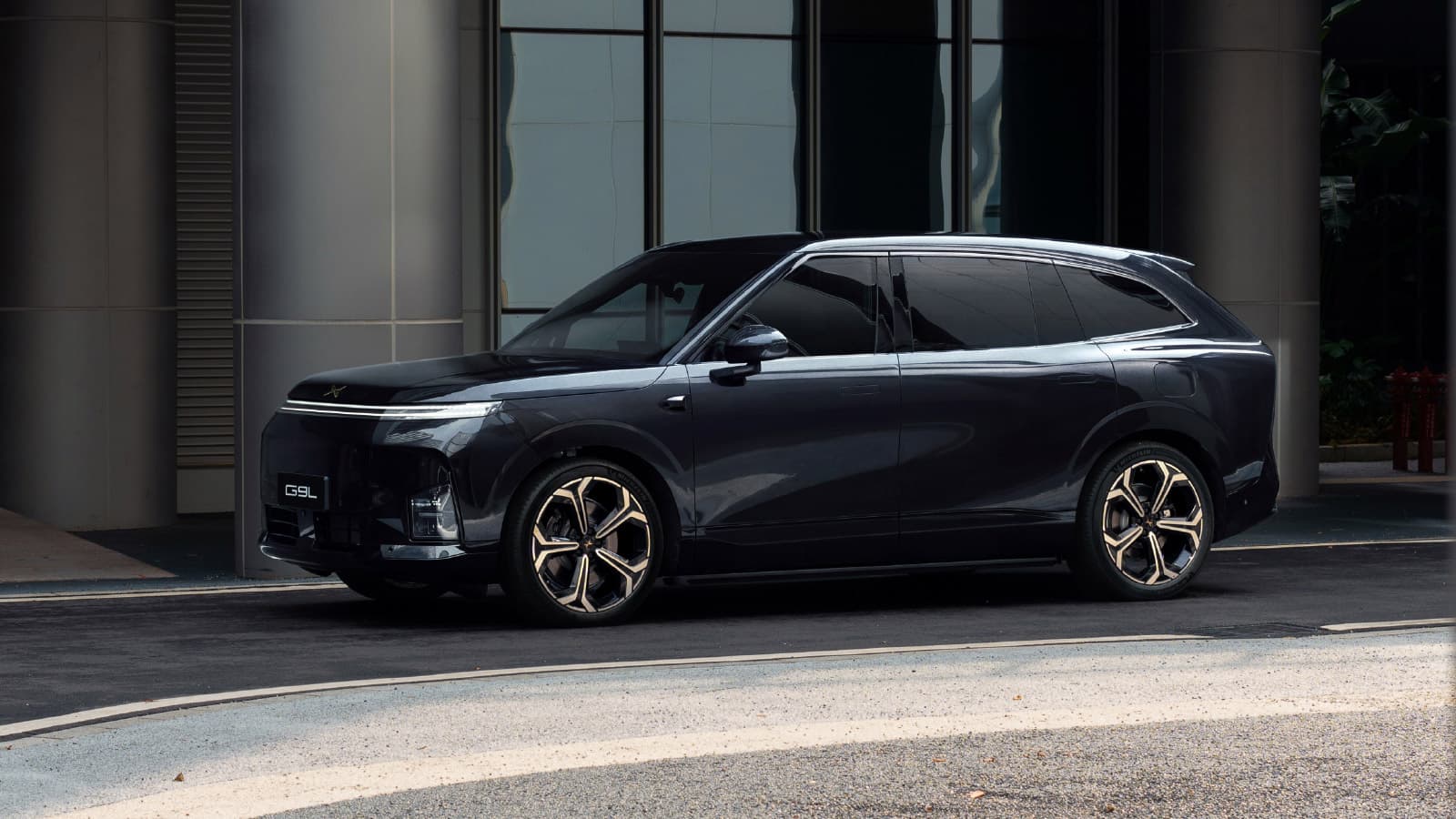
Xpeng is accelerating its model and production plans in 2026 to reach more than 60,000 deliveries per month in the fourth quarter. Two new SUV launches are central to this effort: The Xpeng G9L is scheduled to officially launch in China in September, with deliveries beginning immediately. According to the company, the Mona L05 will follow in the fourth quarter and expand the Mona family into a higher segment.
For readers in the DACH region—Germany, Austria and Switzerland—this is particularly interesting because Xpeng is also ramping up its export business. The Mona series plays a central role in this strategy, including planned deliveries outside China from Q4.
What Xpeng Aims to Achieve With 60,000 Deliveries per Month
In July 2026, Xpeng recorded 38,027 deliveries. A target of more than 60,000 units per month would represent an increase of around 58%. At the same time, the company has projected 115,000 to 121,000 deliveries for the third quarter, equivalent to an average of just under 38,000 to 41,000 vehicles per month.
The bottom line is that the major increase is clearly planned for Q4, precisely when the G9L and Mona L05 are expected to provide additional sales volume.
Xpeng G9L: 800 Volts, BEV and Range Extender in One Model
The G9L is a large five-seat SUV and is set to become Xpeng’s new flagship in this category. It will launch in China in six variants, all based on an 800-volt platform for fast DC charging. Importantly, Xpeng will offer the G9L both as a BEV (battery-electric vehicle) and an EREV (range-extended electric vehicle).
In terms of range, Xpeng quotes up to 755 km under China’s CLTC test cycle for the BEV version. The EREV variant is expected to achieve a combined range of up to 1,602 km. Because the Chinese test procedure differs from WLTP, these figures are not directly comparable, but they clearly show the strategic direction: a model designed to appeal both to fans of fast charging and buyers who want to keep driving as far as possible.
For context, 800-volt technology has become a genuine advantage in everyday use and on long-distance journeys because compatible chargers can deliver high charging power with less thermal stress. If you want to explore the topic in more detail, see our comparison 800V vs. 400V in Electric Cars.
We have already examined the G9L as a technology package focused on range and 800-volt architecture. You can also find the details in our article on the Xpeng G9L.
Mona L05: Larger Than the L03 and Planned as Both a BEV and EREV
The Mona L05 is positioned as a midsize SUV and will also be available as a BEV and EREV. According to the available data, it is 4,870 mm long and has a 2,940 mm wheelbase. This places it above the already launched Mona L03 and is intended to round out the upper end of the model family.
Meanwhile, production of the Mona L03 is already ramping up, including two-shift operation. Xpeng says it is working with suppliers to increase capacity more quickly after extreme weather and supply-chain issues slowed the production ramp-up of new models.
Of relevance to Europe, Xpeng expects overseas deliveries of the Mona L03 to begin in Q4. The company is also targeting more than 40,000 international sales per quarter in Q4. We have covered the Mona L03’s European prospects separately; see Xpeng Mona L03 Is Coming to Europe.
Software Push: Driver-Assistance System Upgrade With VLA 6.3.0
Alongside hardware and new models, Xpeng is placing a strong emphasis on driver-assistance systems. The first major update to its second-generation Vision-Language-Action (VLA) approach is scheduled to begin rolling out at the end of August. For the on-device version 6.3.0, Xpeng cites, among other things, 3.5 times as many parameters, significantly higher perception sensitivity and improved long-term predictive capabilities.
Closer integration with a Vision-Language Model (VLM) is also planned, bringing functions “toward a robotaxi feature set” into production vehicles. The timetable for Europe is ambitious: Xpeng aims to secure regulatory approvals in the first half of 2027 so it can roll out the second VLA generation in additional international markets.
Analysis: What This Could Mean for Buyers in the DACH Region
Although the G9L and Mona L05 will initially launch in China, they highlight three trends likely to reach Europe over the medium term: 800-volt architectures becoming standard in higher vehicle classes, the return of the range-extender concept as a safety net for longer journeys, and an aggressive software roadmap for driver-assistance systems. For buyers, what ultimately matters is the real-world impact: fast charging stops on long-distance journeys, reliable vehicle availability and a driver-assistance package that improves in practice, not just on paper.
Charging infrastructure and its reliability also play a major role in Europe. One example of how charging on the road is becoming easier in Germany is the use of large roaming networks; see Charging at 220,000 Locations.