Cybercab Makes Its China Debut
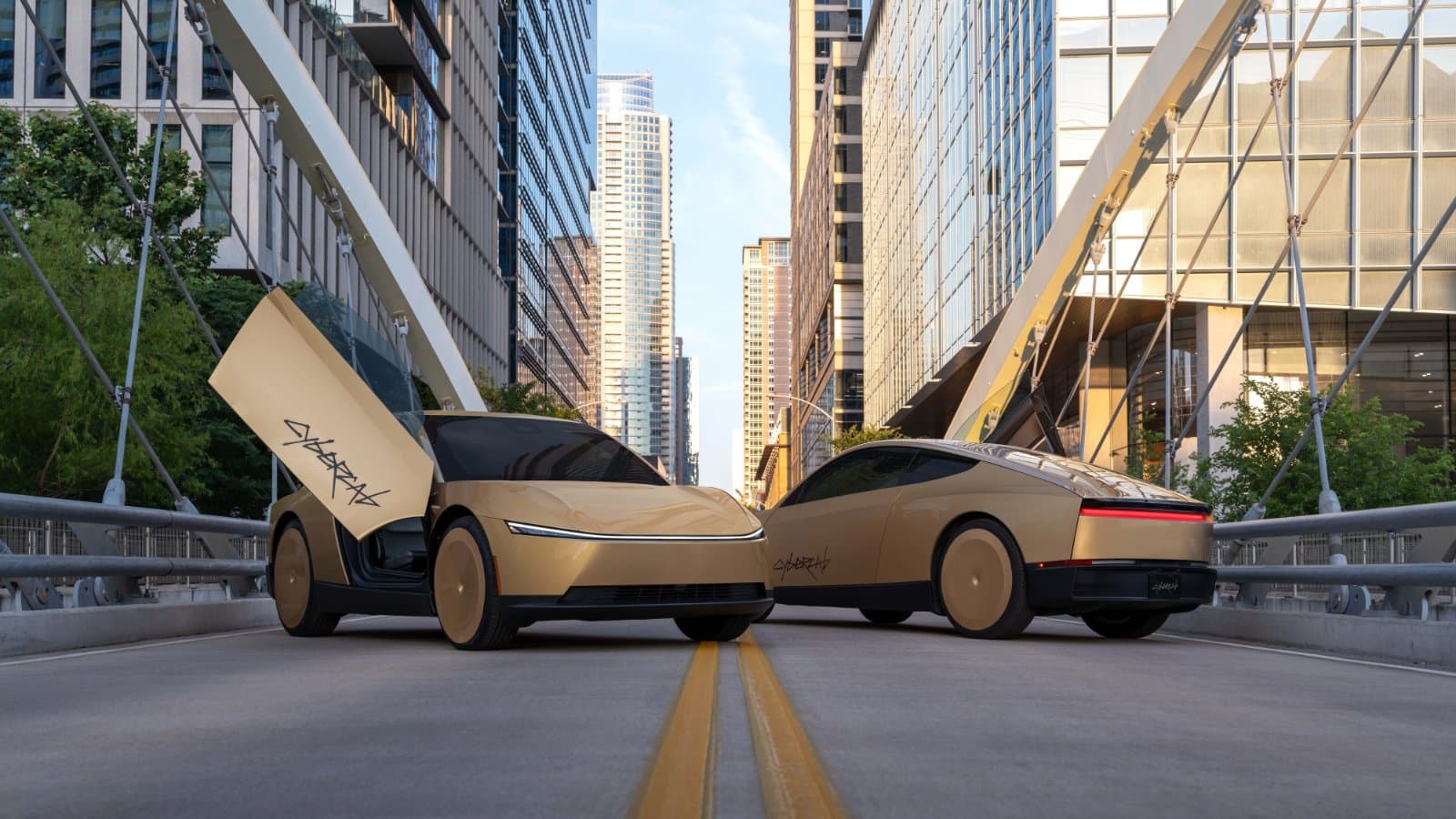
Tesla is bringing the Cybercab to China. The vehicle, developed specifically for autonomous ride-hailing services, will be exhibited in Beijing and Shanghai starting on September 17, 2026.
Visitors will be able to see the robotaxi up close, but it will not be driven at these events. Tesla emphasizes that these are static displays only.
| City | Dates | Venue |
|---|---|---|
| Beijing | September 17–27, 2026 | Tesla Experience Store Huamao |
| Shanghai | September 17–21, 2026 | HKRI Taikoo Hui |
No Robotaxi Launch in China Yet
The China debut marks neither a sales launch nor the start of a commercial ride-hailing service. Tesla has also not announced any specific plans for local approval or production in connection with the exhibitions.
This is particularly important for the Cybercab. The two-seater has neither a steering wheel nor pedals and does without conventional side mirrors. All driving tasks are intended to be handled by Tesla’s software, which requires extensive regulatory approval.
Displaying the Cybercab in China → attracting public attention. It does not yet mean an approved robotaxi service.
China is one of the most dynamic markets for automated driving functions, but it is also heavily regulated. Manufacturers and operators need local permits, suitable testing areas and, in many cases, cooperation with government authorities. No Cybercab market launch has been confirmed for Germany, Austria or Switzerland either.
Cybercab Is Already Operating in Austin
Tesla integrated the Cybercab into its ride-hailing service in Austin, Texas, in early September. The initial scale is modest: At the end of August, 45 Cybercabs were registered there for the local robotaxi fleet. Before that, the vehicles were used primarily to transport employees.
The Cybercab was first unveiled publicly in October 2024. The first production vehicle rolled off the line at Gigafactory Texas in February 2026, and Tesla says volume production began in April.
How quickly operations can be expanded depends on more than vehicle production. The reliability of the autonomous driving software is the key factor. In parallel, Tesla is working on FSD v15 and the continued use of HW4.
Unboxed Manufacturing Is Intended to Reduce Costs
The absence of conventional controls is not the only technically interesting aspect. Tesla produces the Cybercab using the so-called Unboxed manufacturing process. In this method, larger vehicle modules are built in parallel and joined together to form the finished body only at a later stage.
This differs from traditional production lines, where a vehicle moves step by step through numerous stations. Parallel manufacturing stages are intended to reduce space requirements, production time and, in the long term, costs. Whether the process delivers the expected benefits on a large scale will become clear as production ramps up.
Tesla Faces Competitive Pressure in China
The high-profile Cybercab presentation comes amid intense competition. Tesla sold around 50,047 vehicles directly to Chinese customers in August 2026, 12.4% fewer than in the same month of the previous year. It was the third consecutive month with a year-over-year decline.
Chinese deliveries of the Tesla Model Y totaled 29,260 vehicles in August, a decline of 25.8%. Shortly afterward, Tesla expanded its local lineup with the Performance version of the updated Model Y.
No link has been established between the current sales figures and the Cybercab exhibitions. However, the presentations show that, alongside its high-volume models, Tesla wants to draw more attention in China to future-focused areas such as robotaxis and autonomous mobility.