Tesla Expands Its Robotaxi Area in Dallas
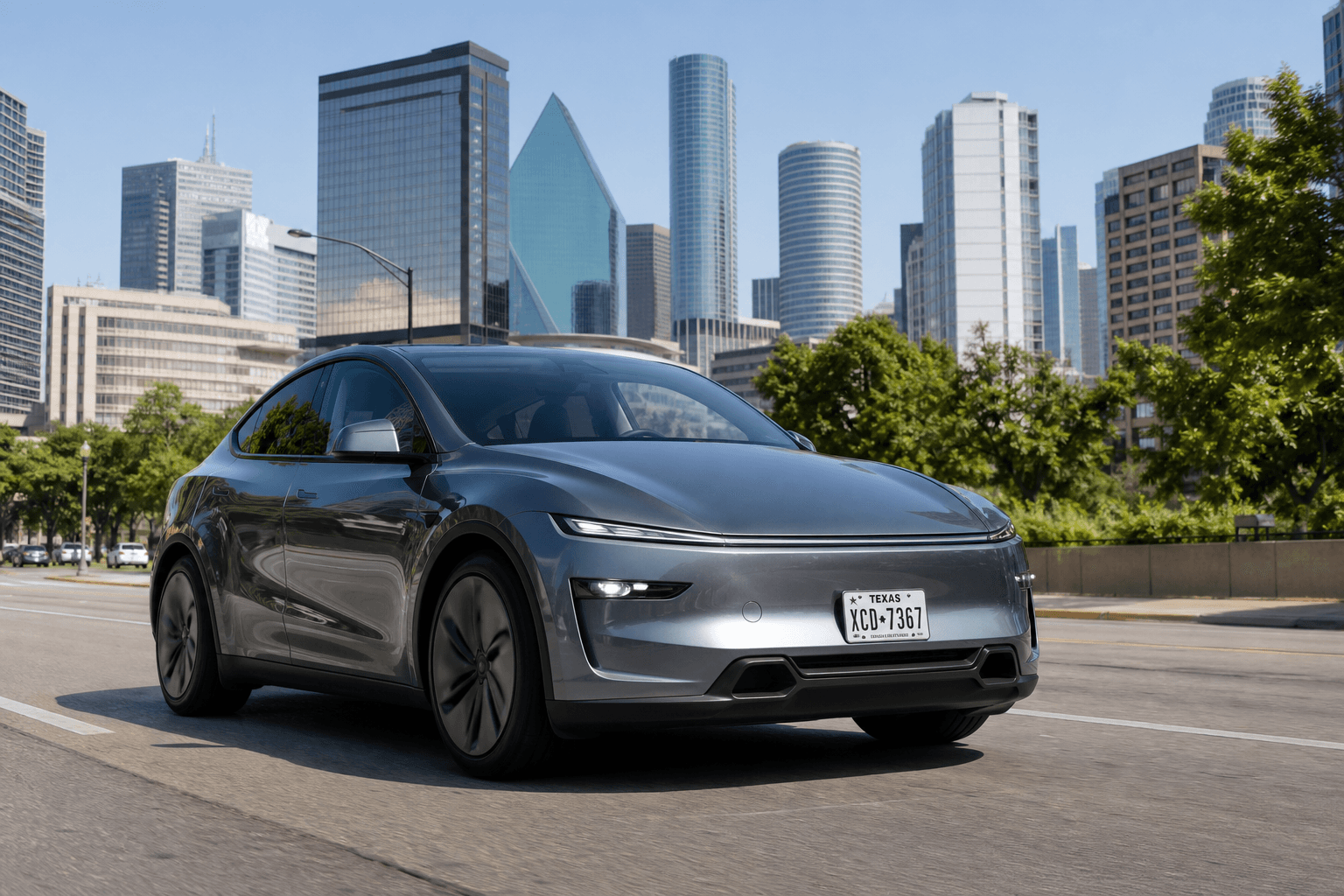
Tesla has significantly expanded the service area of its Robotaxi service in Dallas. According to a post by the official Robotaxi account, the driverless service can now reach more people in the Texas metropolis. Specifically, the expansion covers additional parts of Downtown as well as new areas farther west.
At its core, this is a classic geofence upgrade: The software authorizes the autonomous system to operate within a larger, clearly defined area. This is a crucial step for robotaxi services because range here is not just about the battery and charging infrastructure, but above all about which roads, intersections and traffic situations the system can handle safely enough.
How Big Is the Update Really?
Tesla itself has not provided a figure in square kilometers. However, unofficial estimates paint a fairly clear picture: The Robotaxi area is said to have grown by around 50% to approximately 120 km². Previously, the zone was reportedly about 78 km².
For users, this is more than just a nice-looking map: A larger geofence typically reduces the number of situations in which a ride request is rejected or an inconvenient pickup point is assigned. Especially in an urban area, that can make the difference between being “practical for everyday use” and “only useful in certain neighborhoods.”
More Than Just Area: Longer Hours and Shorter Wait Times
The expansion in Dallas is part of a series of improvements since the public launch of the unmanned Robotaxi service in January. Tesla also recently announced longer operating hours in several cities. In addition, shorter wait times are expected as Tesla expands the fleet and improves its “dispatch intelligence,” meaning the logic used to allocate vehicles based on demand, location and traffic conditions.
It remains unclear how large the unmanned fleet has become. Tesla says it is now considerably larger but has not provided specific vehicle numbers.
Which Cities Are Included, and Where Do Restrictions Apply?
Tesla’s Robotaxi service is currently active in six US cities: Austin, Dallas, Houston, Miami, Orlando and Tampa. Importantly, this is a US-specific development, and the operating conditions depend heavily on local permits. As a result, implementation also varies by region.
In California’s Bay Area, Tesla continues to operate with a safety driver, as required by its local permit. And in Las Vegas, it has authorization for 10 vehicles, significantly fewer than Tesla originally requested there.
Looking Ahead: Robotaxi Outside the US?
For Europe and the DACH region—Germany, Austria and Switzerland—the key question is when and how Tesla will scale Robotaxi internationally. Recent job postings also offer clues, pointing to potential next steps in Canada and South America.
For Germany, Austria and Switzerland, this is not yet a concrete launch plan, but it indicates the direction of travel: Tesla is apparently working not only to add more cities but also to achieve broader geographic coverage. And geofence expansions like the one now underway in Dallas are an important indicator of that progress.
Why Geofencing Is So Important for Robotaxis
A robotaxi system is not simply “Autopilot, but without a driver.” It requires reliable pickups and drop-offs, robust route selection, safe behavior in complex traffic environments and clear boundaries within which the system has demonstrably proven stable. In practice, a larger geofence therefore usually means that Tesla is confident the system can handle more complex surroundings or can operate more routes at a sufficiently high level of quality.
A growing geofence is a sign that autonomy is not just being tested but is moving into everyday life step by step.
What It Means for Everyday Use
When the service area, fleet size and operating hours all increase at the same time, robotaxis become truly competitive for many trips. A larger area typically means fewer problems at the edges of the service zone, longer hours mean fewer gaps in the evening or early morning, and better dispatching can help absorb peaks in demand.
Anyone interested in Tesla’s autonomy strategy can also find our overview of the latest developments involving Tesla FSD v15, HW4 and Optimus. And if you want to compare developments across the robotaxi market as a whole, it is also worth looking at Tesla’s approach using HW4 and “distilled” FSD models, as well as the background on Tesla’s Model 2 (Project Redwood), which could also play a role in scaling and cost per kilometer over the long term.