Tesla makes automatic navigation significantly smarter
With software update 2026.26, Tesla is fundamentally overhauling automatic navigation. Instead of predicting destinations primarily based on fixed times and calendar entries, the system now takes actual driving habits into account.
Drivers who regularly travel to the same places at similar times should therefore receive the appropriate route more often. This applies not only to commuting, but also to recurring trips to the gym, supermarket or a weekend destination, for example.
Navigation no longer responds solely to a rigid schedule, but to recurring patterns involving the time, day of the week and location.
Rigid time windows replaced by learned routines
Until now, automatic navigation used a comparatively rule-based approach. Drivers leaving home in the morning on a weekday were often shown their work address. In the late afternoon or evening, the route home was suggested when they left work.
This principle worked well for traditional office hours, but quickly became unsuitable for shift work, part-time schedules or changing daily routines. With version 2026.26, the vehicle instead considers when the driver normally navigates to a particular destination.
| Area | Before update 2026.26 | With update 2026.26 |
|---|---|---|
| Commute | Fixed time windows on weekdays | Individually learned departure times |
| Other destinations | Primarily calendar entries and saved addresses | Frequent trips based on day, time and location |
| Starting a route | Destination suggestion for manual selection | Automatic start when confidence is high |
| Alternatives | Suggestions in the search area | Dedicated module below active navigation |
Route starts automatically when confidence is high
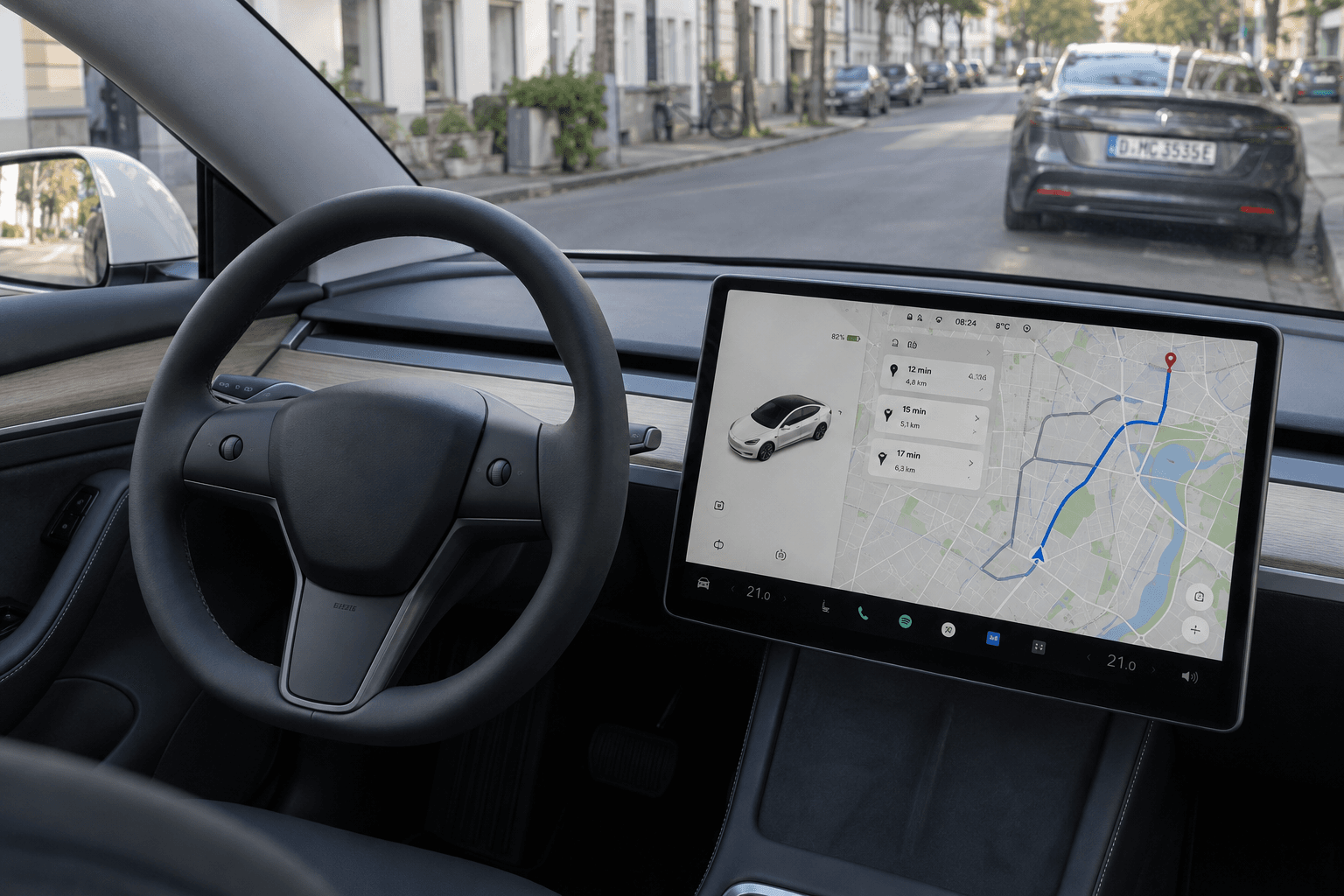
If the software identifies a clear pattern, it can start navigation as soon as the driver gets into the vehicle. This eliminates the need to use the central display when, for example, the vehicle regularly travels from the office to the gym on Tuesday evenings.
The system’s calculated confidence level is crucial. The route is activated automatically only when the starting point, time and previous behavior indicate a destination clearly enough. In less clear-cut situations, destination suggestions remain the more sensible solution.
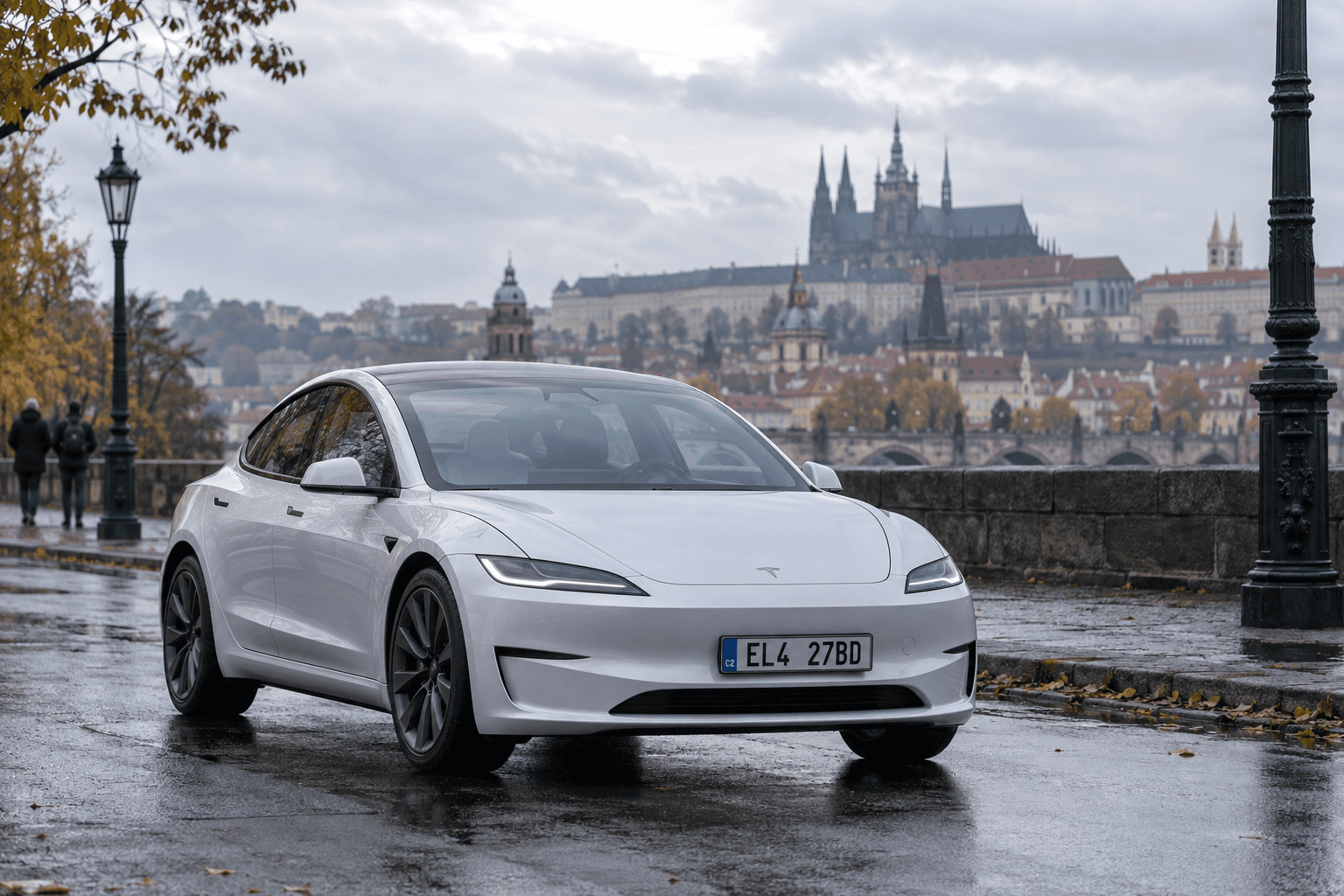
Especially in frequently used vehicles such as the Tesla Model 3 and the Tesla Model Y, the feature could make everyday driving noticeably more convenient. Its value lies less in a spectacular standalone innovation than in removing an interaction step from almost every routine trip.
New module displays alternative destinations
An automatically started route will not necessarily be correct. Tesla is therefore introducing a separate module for alternative suggestions that appears below the main navigation map.
It can display other frequently visited places or destinations from the calendar. If the vehicle has misjudged the planned trip, the route can be changed with a single tap. Automatic prediction → quick correction, without having to reopen the full destination search.
More vehicle intelligence beyond FSD
The new feature is not part of autonomous driving and does not perform any driving tasks. However, it shows how Tesla can use existing usage data to personalize everyday software features more extensively.
Tesla is therefore complementing the further development of driver-assistance systems such as the planned Tesla FSD v15 with a much more practical feature. Navigation is not becoming more autonomous, but it is becoming more predictive and convenient in everyday use.
As is customary with Tesla, the update may be rolled out in stages across Germany, Austria and Switzerland. Version 2026.26 may therefore not appear on all compatible vehicles at the same time.