Model S Reaches the Million-Kilometer Mark in Taxi Service
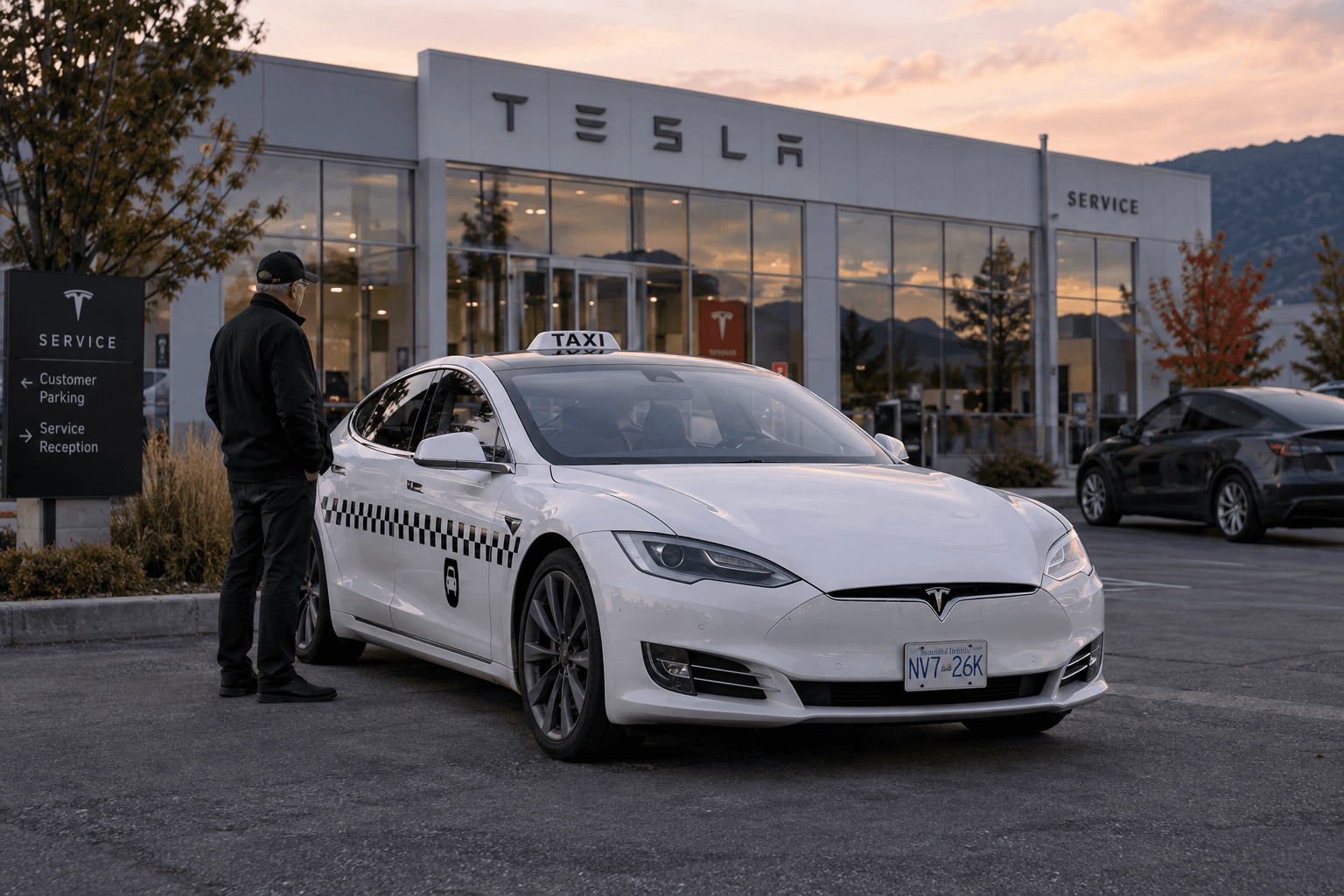
A Tesla Model S that entered service on February 9, 2017, has reached the 1,000,000 km mark in Kelowna, Canada. Known internally as S1K, the electric car was the first vehicle operated by local taxi company Current Taxi.
The odometer rolled over to seven digits on September 19 in the parking lot of Tesla’s Kelowna location. During its nearly ten years in service, the Model S transported tens of thousands of passengers across the Okanagan region.
| Metric | Value |
|---|---|
| Entered service | February 9, 2017 |
| Total mileage | 1,000,000 km |
| Monthly mileage | around 10,000 to 12,000 km |
| Service area | Kelowna and the Okanagan, Canada |
| Use | Commercial taxi service |
High Mileage Under Demanding Conditions
Monthly mileage of up to 12,000 km is far beyond that of a typical privately owned car. Taxi service also means long operating hours, frequent passenger turnover, and numerous charging cycles. It is therefore remarkable that an electric car can be operated economically under these conditions all the way to the million-kilometer mark.
According to the operator, other Teslas in the fleet each covered more than 750,000 km before being sold. The S1K was deliberately kept in service because the company wanted to find out whether its first vehicle could reach one million kilometers.
One million kilometers in taxi service is a strong indication of an electric car’s fundamental long-term durability, but it is not proof that the entire powertrain remained untouched.
Maintenance Is Still Necessary, but Oil Changes Are Not
The operator particularly highlights the electric powertrain’s lower maintenance requirements. In its assessment, a combustion-engine vehicle used with comparable intensity would have needed an oil change approximately every three weeks. The Model S requires no engine oil or spark plugs and lacks many of the mechanical components found in a conventional powertrain.
Electric cars are not free from wear either. At such high mileages, tires, suspension, brakes, climate control, and the cooling system still require attention. Regenerative braking can, however, significantly reduce the use of the mechanical brakes.
No Information About the Battery or Repairs
One crucial piece of information is missing for a technical assessment: There is no documentation showing whether the battery, drive units, or other major components were replaced during the vehicle’s time in service. The mileage therefore primarily demonstrates that the vehicle as a whole could be kept commercially operational for an exceptionally long period.
Similar high-mileage vehicles provide further evidence of the durability of modern electric cars. For example, a Tesla Model 3 covered 402,000 km with its original battery. The battery condition of a VW ID.3 after 220,000 km also shows that high mileage does not automatically mean the end of a battery’s useful life.
From Taxi to Research Subject
After reaching the million-kilometer mark, the Model S is set to retire from regular passenger service. The operator hopes to make the vehicle available to a technical university so that students can examine the wear caused by almost a decade of intensive use.
A scientific analysis of the battery, power electronics, motors, and suspension could provide particularly valuable insights. For drivers in the DACH region—Germany, Austria, and Switzerland—the most important message is already clear: High mileages are technically achievable in electric cars, provided that maintenance, repairs, and battery management are handled properly.