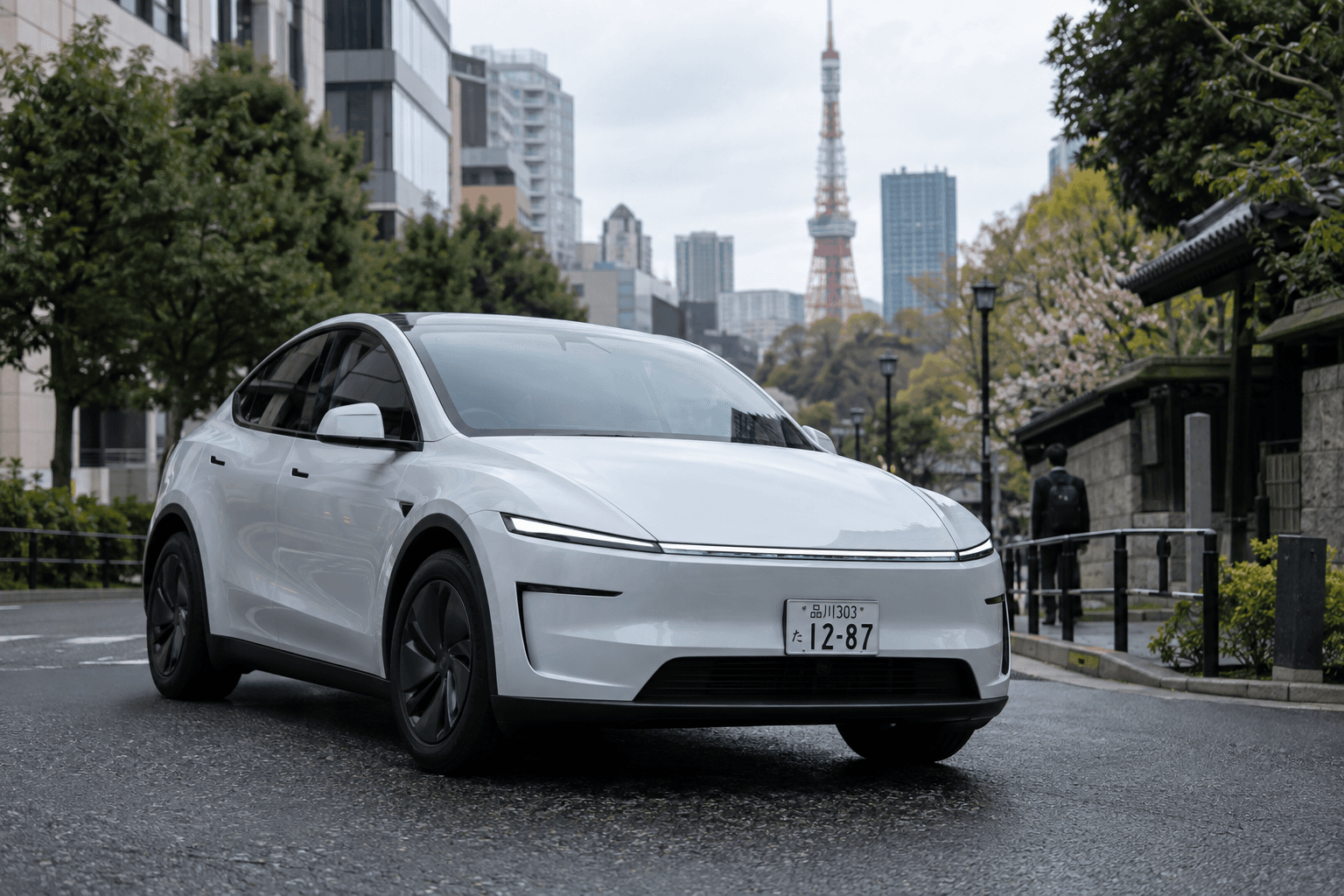
Tesla Model Y and Model 3 Become Extremely Affordable in Tokyo
Tokyo is unexpectedly becoming one of the cheapest places in the world to buy a Tesla. The key factors are not just list prices, but the combination of national incentives, additional subsidies from the Tokyo Metropolitan Government, and the weak Japanese yen.
The Tesla Model Y has a regular list price of 5.7 million yen. After deducting the available incentives, the effective price falls to around 3.6 million yen, equivalent to approximately €20,000.
For the Tesla Model 3, the entry-level price after incentives drops even further, to around 3.2 million yen. Depending on the exchange rate, that is equivalent to approximately €18,000.
| Model | List price | Price after incentives | Approximate price in euros |
|---|---|---|---|
| Tesla Model Y | 5.7 million yen | 3.6 million yen | around €20,000 |
| Tesla Model 3 | not specified | 3.2 million yen | around €18,000 |
The euro amounts are estimates and may change with the exchange rate. The subsidy actually available also depends on whether buyers meet all the requirements of the national and local programs.
The low final price is not a general Tesla discount, but the result of incentives and exchange-rate effects.
Tesla Gains Momentum in Japan
The aggressive pricing is being accompanied by stronger marketing. In Japan, Tesla is competing against established domestic manufacturers such as Toyota, Nissan, Honda, Mazda, Subaru, and Mitsubishi, whose presence has traditionally shaped the country’s car market.
In the first half of 2026, Tesla registered more vehicles in Japan than it did in all of 2025. In the second quarter alone, it recorded 7,034 new registrations, a new high for the brand in the country.
The range of incentives could accelerate this growth further. Lower entry price → more potential buyers who had previously hesitated because of high import prices or strong domestic competition.
Why Tokyo’s Prices Cannot Be Applied to Germany, Austria, and Switzerland
For buyers in Germany, Austria, and Switzerland, the final price in Japan is not directly comparable. Incentive programs, taxes, vehicle approval requirements, transportation costs, and regional pricing strategies differ significantly.
Nevertheless, Tokyo demonstrates how much local subsidies and exchange rates can affect an electric car’s competitiveness. While Tesla relies more heavily on financing, promotional discounts, and equipment packages in Europe, the Japanese price advantage is primarily created by public incentives.
For Tesla, this is an important lever in a challenging market. If the programs remain in place and the yen stays weak, the Model 3 and Model Y could further strengthen their positions in Japan’s EV segment.