Tesla Model 3 Reaches 402,000 km Without a Drivetrain Replacement
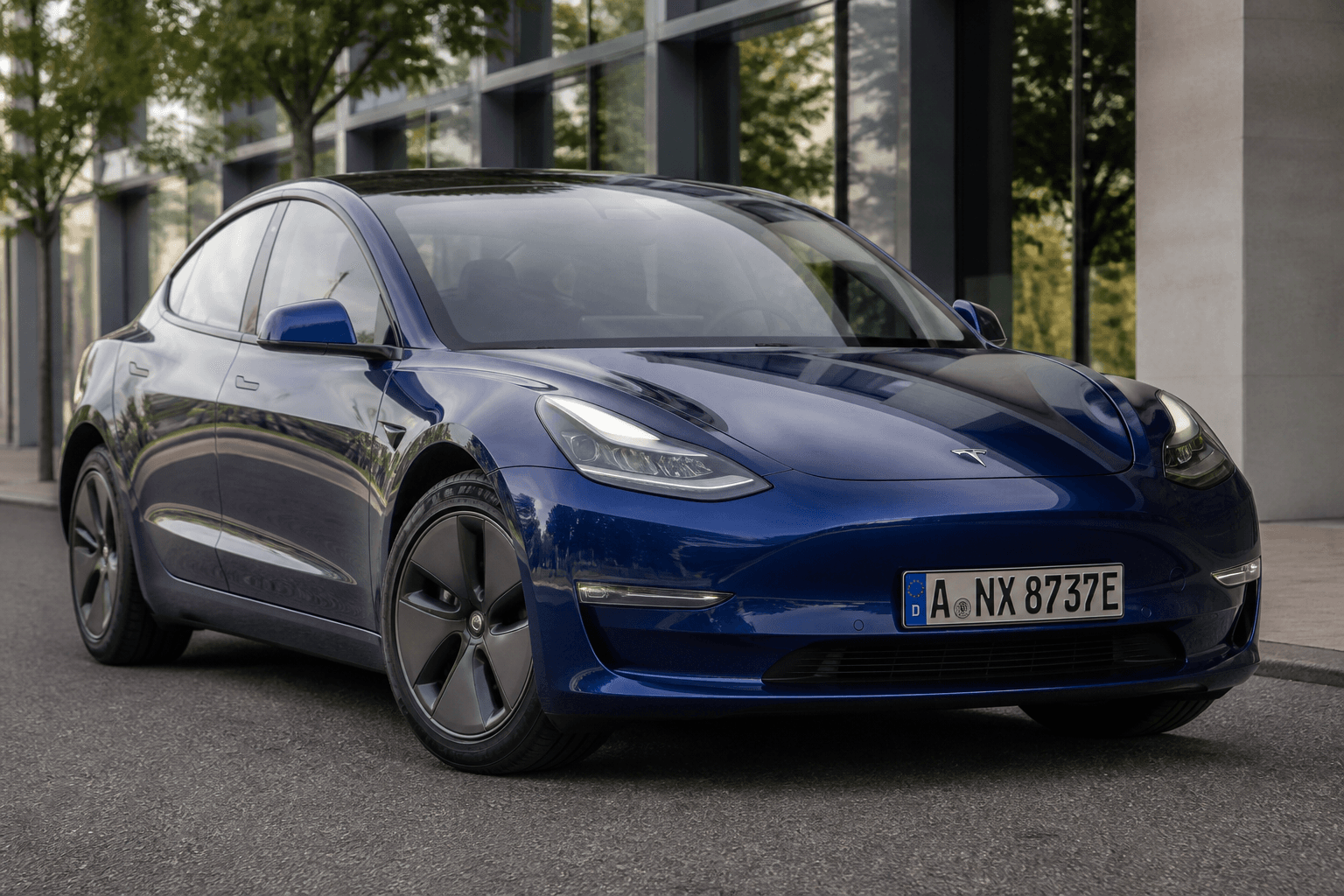
High mileage, intensive taxi use, and still no new battery: A 2021 Tesla Model 3 Long Range has covered around 402,000 km in less than five years. The battery and both electric motors are still the original factory-installed components.
The vehicle covered an average of about 241 km per day. According to the condition report, it still drives smoothly, without any noticeable rattling or squeaking, and delivers performance at the expected level.
This individual case demonstrates the mileage potential that a heavily used electric car can achieve with its original drivetrain.
Key Figures at a Glance
| Metric | Reported Figure |
|---|---|
| Mileage | around 402,000 km |
| Vehicle age | less than five years |
| Remaining battery capacity | 84% |
| Real-world summer range | around 457 km |
| Average consumption | around 15 kWh/100 km |
| Fast charging | 30 percentage points in 11 minutes |
| Range added | around 137 km |
84% Battery Capacity After Intensive Taxi Use
A reported remaining capacity of 84% is remarkable given the mileage. The battery has therefore lost some of its original storage capacity but remains perfectly usable in everyday driving.
It is important to put this into context: The exact method used to determine the battery's condition is unknown. A displayed or calculated figure is therefore not necessarily comparable with a standardized capacity measurement under laboratory conditions.
Nor can the degradation observed so far simply be projected linearly into the future. Age, temperature, states of charge, and charging behavior all influence future development, as does mileage itself.
Only One Minor Component Failed Prematurely
The only reported unscheduled defect was the externally mounted speaker in the front bumper. Among other things, this component produces the mandatory warning sound at low speeds and had to be replaced.
There was also routine wear and tear. The Model 3 required six sets of tires, several windshield wiper blades, and various suspension bushings. Each set of tires lasted an average of about 67,000 km, although tire type, driving style, and wheel alignment have a significant impact on this figure.
The rear shock absorbers were replaced with more comfortable units even though the original dampers were still functional. This was therefore a voluntary upgrade rather than a repair.
Regenerative Braking Preserves the Mechanical Brakes
The reported condition of the braking system is also noteworthy. The brake discs and pads are still the original factory-fitted parts. This is plausible for an electric car because much of the deceleration is handled by the electric motors, recovering energy and returning it to the battery.
Less mechanical braking → less brake pad wear. Nevertheless, corrosion and sticking components can become a problem, particularly in wet conditions, where road salt is used, and after extended periods of inactivity. Regular inspections therefore remain important even if the brakes look good from the outside.
According to the report, the brake fluid and coolant have not yet been replaced either. However, this should not be interpreted as a general maintenance recommendation, as their condition and replacement requirements must be assessed for each vehicle.
Energy Consumption and Fast Charging Remain Practical
The long-term average of around 15 kWh/100 km indicates high efficiency. Without information on speed, temperature, route profile, and heating requirements, however, the figure can only be compared with other vehicles to a limited extent.
The brief fast-charging test also showed no obvious drop in performance. A reliable assessment of the charging curve would, however, require the battery temperature, initial state of charge, peak power, and a complete charging session up to a defined target level.
A Strong Example, but No Guarantee
One vehicle cannot prove that every Model 3 will achieve similarly high mileage without problems. Manufacturing variation, climate, accident history, charging habits, and maintenance all have a significant impact on durability.
However, this case is consistent with other long-term observations of modern electric cars. A VW ID.3 with 220,000 km also demonstrated that high mileage does not automatically mean a worn-out traction battery.
What Used-Car Buyers Should Look For
When buying a used electric car, mileage alone is less informative than the overall picture. Verifiable battery data, a well-maintained vehicle, and an inspection of heavily stressed suspension components are particularly important.
- Check the battery's condition using a meaningful diagnostic report wherever possible
- Inspect the suspension for worn bushings, dampers, and uneven tire wear
- Check the braking system for corrosion despite its limited use
- Test both AC charging and fast charging in practice
- Review the accident history, repairs, and software alerts
Overall, the Model 3 taxi makes a strong case for the longevity of modern electric drivetrains. In particular, the original battery's still-usable range shows that high mileage does not necessarily lead to an expensive battery replacement.