Tesla improves WLTP range without changing the battery
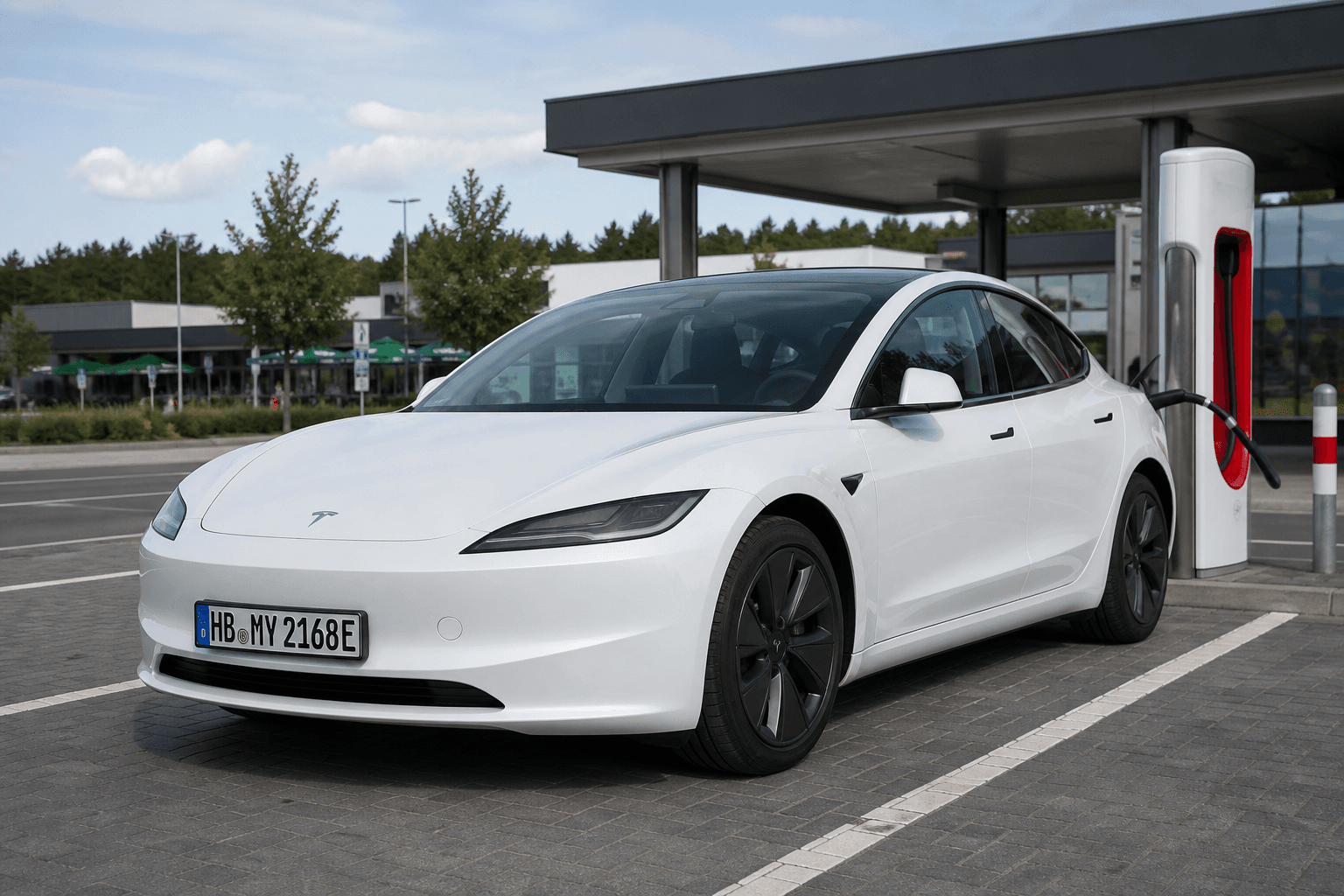
Tesla has given the Tesla Model 3 more range in Europe, using a refreshingly pragmatic approach. The official WLTP figure for the rear-wheel-drive Model 3 (the entry-level version) has risen to 572 km. It was previously 534 km.
That is an additional 38 km on paper, or roughly 7.1%. The interesting part is that the battery remains unchanged: the increase comes from a new wheel-and-tire setup.
What has changed: new 18-inch wheels and more efficient tires
Instead of the previous 18-inch Photon wheels, Tesla now equips the Model 3 RWD in Europe with 18-inch Prismata wheels as standard. The size and basic concept therefore remain the same, but aerodynamics and rolling resistance have been optimized.
The effect is typical of EVs: Less air turbulence around the wheels and a tire compound with lower rolling resistance reduce energy consumption at a constant speed. The result is the same usable battery energy, but more kilometers in the WLTP cycle.
Real-world impact: What difference do 38 km of WLTP range make in everyday use?
WLTP does not represent sustained highway speeds, but the trend is encouraging: Efficiency improvements to wheels and tires are particularly effective during steady driving. On long journeys, depending on the weather, speed, and tire pressure, this can provide a few percent more buffer, meaning less planning stress and, ideally, a slightly later charging stop.
The psychological effect is also important: A higher official range means less range anxiety for many drivers. If this is something that concerns you more generally, take a look at our guide to EV range anxiety.
Which countries does the update apply to, and which are excluded?
According to Tesla, the new range figure and Prismata package apply to all European left-hand-drive markets. This automatically includes a large part of the DACH region—the German-speaking markets of Germany, Austria, and Switzerland—particularly Germany and Austria. (New cars in Switzerland are also generally left-hand drive, so the market is typically included.)
Right-hand-drive markets are currently excluded. In the UK and Ireland, the configurator continues to list the previous 18-inch Photon package with the old range figure.
Why Tesla loves these "small" updates
Tesla often optimizes its vehicles through small but effective changes: aerodynamics, rolling resistance, thermal management, and software calibration. Particularly for the Model 3, these iterations are a way to improve efficiency and range without incurring the cost of a new battery or powertrain.
Official figures and real-world results often differ, sometimes in a positive direction. One recent example is the Model Y L, whose tested range reportedly exceeded Tesla's figure. However, such results depend heavily on the test conditions, so they should be treated as context rather than a guarantee.
The new key specifications at a glance
| Criterion | Before | Now (Europe, LHD) |
|---|---|---|
| Model variant | Model 3 rear-wheel drive | Model 3 rear-wheel drive |
| WLTP range | 534 km | 572 km |
| Standard wheels | 18-inch Photon | 18-inch Prismata |
| Reason for the increase | Old wheel-and-tire package | Aerodynamics and lower rolling resistance |
| Availability | Europe (previous WLTP figure) | European left-hand-drive markets |
Conclusion: More range for the price of a tire update
An additional 38 km of WLTP range without a new battery shows how much efficiency potential lies in an EV's peripheral components. For buyers in the DACH region—the German-speaking markets of Germany, Austria, and Switzerland—this is a tangible benefit because it is reflected directly in the configurator and journey planning, without Tesla having to launch a new model generation.
If the Model 3 is already on your shortlist, the update is above all one thing: extra range included from the factory at no additional cost.