Tesla FSD frequently exceeds the 30 km/h limit in Brussels
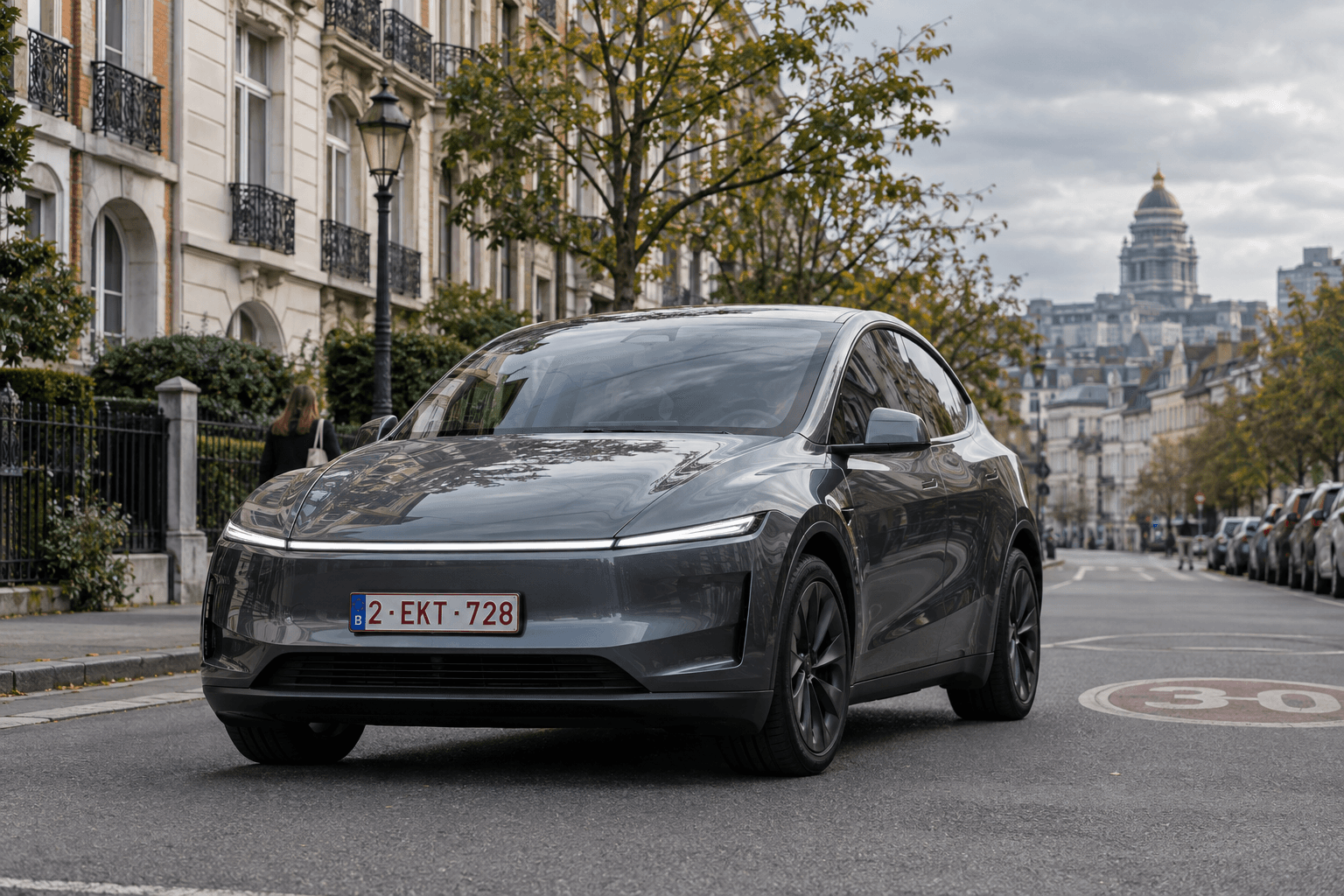
A Brussels pedestrian and cycling advocacy group tested Tesla FSD (Supervised) over around 400 km in urban traffic. The system reportedly exceeded the permitted speed on 55% of the tested sections with a 30 km/h limit.
According to the study, the average speed measured in these areas was 44 km/h. In traffic-calmed shared-space zones with a maximum speed of 20 km/h, the system also reportedly drove too fast on 42% of the tested sections.
| Test area | Observation |
|---|---|
| 30 km/h zones | Limit exceeded on 55% of the tested sections |
| Average in affected 30 km/h areas | 44 km/h |
| Shared-space zones with a 20 km/h limit | Limit exceeded on 42% of the tested sections |
| Scope of the test | Around 400 km over three days in July 2026 |
The speed limit was apparently misidentified in some cases
According to the test, the central issue was not merely speed control. In many 30 km/h zones, the vehicle display showed a limit of 50 km/h instead. If the system misidentifies the applicable limit in the first place, its subsequent choice of speed cannot function reliably either.
Modern driver-assistance systems generally combine recognized road signs with map information and other environmental data. In cities in particular, changing signs, zone-wide limits and local variations in the rules can make this matching process more difficult. Even so, a robust system must resolve such conflicts conservatively and choose the lower speed when in doubt.
FSD also reportedly tried several times to overtake cyclists on Belgian bicycle streets. Cars are generally prohibited from overtaking cyclists there. On the positive side, the system was frequently observed yielding to pedestrians and cyclists at an early stage.
The study has limitations
The findings come from an advocacy group, not a vehicle approval authority or a long-term scientific study. The test deliberately focused on roads with low speed limits and therefore does not support a blanket conclusion about FSD’s overall safety.
Nevertheless, the observations are relevant because 30 km/h zones have covered a large proportion of Brussels’ road network since 2021. Even a small difference in speed significantly affects stopping distance and the risk of injury. In dense urban traffic, 44 rather than 30 km/h is therefore not a trivial difference.
FSD can handle complex traffic situations, but it must reliably recognize rules that are both simple and safety-critical, such as local speed limits.
FSD remains a Level 2 driver-assistance system
The European version is deliberately named FSD (Supervised). It is not an autonomous driving system, but a Level 2 driver-assistance system. The person behind the wheel must continuously monitor traffic and be ready to intervene at any time.
Legal responsibility therefore also remains with the driver. If the wrong speed limit is detected, the driver must correct the speed immediately. However, this duty of supervision does not release the manufacturer or the authorities from the obligation to closely examine systematic errors before granting broad approval.
Tesla argues, based on its own data, that FSD does not drive excessively fast and often follows the flow of traffic. This may result in smoother driving on many roads, but where limits are clearly posted, it is no substitute for obeying traffic rules. We discuss further technical claims about the system and its hardware in our article on Tesla FSD v15 and HW4.
EU vote puts speed limits in the spotlight
In April 2026, the Dutch vehicle approval authority RDW granted FSD (Supervised) preliminary approval under UN Regulation No. 171. Several European countries, including Belgium, Denmark, Estonia, Lithuania, Slovenia and the Czech Republic, subsequently recognized the approval nationally.
On October 6, 2026, the Technical Committee on Motor Vehicles is due to vote on broader recognition across the European Union. This requires a qualified majority of at least 15 member states representing at least 65% of the EU population.
Sweden and France had previously raised concerns about potential speeding and driver monitoring. Finland and Norway, which is not an EU member, also expressed reservations. The Brussels test now gives these countries additional arguments, but on its own it does not constitute conclusive evidence regarding safety.
What Tesla could improve before broad approval
From a technical perspective, the problem appears solvable. Tesla could cross-check recognized signs, map data and the geographic boundaries of speed-limit zones more rigorously. When information conflicts, cautiously limiting speed would be more appropriate than following the speed of other road users.
For Tesla, the European review is also an opportunity. If FSD can be reliably adapted to detailed local traffic rules, it could make better use of its strengths in complex urban traffic. Until then, active supervision by the driver remains essential.