Hungary Reassesses Chinese EV Investments
Hungary’s new government under Prime Minister Peter Magyar is tightening regulatory oversight of major industrial projects. Its focus is on government subsidies, environmental requirements, approval procedures and working conditions related to investments from China and other countries.
This is particularly relevant for BYD and CATL. Both companies are investing billions in Hungarian sites, making the country an important part of Europe’s electric vehicle and battery production network.
China is to remain an important economic partner for Hungary, but under more transparent and stricter rules in the future.
BYD Plant in Szeged Under Scrutiny
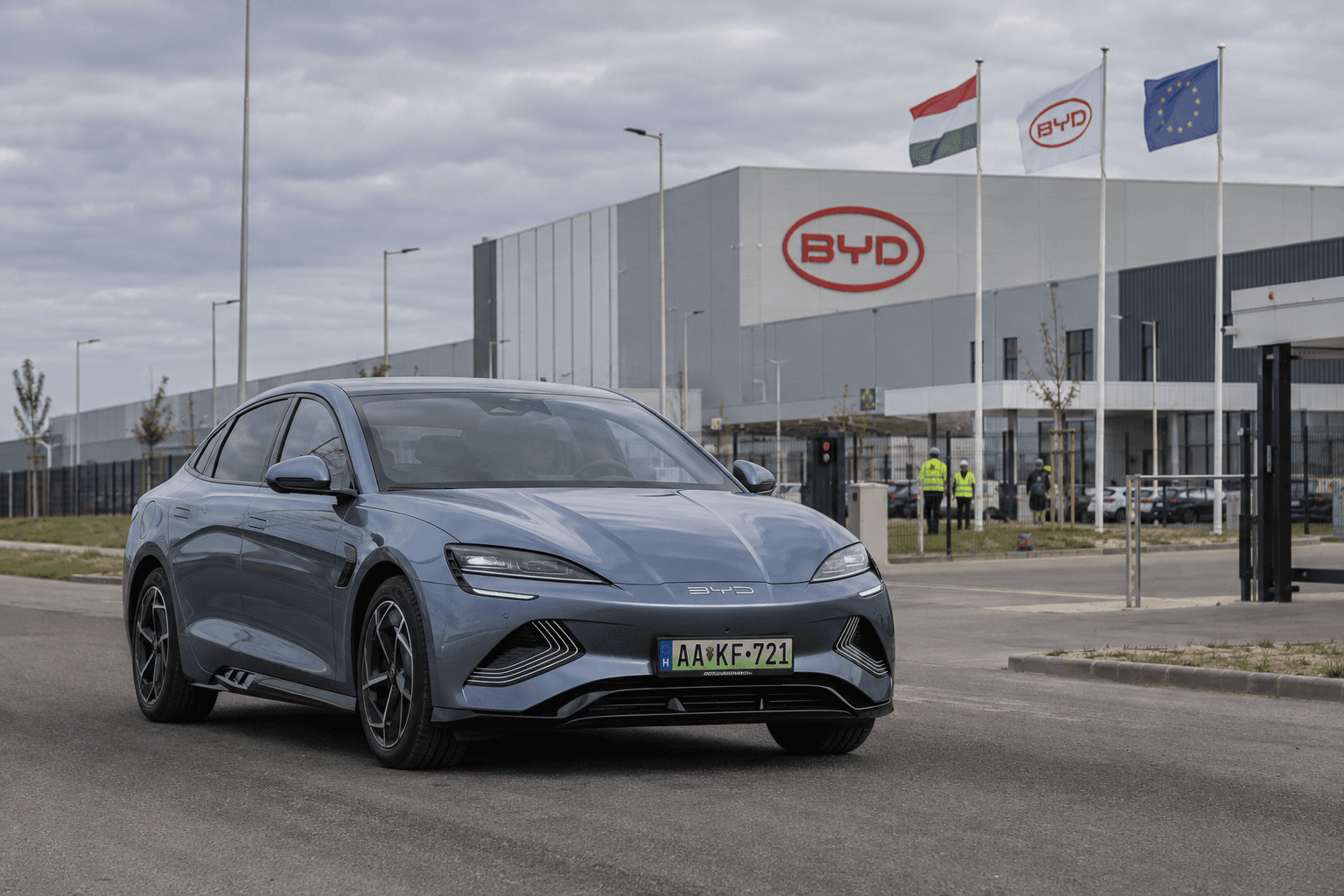
BYD is building its first European passenger car plant in Szeged. Production is still scheduled to begin in 2026, but the new government is reviewing financing commitments and investment agreements made during the tenure of former Prime Minister Viktor Orbán.
The review concerns, among other things, the extent of government support and a reportedly agreed quota of around 10,000 workers from China. Reports of long working hours and unpaid overtime during construction of the plant are also to be investigated more closely.
A potential conflict of interest is also politically sensitive. Former Foreign Minister Péter Szijjártó, who is said to have been involved in the negotiations with BYD, gave up his seat in parliament and reportedly then took on an executive role at the manufacturer. It remains to be seen whether this will lead to formal investigations.
CATL and Semcorp Face Pressure Over Environmental Violations
Alongside labor law and subsidies, the battery industry’s environmental record is becoming a particular focus. A new authority is to inspect battery factories directly and will also be able to order production shutdowns in cases of serious violations.
| Company | Location | Area Under Review |
|---|---|---|
| BYD | Szeged | Subsidies, working conditions and investment agreements |
| CATL | Debrecen | Storage of hazardous waste and other environmental requirements |
| Semcorp | Debrecen | Elevated aluminum levels in groundwater and revoked operating permit |
CATL has been producing in Debrecen since 2026 and must pay a fine for violations of environmental regulations. Semcorp, a major manufacturer of battery separators, has already lost its operating permit after groundwater samples showed significantly elevated aluminum concentrations.
The stricter oversight affects a strategically important industry. CATL and BYD are among the leading companies in a market where LFP batteries strongly dominate in China and are increasingly being used in European vehicles as well.
What the Inspections Mean for Europe’s EV Market
For BYD, Hungary is a central part of its European strategy. Locally produced vehicles can shorten supply routes and, provided the relevant rules of origin are met, are generally not affected in the same way by additional EU tariffs on Chinese imports.
Stricter requirements could make the ramp-up of individual plants more expensive or delay it. At the same time, transparent approvals and robust environmental standards increase acceptance of the projects and reduce political and legal risks over the long term.
Hungary therefore remains an important production location for the growing European EV market. Given the investments already made and their economic importance to the country, a comprehensive withdrawal by Chinese companies appears unlikely.
Hungary Must Balance Investment and Oversight
Magyar had made stronger environmental protection, better labor standards and closer ties with the European Union key political goals. This approach appears to have received broad support, particularly in eastern Hungary, where several large Chinese projects are being developed.
Nevertheless, the government faces a difficult balancing act. Measures that are too severe could deter investors, while overly lenient rules would undermine public and EU confidence.
For BYD and CATL, the change in direction primarily means greater oversight, not necessarily a shift by Hungary away from China. The key issue will be whether the announced reviews are conducted according to consistent criteria and whether existing plants can ramp up production without major delays.