Tesla Raises Cybertruck Prices in the US
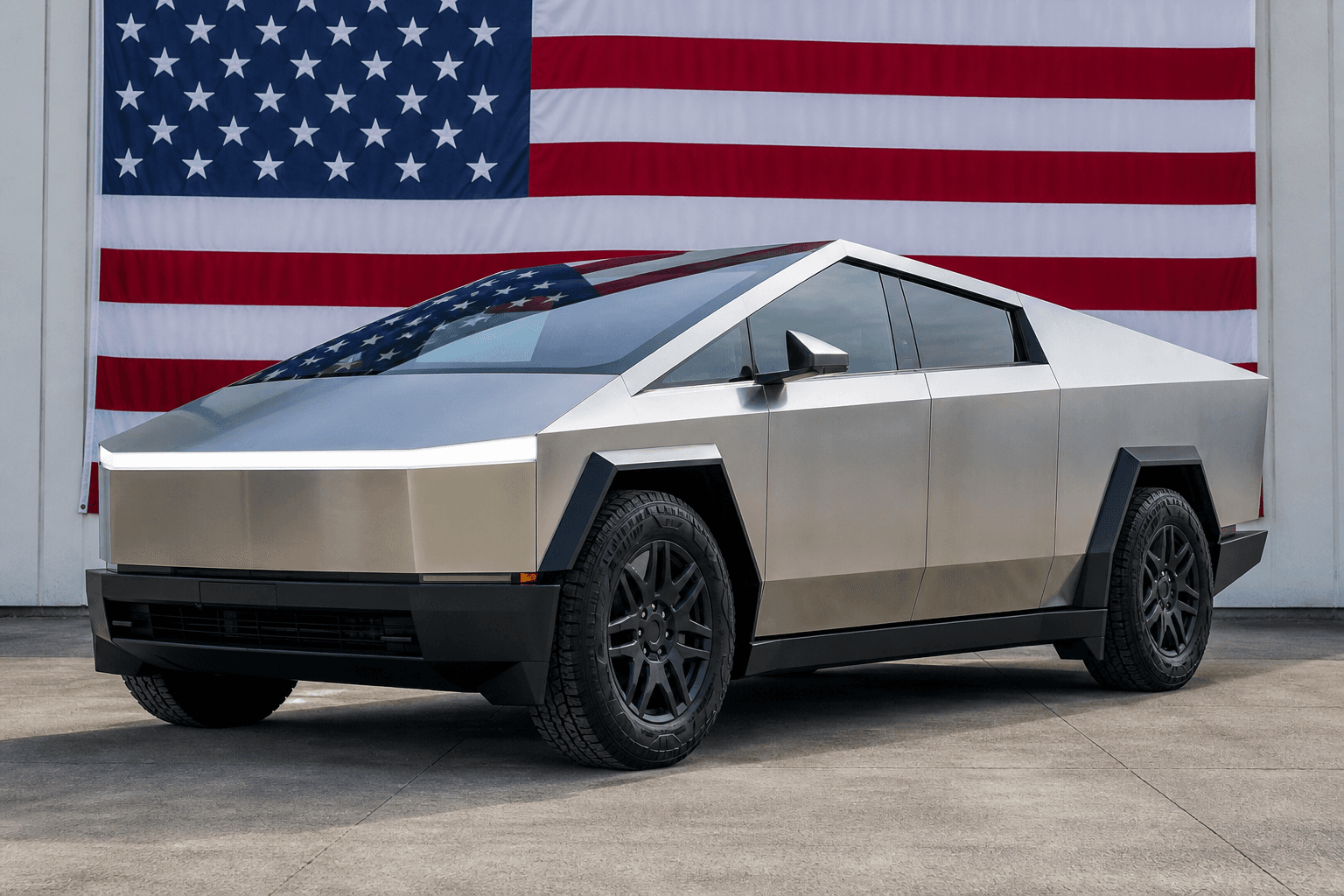
Tesla made the Cybertruck more expensive in the US overnight without announcing any technical changes in the configurator. The two dual-motor variants are affected, with each increasing by $5,000, equivalent to roughly €4,600. The Cyberbeast’s price remains unchanged.
For buyers in the DACH region—Germany, Austria and Switzerland—this is primarily a US issue, as the Cybertruck is still not officially available here on a broad scale. Nevertheless, the pricing dynamics are interesting because they show how Tesla is positioning the model in the market, particularly after previously offering some very aggressive entry-level prices.
New Cybertruck Prices at a Glance
| Variant (US) | Previous price | New price | Change |
|---|---|---|---|
| Dual Motor AWD | $69,990 | $74,990 | +$5,000 |
| Premium AWD | $79,990 | $84,990 | +$5,000 |
| Cyberbeast | $99,990 | $99,990 | no change |
Because the Cyberbeast is not becoming more expensive, the gap between the Premium AWD and Cyberbeast has narrowed from $20,000 to $15,000. This could influence purchasing decisions because the step up to the top variant now appears smaller in purely financial terms.
The Brief $59,990 Price and Why It Stands Out
The rapid sequence of price changes for the dual-motor version is particularly striking. Tesla briefly offered this variant for $59,990 in February, describing it as a strictly time-limited test of an entry-level price and demand.
Less than 10 days later, the price rose to $69,990. With the latest increase, the same variant now costs $74,990. All told, that is a difference of $15,000 within around six months—a substantial range for a single model, even by Tesla’s standards.
Cybertruck Demand: What Tesla’s Figures Reveal and What They Do Not
Tesla does not report Cybertruck sales separately. In its quarterly figures, the Cybertruck is included in a combined category that also covers the Model S, Model X and Semi. As a result, trends can only be assessed indirectly.
For context, Tesla reported 467,762 deliveries of the Model 3 and Model Y in Q2 2026, compared with 12,364 vehicles in the combined “Other Models” category. This means Tesla delivered roughly 37 times as many Model 3 and Model Y vehicles during the quarter as the S, X, Semi and Cybertruck combined.
This is not proof of a specific problem with the Cybertruck because the combined figure includes several models. However, it does show that the Cybertruck has not yet achieved the high-volume role many observers expected after its launch.
Does the Price Increase Mean the Cybertruck Will Be Discontinued?
A price increase alone is not sufficient evidence to conclude that a model will be discontinued. Price adjustments can have many causes, including production costs, equipment mix, supply chains, regional demand or simply margin management. Tesla has not provided an explanation this time.
There is one point worth keeping in mind, however: When a model has relatively low sales volume, its pricing strategy is often more sensitive. Higher prices could indicate either more stable demand for certain configurations or that Tesla wants to position the model more clearly as a higher-margin niche product.
A price increase is a signal about positioning, but it is not evidence that the Cybertruck is being phased out.
What This Means in Practice for Tesla Fans in the DACH Region
For Europe, the news is mainly of indirect relevance. It shows how Tesla continues to balance range, price and target audience for the Cybertruck while its major high-volume models carry most of the load. Anyone interested in Tesla’s model strategy can see a typical pattern here: test demand, adjust prices and reset the gaps between variants.
If you are interested in Tesla’s most important high-volume model in this market, you can find the specifications for the Tesla Model Y in our database. And if you are following the current debate surrounding Tesla technology and platform strategy, it is also worth looking at Tesla’s HW4 and streamlined Full Self-Driving models, as this clearly illustrates how heavily Tesla is scaling its software operations in parallel.
For a broader market overview, it is also worth considering the registration figures: The Western European EV market shows that Tesla continues to rely heavily on the Model 3 and Model Y, while niche models from other manufacturers often achieve significantly lower volumes.
Assessment: Pricing Dynamics Rather Than Panic
The Cybertruck is becoming noticeably more expensive in the US while the top variant’s price remains stable. This narrows the price gap at the upper end and could shift the sales mix toward the Cyberbeast. Whether this signals weaker demand or a more deliberate margin strategy remains unclear, as Tesla has not commented.
As for the rumors, “being discontinued” may sound dramatic, but the available facts do not support that conclusion. The only certainty is that Tesla continues to actively manage Cybertruck demand through pricing.