Tesla Cybercab launches with radically simplified technology
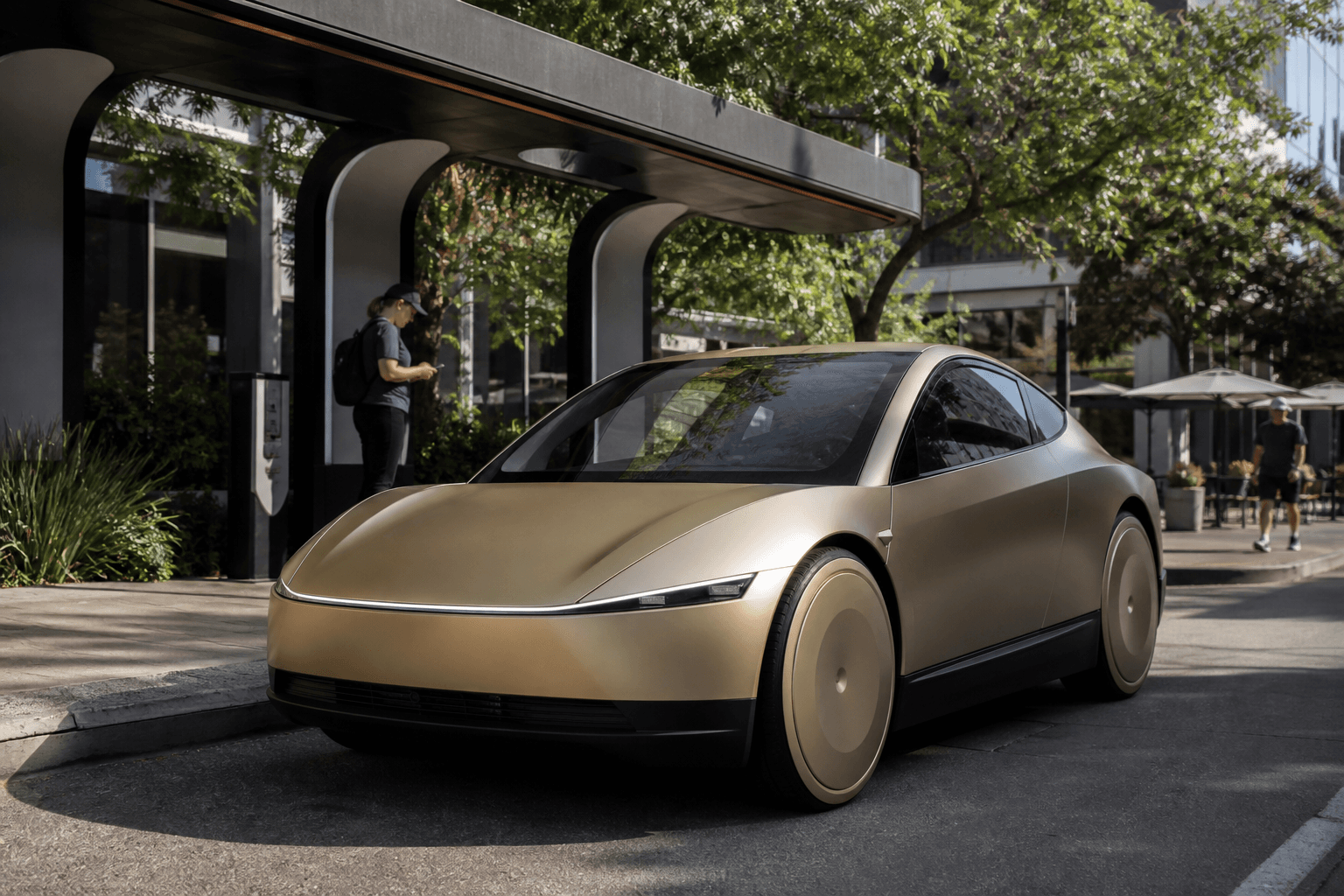
With the Cybercab, Tesla is launching an electric car developed specifically for autonomous ride services into commercial operation in Austin. New technical documents now show how consistently the two-seat robotaxi has been designed for low production costs, minimal maintenance and high fleet efficiency.
Rather than converting an existing production model, Tesla has eliminated the steering wheel, pedals and a conventional hydraulic braking system, among other components. For the DACH region—Germany, Austria and Switzerland—the vehicle is initially of interest primarily from a technological perspective. Deployment in any of these countries would require extensive approvals for both the vehicle technology and autonomous operation.
With the Cybercab, Tesla is optimizing not only the powertrain but the entire vehicle for driverless fleet operation.
Supermanifold V3 consolidates thermal management
The Supermanifold V3 is making its debut in a production Tesla. This central component connects the cooling circuits and the high- and low-voltage electronics, replacing several separate valves, lines and control units.
According to Tesla, 80% of the modular system’s production can be automated. In operation, it is said to be 38% more efficient than other automotive thermal systems. For a robotaxi, fewer connections could also mean fewer potential points of failure and less maintenance.
This is particularly relevant in day-to-day fleet operations: every hour in the workshop reduces the number of potential trips. At the same time, the thermal management system must reliably control the temperature of the battery, powertrain and cabin under frequently changing loads.
Front-wheel drive without rare-earth metals
The Cybercab is powered by a single permanent-magnet motor on the front axle. It delivers 163 kW and uses hairpin stator windings as well as a simplified lubrication circuit.
According to Tesla, the drive unit contains no rare-earth metals whatsoever. This is notable because permanent-magnet motors often rely on materials such as neodymium. Eliminating them could reduce supply-chain dependencies without Tesla having to accept any loss of range.
The complete unit is said to take less than 10 seconds to assemble. Compared with competing electric powertrains, Tesla claims it is 18% more compact and 25% lighter. These figures are manufacturer claims and cannot yet be independently compared.
Just under 48 kWh and a calculated range of around 472 km
A structural battery pack with 4680 cells and dry-cathode manufacturing is integrated into the vehicle floor. Usable capacity is stated as 47.6 kWh. Tesla is designing the battery to withstand the heavy demands of frequent DC fast charging and significant temperature fluctuations.
The development target is a service life of around 805,000 km with continuous use of fast charging. Preliminary multi-cycle measurements initially produced a range of around 673 km; after the customary adjustment to the US EPA testing procedure, the calculated figure is approximately 472 km.
The stated data imply energy consumption of approximately 10.1 kWh/100 km. That would be exceptionally efficient, but it is not yet a homologated WLTP figure. A direct comparison with the range of a European production vehicle such as the Tesla Model Y would therefore be premature.
Brake-by-wire replaces conventional hydraulics
The braking system is particularly unusual. Each brake caliper has its own electromechanical actuator, eliminating the need for a central master brake cylinder and brake fluid. The steering is also fully steer-by-wire and is mounted behind the front drive unit.
The electrical foundation is an enhanced 48-volt architecture. Without a mechanical steering column or pedals, Tesla has greater freedom in designing the cabin. At the same time, redundancy, fail-safe operation and regulatory approval are especially important for systems of this kind.
Nine cameras and radar for passengers
For autonomous driving, the Cybercab uses an enhanced computer based on the Hardware 4 architecture. Tesla has not yet disclosed full performance specifications but positions the system above the version currently used in customer vehicles. The role that future versions of Tesla FSD and Hardware 4 will play is likely to be crucial to scaling the fleet.
The sensor suite includes eight outward-facing cameras and one cabin camera. The latter is intended to check between trips whether items have been left behind or cleaning is required. A green icon on the display indicates when it is active.
A radar module in the headliner classifies seat occupancy. According to Tesla, it can distinguish between an empty seat, an adult and a child seat, adjusting airbag deployment accordingly. The restraint system includes front, knee, curtain and seat-mounted side airbags.
Cybercab dimensions and capacity figures
| Specification | Value |
|---|---|
| Height | around 1.41 m |
| Width | around 1.75 m |
| Ground clearance | around 14.5 cm |
| Step-in height | around 42 cm |
| Unladen weight | around 1,412 kg |
| Gross vehicle weight rating | around 1,692 kg |
| Payload | around 280 kg |
| Trunk capacity | 572 liters |
| Maximum trunk load | 100 kg |
Despite its compact exterior dimensions, the cabin offers around 110 cm of legroom and 97 cm of headroom. The two seats can be moved together, while their backrests can be adjusted separately. Tesla has omitted seat heating and ventilation because the vehicle can be preconditioned before pickup.
According to the manufacturer, the trunk can accommodate two larger suitcases and two pieces of carry-on luggage. Alternatively, it is said to fit a folded stroller or a compact wheelchair. Lower ISOFIX anchor points are not provided, so child seats must be secured with the seat belts.
22-inch display and Starlink compatibility
Controls and entertainment are centered on a 22-inch touchscreen. USB-C ports supply power to mobile devices and connected controllers, but there is no wireless smartphone charging pad.
For the future, Tesla is preparing support for external game consoles and an integrated Starlink connection. This could be useful during autonomous operation because passengers can use their time in a completely different way than they would in a conventional car.
The Cybercab is primarily a fleet machine
Many of these decisions may seem unusual from the perspective of a private customer, but they make sense in the robotaxi context. A small battery, low energy consumption and automated production → lower costs per vehicle and potentially cheaper fares.
Whether this concept succeeds will not depend on the hardware alone. The reliability of the autonomous system, regulatory approvals and an infrastructure for cleaning and charging the vehicles will be crucial. Nevertheless, the Cybercab demonstrates just how much an electric car changes when no human driver is included in the design from the outset.