Tesla is building a European charging network for the Semi
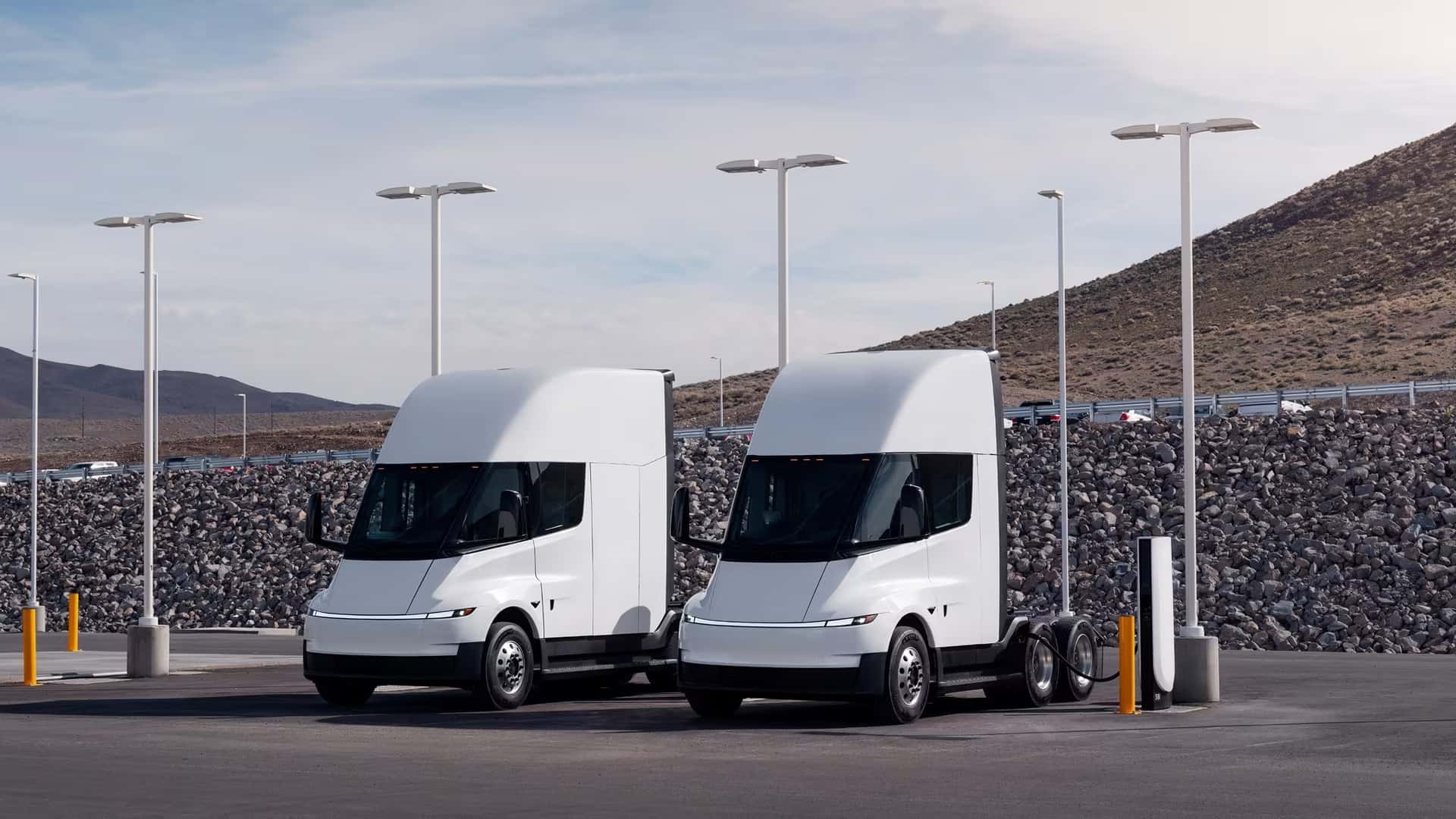
The Tesla Semi is set to arrive in Europe in 2027. However, for the electric semi-truck to operate beyond short factory routes, Tesla needs powerful charging infrastructure along major transport corridors.
The first phase will include more than 100 Megachargers at 21 locations. The stations will be spread across Germany, France, the United Kingdom, Sweden, Belgium, the Netherlands and Luxembourg.
Within the DACH region—the German-speaking markets of Germany, Austria and Switzerland—only Germany is initially included. Austria and Switzerland do not yet appear on Tesla’s first map for Europe.
Up to 1.2 MW of charging power for the Tesla Semi
The European Megachargers are expected to provide up to 1.2 MW of power. Tesla combines a 1,000-volt power cabinet with two charging points, each capable of delivering up to 1,500 amps.
According to the manufacturer, this can charge the Semi’s large battery to around 60% in approximately 30 minutes. In principle, that fits with the legally mandated breaks for long-haul drivers, provided the location, charging power and route planning all align.
For comparison, even in passenger cars, a modern 800-volt architecture can significantly reduce charging times. For heavy-duty electric trucks, however, energy demand, current levels and the requirements for grid connections and cooling are considerably greater.
Megacharger and Basecharger compared
| Feature | Megacharger | Basecharger |
|---|---|---|
| Use case | Fast charging on the road and at logistics centers | Longer parking periods at depots |
| Maximum charging power | Up to 1.2 MW | 120 kW DC |
| Configuration | Power cabinet with two charging points | Technology housed in a single enclosure |
| Charging claim for the Semi | Around 60% in approximately 30 minutes | Around 80% in approximately four hours |
| Price | €163,000 per package | €17,000 per unit |
Tesla requires a minimum order of two Basechargers. This puts the minimum purchase price at €34,000. Depending on the location, grid connections, construction work, permits and potential battery storage solutions could add substantial costs.
Connector initially limits access for other electric trucks
In Europe, the Semi and Megacharger use an MCS 3.2 connector. As a result, other electric trucks will initially be unable to use these Tesla charging points without additional measures. Tesla has not yet provided specific details about access terms or whether it may open the network to other vehicles at a later date.
Tesla also plans to offer CCS2 adapters for the Semi. This will allow operators to charge their vehicles at existing European CCS2 charging points, although usually at significantly lower speeds than at a Megacharger.
Building a proprietary network echoes Tesla’s approach to passenger cars, but heavy-duty transport depends even more on available space, grid capacity and predictable routes. The planned 1,500 kW charging network from BYD also demonstrates the growing technical relevance of charging power above 1,000 kW, although that network is primarily intended for electric cars.
Private Megachargers for logistics centers
Tesla not only intends to operate the charging hardware itself but also to sell it directly to businesses. Haulage companies, fleet operators and logistics centers will therefore be able to install their own charging points at depots or transshipment hubs.
Orders for Megachargers and Basechargers can already be placed. The first deliveries of the European charging hardware are scheduled for mid-2027. However, Tesla has not yet published a specific timeline for the 21 announced locations.
This network is crucial to the Semi’s success in Europe. Although more than 100 charging points are only a starting point for the entire continent, they could cover key corridors and major logistics customers. If the network expands in parallel with vehicle deliveries, Tesla will begin with an important advantage: the trucks and charging infrastructure will come from a single supplier.