Tesla Registers Cybercabs for Its Robotaxi Fleet in Texas
Tesla appears to be taking the final organizational steps toward launching its Cybercab. New vehicles specifically intended for the robotaxi service have appeared in Texas vehicle registration data, with Tesla assigning them to its commercial robotaxi fleet.
According to publicly accessible fleet and registration data, 45 Cybercabs have now been registered for Tesla’s robotaxi operation in Texas. The timing is notable, as it comes immediately before an announced event in Austin where Tesla is expected to officially unveil the Cybercab.
Why the 45 Entries Matter—and What They Do Not Mean
Registration in government databases is a fairly concrete indicator: These vehicles are not merely prototypes but are being prepared administratively as part of an operational fleet. At the same time, it is important to note that a registered fleet does not automatically mean the robotaxi service is immediately live for everyone.
It is more likely that Tesla is assembling a sufficiently large number of vehicles for demonstration rides, pilot operations and controlled rollouts. Particularly for a service that scales largely through software approvals, geofencing and local regulations, public rides may well begin gradually.
Cybercab as the Robotaxi Backbone: Built Uncompromisingly for Autonomy
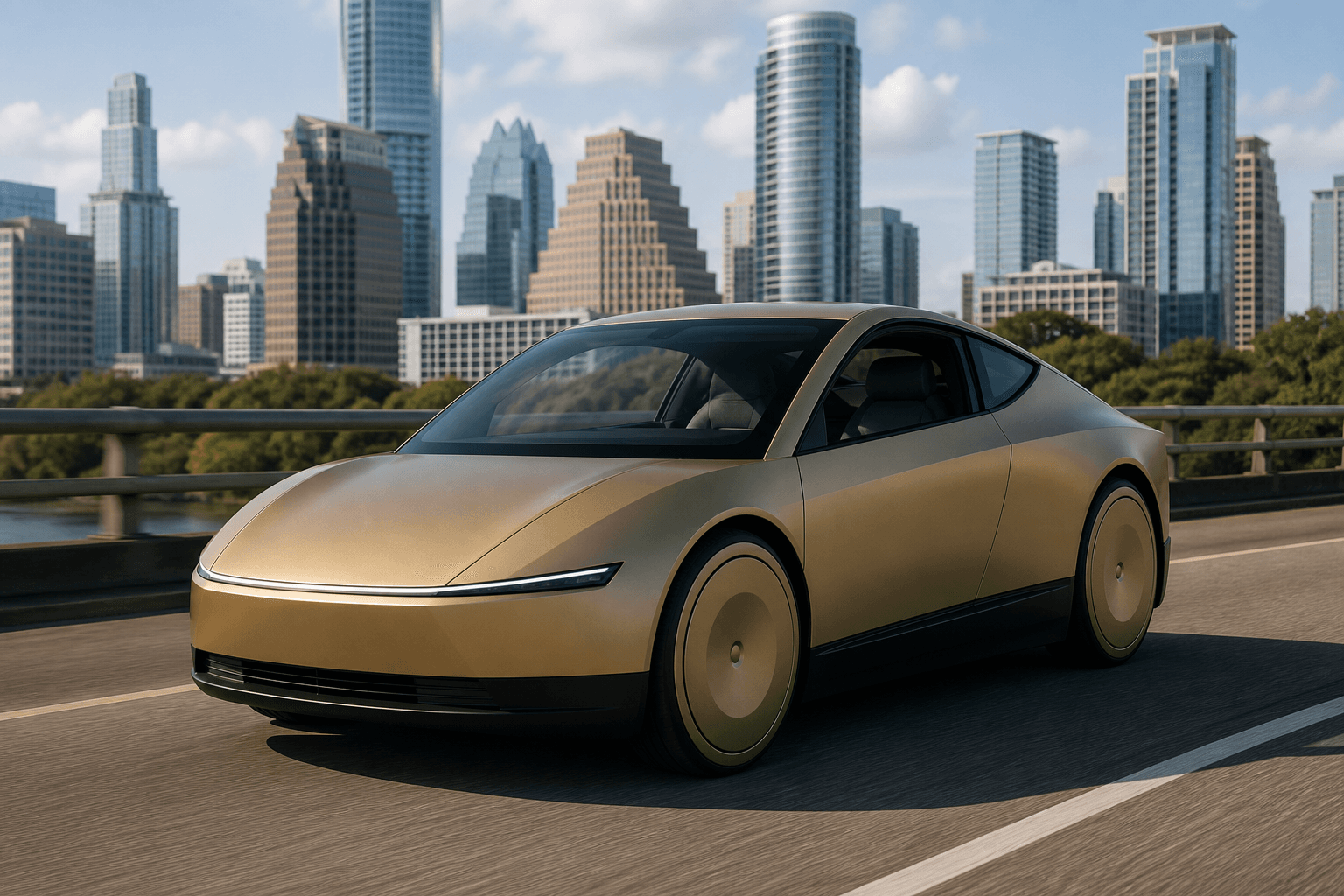
The Cybercab is intended to serve as the long-term core vehicle for Tesla’s ride-hailing network. Unlike the converted vehicles used to date, the concept follows an uncompromising approach: a two-seater designed for autonomous operation without conventional controls such as a steering wheel or pedals.
This is important for everyday use: A purpose-built robotaxi can optimize the interior, access, cleaning, sensor layout and maintenance much more specifically for fleet operations. That is a different focus from a private vehicle expected to handle everything from family outings to highway trips.
Controls and UI: Sightings Point to New Details
The Cybercab has been spotted with increasing frequency in Texas in recent weeks. Documented details include variants with a multicolor RGB light bar at the front, as well as glimpses of a split-screen interface. Both fit the robotaxi use case: Light signatures can serve as status indicators, while a split UI clearly separates driving logic—or vehicle status—from the passenger view.
Austin as the Starting Point: Geofences and Pilot Operations as a Blueprint
Austin is a logical location: Tesla has already been conducting tests there for some time, and the city is considered a natural candidate for an initial public expansion. Operating zones in Texas metropolitan areas have also recently been expanded, which in practice means more covered roads and more potential pickup points once approvals are granted.
If Tesla does offer autonomous demonstration rides on public roads at the event, it would mark a visible step from internal testing toward genuine, controlled fleet use. Whether this immediately leads to a service that anyone can book will ultimately depend less on the number of vehicles than on software maturity, safety documentation and local regulatory conditions.
What It Means for the DACH Region: Exciting, but Not Necessarily Relevant in the Near Term
For the German-speaking DACH region—Germany, Austria and Switzerland—the news is primarily a sign of how seriously Tesla is treating robotaxis as a standalone product. However, a rapid transfer to Europe is not guaranteed because vehicle approval and regulatory processes work very differently here.
Nevertheless, the move is strategically significant: If Tesla succeeds in establishing stable commercial operations in a US market, it will increase pressure on other providers and, in the medium term, on European lawmakers to create practical rules for highly automated fleets.
Related Context at Elektroquatsch
- Analysis of Tesla’s autonomy roadmap: Tesla FSD v15, HW4 and Optimus
- Robotaxis as a market of their own: Western Europe’s EV Market, Tesla and the Competition
- The related vehicle ecosystem: Tesla Model Y (frequently used as the basis for pilot fleets to date)
Forty-five registered Cybercabs do not amount to a launch button for mass operations, but they are a clear sign that Tesla is preparing the fleet for the next step.