Waze alerts directly in Rivian vehicles, without smartphone mirroring
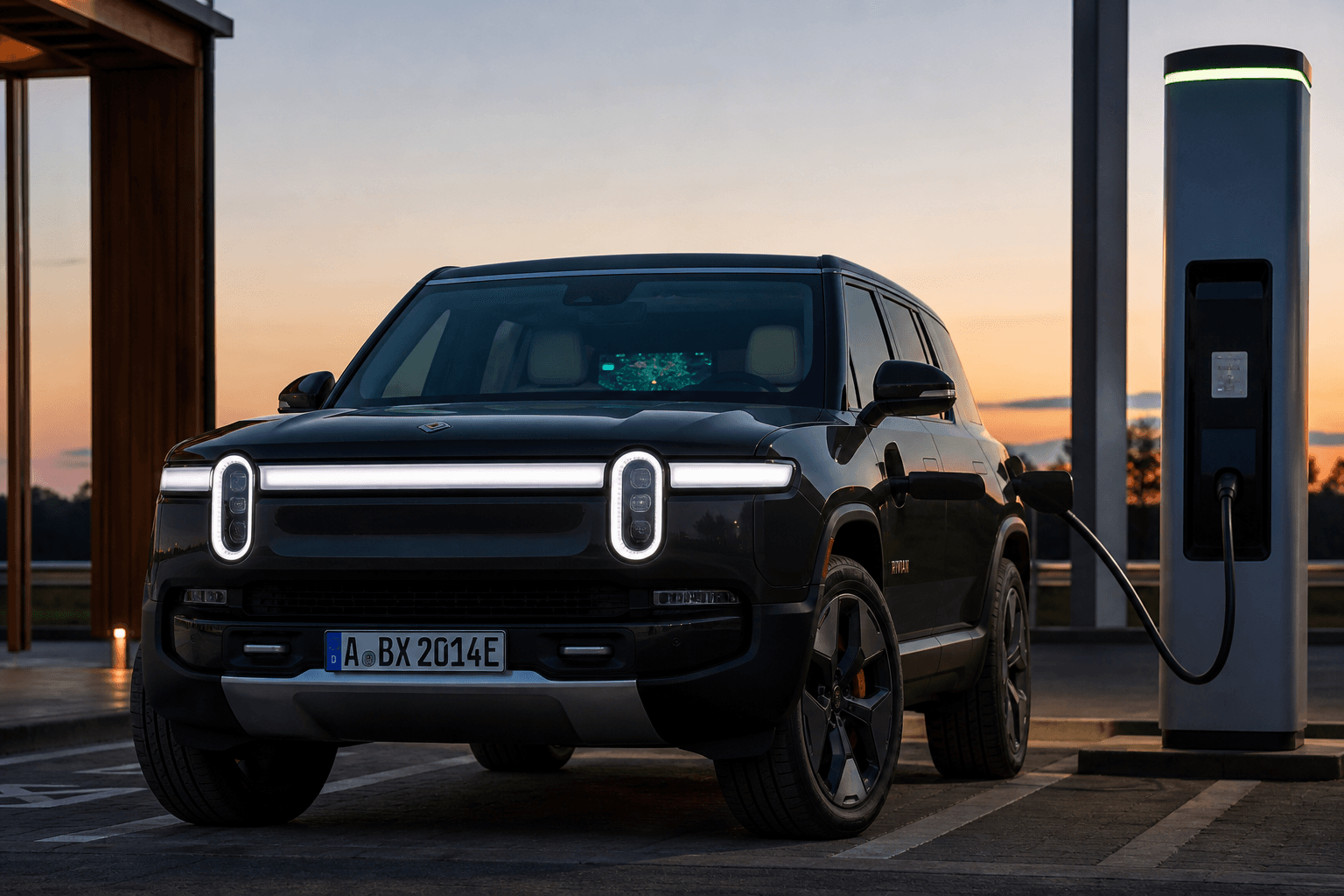
Rivian is rolling out a major software update that brings a feature to its vehicles that many drivers previously knew only from smartphone navigation: real-time Waze alerts for hazards and traffic incidents. The feature will become part of Rivian’s navigation system on the central display, meaning drivers will not necessarily need a separate app on their phone.
Waze is particularly widespread in the US, but the principle is also easy to understand in everyday driving in the DACH region—Germany, Austria, and Switzerland: The better the system responds in real time to congestion, road closures, or sudden obstacles, the more relaxed the journey becomes. It is important to put this into context: Such alerts are primarily a safety and convenience feature, not some kind of “trick” for illegal behavior.
Update 2026.31: First-generation R1 vehicles set to benefit as well
According to Rivian, software version 2026.31 will bring Waze alerts to all R1 models, including older R1S and R1T vehicles with earlier hardware. This is particularly relevant for early adopters, as access to modern features often depends most heavily on advances in hardware.
It is not yet clear how deep the integration will go. For example, it remains uncertain whether drivers will be able to submit their own reports directly from the vehicle or whether the system will initially only display alerts, making it more of a read-only integration.
Rivian OS 2.0 is coming to the R1 lineup, standardizing the interface
Waze is only one part of the package. The update is also expected to bring Rivian OS 2.0 to the R1 product line, including redesigned graphics and controls described as faster and more intuitive. The R2 already uses this generation of the operating system, and Rivian intends to standardize the experience across its model range in the future.
From a technical perspective, this is a sensible step: A shared software core reduces fragmentation, simplifies maintenance, and may increase the likelihood that older vehicles will continue to receive useful updates for longer. For users, this primarily means fewer differences in functionality between model years and a more consistent user experience.
No CarPlay or Android Auto as Rivian continues to rely on its own platform
Rivian is sticking to its strategy and continues to forgo Apple CarPlay and Android Auto. For many buyers, this is a fundamental consideration, particularly in the DACH region, where smartphone integration is standard among many brands. Rivian’s approach instead is to implement the most important features directly in the vehicle so effectively that mirroring becomes less necessary.
The Waze alerts fit this strategy perfectly: Features that were previously often a key reason for using CarPlay or Android Auto are moving into the vehicle’s native software.
What R1 drivers cannot retrofit
Despite the software standardization, one difference from the R2 hardware remains: R1 models will not receive the so-called Halo Wheels, the multifunction scroll wheels on the steering wheel that allow drivers to control a wide range of functions without using the touchscreen. The R1 will continue to use more conventional steering-wheel buttons and scroll pads.
What this means for Europe and the DACH region
Rivian is not yet a mass-market brand in the DACH market in the way Tesla, VW, or BMW is, but updates like this demonstrate why software-defined vehicles are becoming increasingly important. When manufacturers consistently develop navigation, driver assistance, charging planning, and infotainment within their own systems, they create benefits similar to Tesla’s approach: The vehicle improves over time instead of simply getting older.
Anyone interested in this approach to software may also find our look at the Tesla ecosystem worthwhile, such as the Tesla HW4 update concerning FSD models. And when it comes to the role of modern charging architectures, the comparison of 800 volts versus 400 volts in everyday use provides helpful context, as software and charging hardware are becoming increasingly interconnected in practice.