Xiaomi Is Building a Dealer Network for Its German Launch
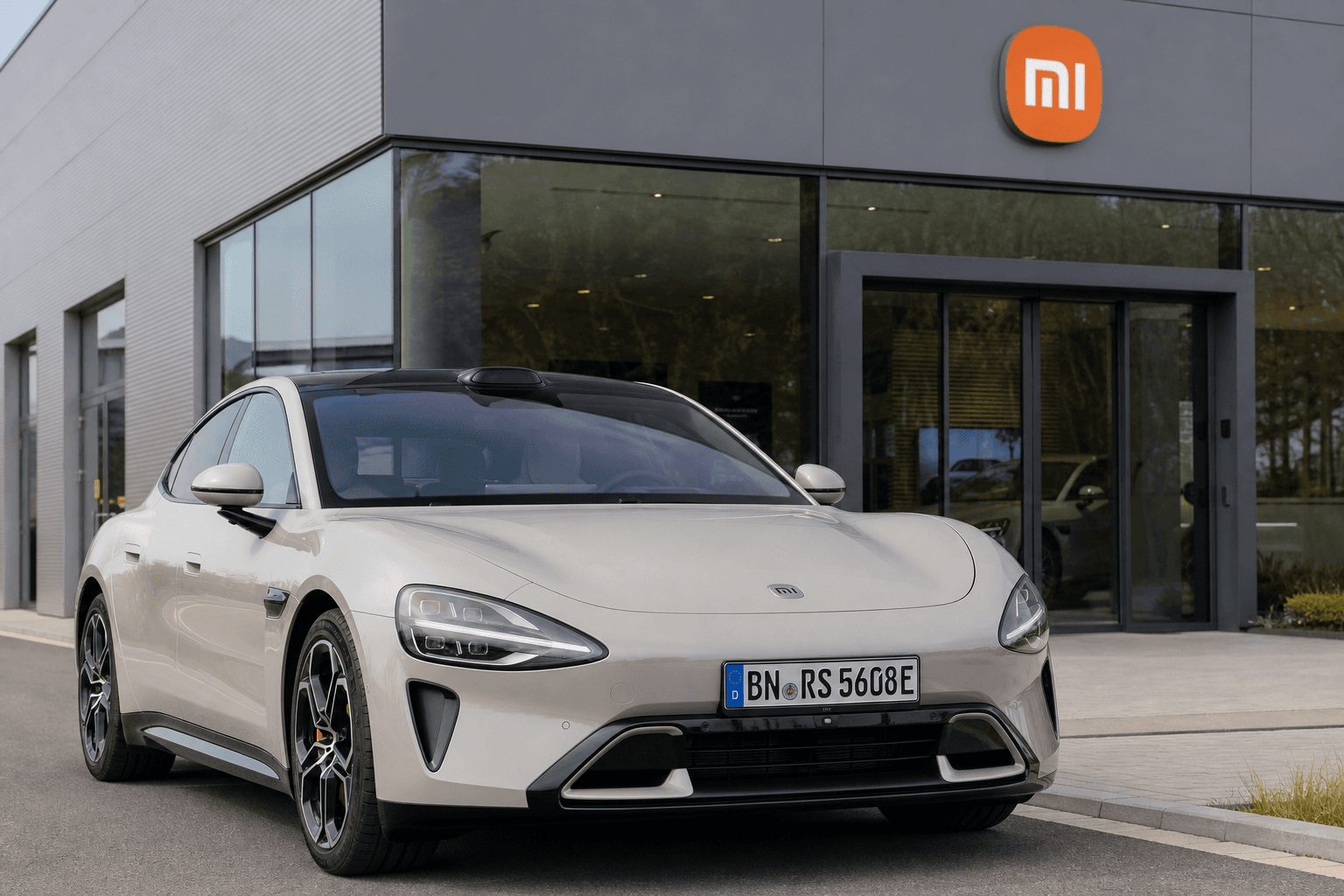
Xiaomi has long been more than a smartphone maker, and its next major step in Europe is taking shape: The company is working to establish a dealer network for the German launch of its electric cars. For the local market, this is no minor detail but a fundamental requirement for turning interest into actual deliveries.
Particularly in Germany, Austria and Switzerland, the combination of sales, test drives and, above all, workshop and warranty services determines whether a new brand gains a foothold in everyday life. A functioning network is therefore at least as important as range, charging performance or infotainment.
Why a Dealer Network Is So Important for Xiaomi in Germany
Market launches work differently in Europe than they do in China. Many buyers expect a physical point of contact where they can see and experience the car, configure it, arrange financing and, if necessary, file a complaint directly. This applies even when a manufacturer primarily sells its vehicles online.
A dealer network does not necessarily mean a traditional dealership model. Depending on the strategy, hybrid approaches are common, such as showrooms for advice and test drives combined with separate service partners for maintenance and collision repairs.
How Customers Benefit
- Easier access to test drives and in-person advice
- Faster handling of servicing, recalls and warranty work
- Reliable spare-parts availability through local partners
- Clear processes for leasing, financing and trade-ins
Assessment: A European Launch Requires More Than a Good Car
The move also sends a signal to the market: Xiaomi appears to be building structures that can support growth rather than relying solely on isolated pilot projects. This is precisely where many new manufacturers encounter obstacles in Europe: Customer satisfaction cannot grow without service capacity and reliable supply chains.
It will also be interesting to see how Xiaomi structures its sales operations. Tesla has demonstrated in Europe that direct sales through company-owned locations can work when software, processes and service are well integrated. Other manufacturers deliberately use partner networks to achieve broader coverage more quickly. The approach Xiaomi chooses will help determine how rapidly the rollout progresses.
What Remains Unclear and What We Are Watching
At present, many details have yet to be officially communicated on a broad scale, including specific locations, the number of partners and the precise timetable. It also remains unclear which models Xiaomi will launch in Germany and what equipment specifications and prices will look like for the DACH region.
For buyers, the key issue will be whether Xiaomi offers a robust service concept from the outset, including trained personnel, diagnostic tools and spare-parts logistics. For new EV brands in particular, this is where everyday enthusiasm can quickly turn into frustration.
Context: Xiaomi Is Not Alone as Competition Intensifies
In Germany, Xiaomi is entering a market in which a growing number of new players are making serious moves. Pressure from China is especially visible, with brands now competing not only on price but increasingly on software, charging speed and driver-assistance systems.
Anyone interested in new brands should keep an eye on the trend of manufacturers currently preparing or expanding their European rollouts. Examples from our news coverage include the announced European SUV Xpeng L05 and the growing momentum in 2026 EV sales, which show how quickly the balance of power can shift. Those primarily wondering how much of this really matters in everyday life can find a useful introduction in our guide to EV range anxiety.
For Xiaomi in Germany, a dealer network is practical proof that launching an EV is not only about hardware, but also about dependable structures for everyday use and servicing.