Range Rover Electric Now Available to Order: Luxury SUV With 800 Volts and 600 km WLTP Range
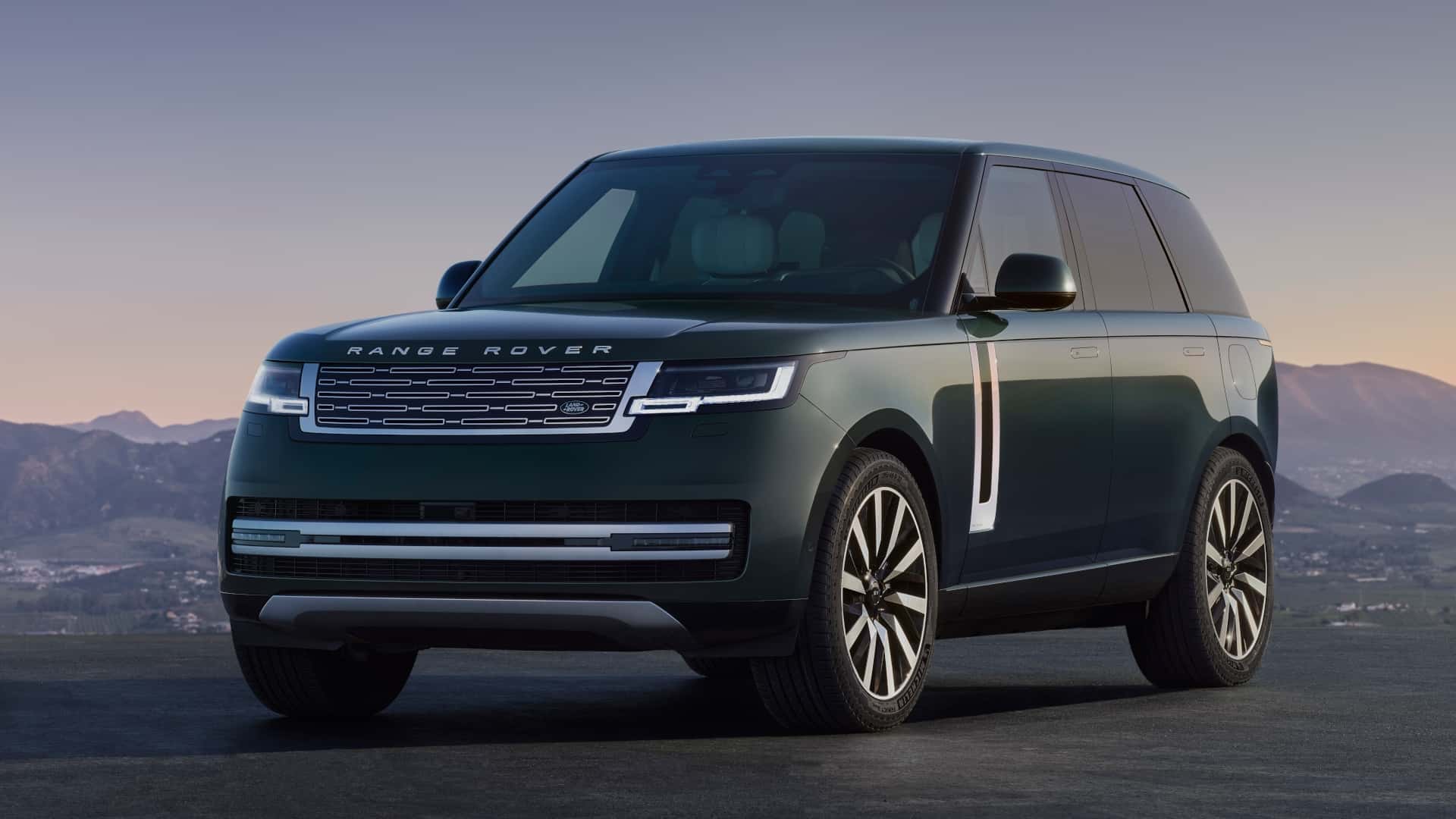
Now it is getting serious: The Range Rover Electric has been officially unveiled and is available to order immediately. Prices start at €163,500, clearly positioning the model as an electric luxury flagship. The familiar format is less noteworthy than the technology: an 800-volt architecture, a large battery and a clear focus on performance and fast charging.
For the DACH market—the German-speaking region comprising Germany, Austria and Switzerland—the key point is that this is not merely a “compliance EV” exercise, but a fully fledged Range Rover with an electric powertrain. The model will be built at the Solihull plant near Birmingham.
Powertrain and Performance: 405 kW and 850 Nm With All-Wheel Drive
The Range Rover Electric is powered by two permanent-magnet synchronous motors, each rated at 260 kW. Total system output is 405 kW, while maximum torque is 850 Nm. The objective is clear: effortless acceleration without compromising the vehicle’s core role as a comfortable long-distance SUV.
It is expected to accelerate from 0 to 100 km/h in 4.5 seconds. That is a very strong figure for a vehicle in this weight class and is on par with powerful top-tier combustion-engine variants, but with the immediate power delivery typical of an EV.
Battery and Charging: 118.5 kWh Usable and 10% to 80% in 22 Minutes
A battery with a usable capacity of 118.5 kWh is installed in the underbody. The manufacturer specifies 344 prismatic cells and describes it as a “double-stacked battery,” meaning a design with two levels or two stacks. What exactly this entails remains unclear, but the packaging is evidently designed to accommodate a large energy-storage system within the familiar vehicle platform.
For charging, the Range Rover Electric uses an 800-volt system and is expected to charge from 10% to 80% in 22 minutes at high-power charging stations delivering up to 350 kW. What matters in everyday use is the practical result: On long journeys, short stops should be enough to add a substantial amount of range. The manufacturer also quotes a “real-world” range of up to 535 km, while up to 600 km should be possible under the WLTP test cycle.
Platform and Off-Road Focus: Electric Without Abandoning the Concept
Technically, the vehicle is based on the MLA-Flex platform, which also supports combustion engines, mild hybrids and plug-in hybrids. That is not a disadvantage as long as the electric components are properly integrated: The Range Rover remains a Range Rover, including its spacious interior, comfort-focused tuning and off-road capabilities.
The battery’s low center of gravity should benefit driving dynamics. It is complemented by dual-chamber air suspension designed to combine comfort and stability.
Traction, One-Pedal Driving and Off-Road Capability: Millisecond-Level Control
For traction and off-road driving, the Range Rover Electric combines predictive all-wheel-drive control with slip management. Two systems are specifically named: Intelligent Driveline Dynamics (IDD) for distributing power and Integrated Traction Management (ITM), which is designed to adjust motor speeds within 50 milliseconds.
Notably, the control system works in conjunction with one-pedal driving. Precisely adjustable regenerative braking can be particularly helpful on loose surfaces because torque can be controlled with great accuracy. Capabilities for steep terrain are also specified: gradients of up to 33 degrees and descents of up to 45 degrees.
Design and Dimensions: Familiar Appearance, Sharper Aerodynamics
Visually, it retains the familiar Range Rover look, supplemented by detailed measures to improve aerodynamics: an optimized grille, revised wheels and a specially designed underbody. These changes should reduce aerodynamic drag, which directly benefits range at high highway speeds.
Its dimensions are similar to those of the combustion-engine variants: approximately 5.06 m long, 2.05 m wide and 1.87 m tall, with a wheelbase of around 3.00 m. Cargo capacity is quoted at 818 to 1,841 liters, depending on the configuration.
Equipment and Variants: From SE to SV Ultra, Plus a Limited First Edition
Both short- and long-wheelbase versions will be available at launch. The trim range extends from SE and HSE to Autobiography and the particularly luxurious SV variants, including SV Ultra and SV Black. A First Edition has also been announced, limited to 2,500 vehicles and featuring special colors and interior materials.
Assessment: Expensive, but Not an Outlier in Its Segment
There is no question that €163,500 is a bold price. In the context of the Range Rover lineup and the luxury SUV class in general, which commands high prices, the electric model’s starting price is less of a “shock” than it might initially appear. The crucial factors will be how consistently the Range Rover Electric delivers on its charging and range promises in real-world use, and how well the 800-volt system works with Europe’s high-power charging network.
Why 800 Volts Makes Particular Sense Here
- shorter charging times thanks to the potential for higher charging power at lower current
- better efficiency due to lower losses in cables and power electronics
- greater long-distance comfort because charging stops become more “brief and predictable”
Recommended Reading on Fast Charging and Range
If you want a better general understanding of 800-volt technology, our comparison 800V vs. 400V: Which EV Architecture Do You Need in 2026? can help. And if you are more interested in the psychological aspect, EV Range Anxiety: Causes, Facts and Strategies offers a practical perspective on the subject.