Formula 2030 Sets the New Design Direction
Polestar is preparing to unveil the Formula 2030 concept vehicle in fall 2026. The study is intended to be the first major design statement under Philipp Römers, who now leads the brand’s creative direction.
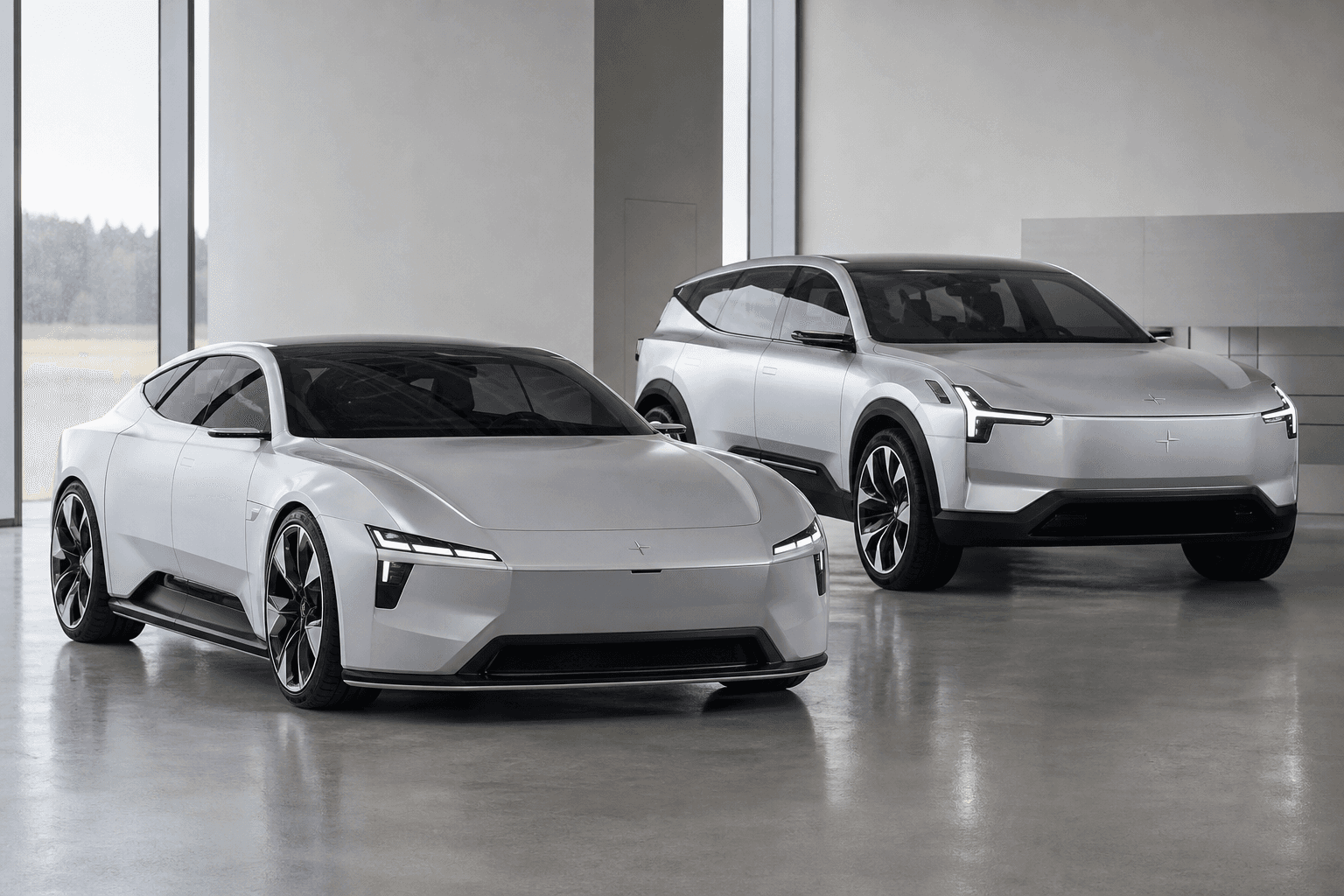
Formula 2030 will not initially be a specific production model. Instead, the show car is intended to demonstrate how Polestar’s design language is evolving and which elements could later appear on the new Polestar 2 and the planned first-ever Polestar 7.
Polestar is not planning a radical break with its existing style, but rather a sportier and more emotional evolution of its familiar Scandinavian design.
Greater Independence from Volvo
The brand intends to retain its fundamentally minimalist appearance. Rather than relying on aggressive shapes or excessive details, the next generation is expected to stand out more through its proportions, stance, and visual dynamism.
This could help Polestar distinguish itself more clearly from Volvo. The two brands continue to share technical and design roots, but Polestar wants to be perceived more clearly in the future as an independent, performance-oriented electric car brand.
Polestar 2 and Polestar 7 Pursue Different Goals
| Model | Planned Role | Potential Technology |
|---|---|---|
| Polestar 2 | Successor to the electric midsize model | Dedicated EV platform and possibly 800 volts |
| Polestar 7 | More compact and likely more affordable electric SUV | Potentially more cost-effective 400-volt architecture |
The current Polestar 2 is already a fully electric car. However, its CMA platform was originally developed for different types of powertrains. A successor based on a dedicated EV platform could offer advantages in packaging, weight, efficiency, and charging performance.
A switch to 800 volts is also under discussion. This type of architecture can sustain high charging power for longer while reducing current. Our comparison of 800-volt and 400-volt architectures in electric cars shows what benefits this can provide in everyday use.
For the Polestar 7, by contrast, a more attractive starting price is likely to be more important than maximum charging performance. A modern 400-volt system would therefore not be an inherent disadvantage, provided the charging curve, battery cooling, and energy consumption are well optimized.
Many Technical Specifications Have Yet to Be Confirmed
Polestar has not yet published dimensions, battery capacities, ranges, or prices for either upcoming model. The reported voltage architectures have also not been definitively confirmed.
For prospective buyers in the DACH region—Germany, Austria, and Switzerland—the key question will be whether the Polestar 7 actually moves into a higher-volume price segment. Formula 2030 is initially expected to reveal in fall 2026 what Polestar wants its cars to look like. Reliable technical specifications for the production vehicles will likely follow later.