BMW M is rethinking performance for EVs, not copying combustion cars
BMW M has made up its mind: the motorsport DNA typical of M models should remain recognizable in the age of electric mobility. The goal is clearly driven by technology: motorsport engineering should be usable in everyday life, so customers do not have to choose between a “sports car” and a “normal” production car.
The key is to avoid disguising electric performance as a combustion engine and instead make targeted use of the advantages offered by electric drivetrains. This is where things get interesting, because BMW M is also working on emotional appeal without introducing artificial drawbacks.
Neue Klasse as the foundation, with M adding its own technology layer
BMW’s “Neue Klasse,” its next-generation vehicle architecture, gives the company a fresh technological playground on which M plans to build its own solutions. This is not just about power, but about the interaction between the drivetrain, control systems, and driving feel—in other words, precisely what defines an M model both on the road and on the track.
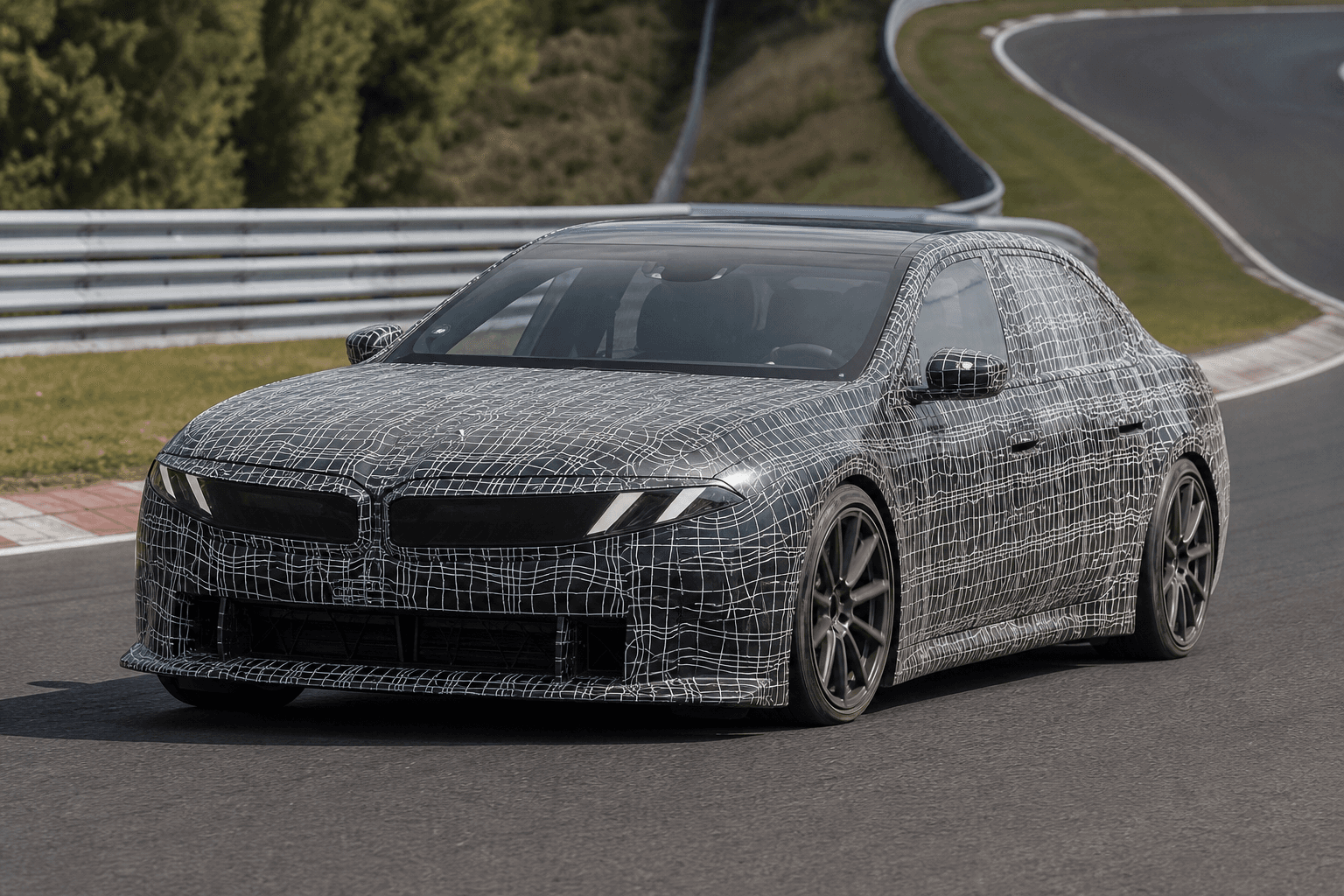
For a future all-electric, high-performance M model, BMW M is previewing a setup that sounds very much like “software first”: four electric motors, torque vectoring, and a central controller running proprietary software. With multiple motors in particular, the control system is the real performance lever, because it makes millisecond-by-millisecond decisions about how much torque is sent to each wheel.
What does that mean in real life?
Multi-motor drivetrains can regulate traction and stability with extreme precision. On wet roads or when accelerating out of tight corners, the software can make the car feel as though it is being “pulled” through the turn rather than merely “pushed,” without simply cutting power through electronic stability control interventions. The result is faster, more controllable acceleration and, ideally, less nervous behavior at the limit.
Motorsport details are moving into production cars, both visually and materially
BMW M continues to emphasize the principle that “form follows function.” For the BMW M Concept Neue Klasse, the brand highlights specific elements inspired by limited-production models and motorsport: a wider-looking body, yellow lights, track lights like those on its LMDh-class endurance racing car, and aerodynamic details reminiscent of the M4 GT3.
One material change in the interior is particularly interesting: natural-fiber bucket seats, made from a material BMW has used in GT4 motorsport for years and now describes as ready for production. This is more than a marketing point, because lightweight, strong materials matter twice as much in EVs: lower mass benefits efficiency, braking, and cornering dynamics.
Sound in electric M cars: emotional, but not a “combustion-engine copy”
When it comes to sound, BMW M is clearly opposed to simply recreating familiar combustion-engine noises. By this logic, an EV should not “pretend” to be something else; instead, its acoustics should emphasize what is actually happening. The sound can reinforce what the vehicle is doing at that moment, such as changes in load and dynamic behavior.
For everyday driving, this means that any sound should provide feedback rather than serving merely as background theater. This can be particularly helpful in very quiet, very fast EVs, making it easier to judge speed subjectively without entirely sacrificing efficiency and refinement.
No fake shifting with interruptions in power delivery—just driving modes and throttle maps
BMW M also wants to take a different approach to “shifting” than some of its competitors. Instead of simulating gear changes that interrupt power delivery—something technically unnecessary in an electric drivetrain—it will use different driving modes and throttle maps. The goal is to provide tangible feedback through changes in load and speed without deliberately sacrificing performance.
It is a pragmatic approach: emotion and feedback, yes—but without intentionally making acceleration worse.
Combustion engines will remain, Euro 7 is coming, and customers will retain the choice
Despite its electric offensive, BMW M does not intend to abandon combustion engines immediately. Its inline-six and V8 engines are to be upgraded to meet Euro 7, the European Union’s latest vehicle-emissions standard. BMW M cites several reasons, including the lack of charging options for some customers and continued demand for traditional engine sound.
That is understandable in the DACH region—the German-speaking markets of Germany, Austria, and Switzerland. Although public charging networks and home charging continue to improve, drivers who park on the street and certain usage scenarios still face obstacles. BMW M is therefore maintaining a choice of drivetrains, at least during a transitional period.
Assessment: M performance is becoming more software-driven, but the ambition remains
Overall, the direction seems consistent: in the electric era, BMW M does not want to offer merely “lots of kilowatts,” but rather a system of hardware and control logic that defines driving feel and control. Four motors, torque vectoring, and a proprietary control system provide the right toolkit for that goal.
What will matter in practice is how genuinely “M-like” the software ultimately feels. In an electric sports car more than ever, good driving dynamics are not just a matter of motors—they are a matter of control strategy.