Nissan N7 Apparently Set for an Early Update
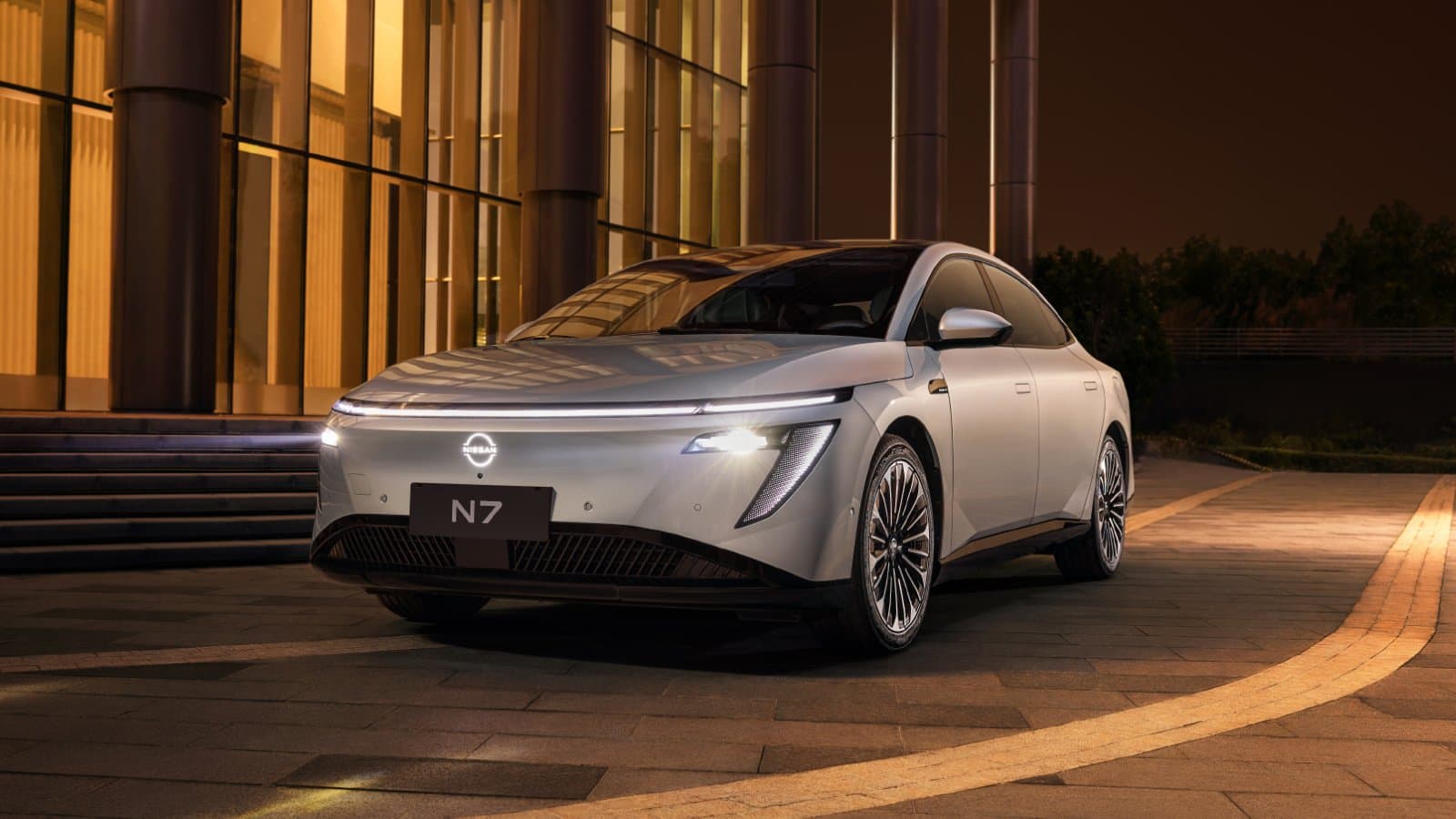
Dongfeng Nissan reportedly plans to unveil a revised version of the electric N7 as early as September 22, 2026. Changes are expected primarily to the trim levels, while no specific technical upgrades are known so far.
Nissan has not yet officially confirmed the date. It therefore remains unclear whether this will be a conventional model-year update, a new variant structure or a more extensive overhaul.
Sales Plummet After a Strong Start
The pressure to act is understandable. In August 2025, the N7 reached its previous peak in China with 10,148 new registrations. One year later, that figure had fallen to just 928 vehicles, a decline of around 91%.
Wholesale sales were also low in August 2026, at 619 units. The trend shows how quickly the balance of power can shift in China’s electric car market. New models, aggressive pricing and short product cycles put even successful vehicles under pressure at an early stage.
An affordable starting price is not enough to ensure lasting success in China. Equipment, software and driver-assistance systems must receive visible upgrades at short intervals.
What the Current Nissan N7 Offers
The N7 launched in late April 2025 with nine variants. The sedan was developed on the Tianyan platform by a Chinese team within the Dongfeng Nissan joint venture.
| Specification | Current Nissan N7 |
|---|---|
| Powertrain | Electric motor with 160 kW or 200 kW |
| Range | 510 to 635 km under the CLTC |
| Variants | Nine versions at market launch |
| Price in China | 119,900 to 158,900 yuan, equivalent to approximately €15,000 to €20,000 |
| Driver-assistance system | Developed jointly with Momenta |
| Infotainment | AI features using language models such as DeepSeek-R1 |
Range figures under the CLTC, China’s vehicle testing cycle, are not directly comparable with European WLTP figures and are generally more optimistic than real-world results. For buyers in the DACH region—Germany, Austria and Switzerland—energy consumption, charging performance and WLTP range would therefore be more important. Nissan has not yet announced a launch for the N7 in any of these markets.
Equipment Is Likely to Be the Most Important Lever
The low base price attracted particular attention when sales began. It was at a similar level to the Xpeng Mona M03 and made the N7 one of the more aggressively positioned electric offerings from an international joint venture in China.
However, a straightforward price cut would not be a sustainable response to the decline in sales. A reorganized model range with more standard equipment, improved digital features or more attractive driver-assistance packages appears more likely. Exactly what Nissan will change will probably become clear only at the presentation.
Nissan Expands Its Chinese N Series
The N7 is part of a broader product offensive. In addition to the electric sedan, the family includes the N6 plug-in hybrid and the NX8, which is also offered with a range extender. The NX7 plug-in hybrid SUV has already completed China’s regulatory approval process.
By June 2026, cumulative production of the N series had reached 100,000 vehicles. This shows that the localized development strategy works in principle, even if individual models experience sharp fluctuations in sales.
The development reflects the current shifts in the international electric car market. Chinese brands are rapidly gaining volume, while established manufacturers increasingly need to rely on locally developed platforms and software. Toyota’s planned electric Corolla generation also illustrates how Japanese automakers are responding to this competitive pressure.
European Perspective
For the European market, the N7 is currently of interest primarily as a technology signal. It demonstrates the extent to which Nissan has regionalized development, digital services and model planning. An unchanged version would be unlikely to come to Europe in any case because of different safety requirements, charging habits and homologation standards.
If the update stabilizes sales, the N7 could nevertheless serve as a blueprint for future electric Nissan models. The key question will be whether the overhaul offers more than repackaged equipment bundles and short-term price advantages.