BYD Formula S expands Fang Cheng Bao with sedan and GT models
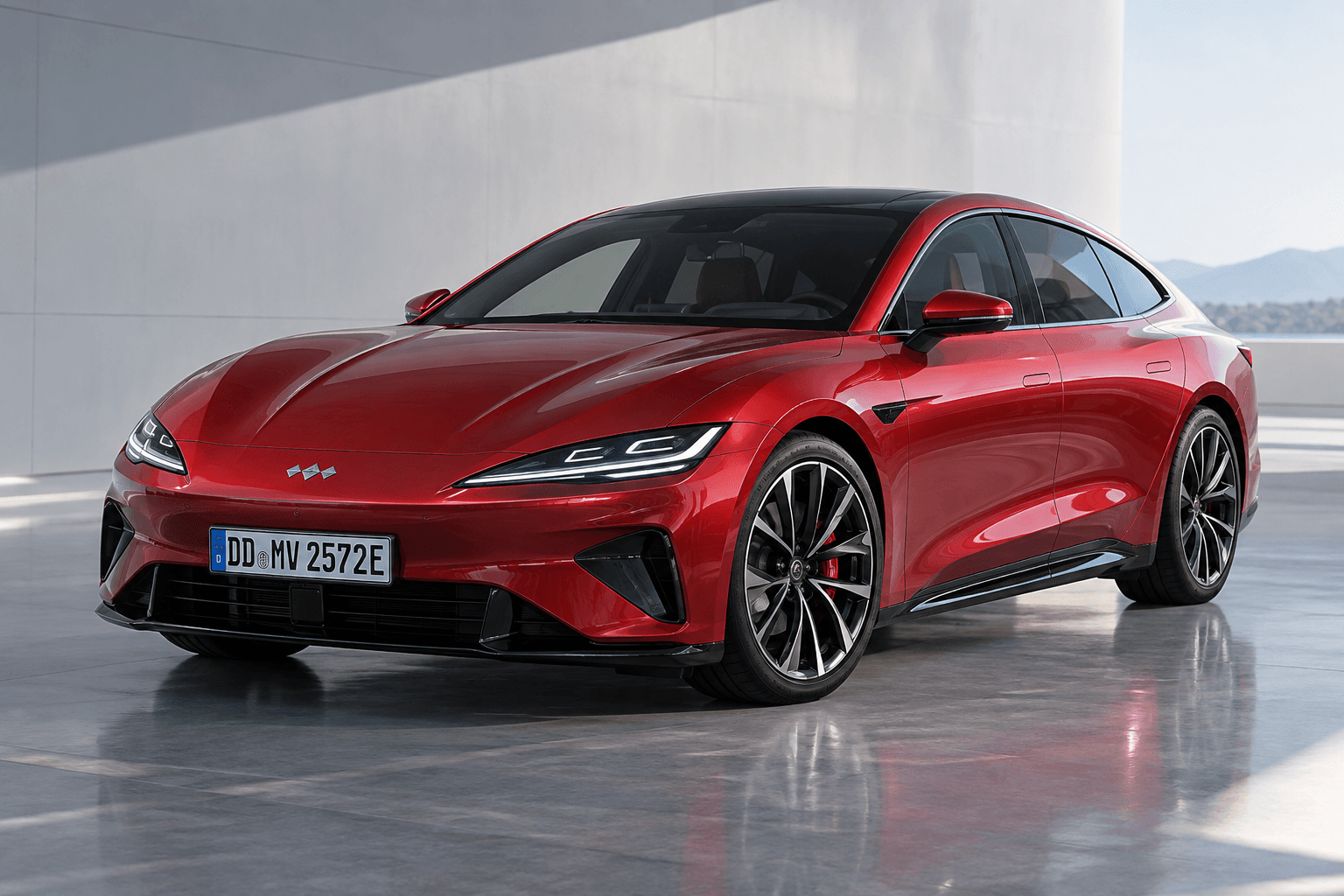
BYD is opening up its Fang Cheng Bao sub-brand to new vehicle classes. Instead of boxy electric SUVs, the Formula S range focuses for the first time on a large sedan and a sportily styled GT.
Both models are aimed at buyers of high-performance electric sedans and compete in China with established rivals such as the Tesla Model 3. At just over 5 meters long, however, BYD is positioning the range one class above the Tesla.
Five variants offering between 750 and 900 km of range
At launch, BYD is offering three versions of the sedan and two GT variants. The converted euro prices are provided for guidance only, as exchange rates, taxes and potential European specifications would significantly affect the actual price.
| Variant | Powertrain | CLTC range | Price in China | Converted price |
|---|---|---|---|---|
| Formula S Sedan | Rear-wheel drive | 750 km | 189,900 yuan | around €22,700 |
| Formula S Sedan Long Range | Rear-wheel drive | 900 km | 209,900 yuan | around €25,100 |
| Formula S Sedan AWD | All-wheel drive | 730 km | 229,900 yuan | around €27,500 |
| Formula S GT | Rear-wheel drive | 850 km | 219,900 yuan | around €26,300 |
| Formula S GT AWD | All-wheel drive | 730 km | 239,900 yuan | around €28,700 |
The range figures are based on China’s CLTC test cycle. This is generally more optimistic than WLTP, so the figures cannot be directly compared with European range ratings. Nevertheless, the 900 km version in particular demonstrates the importance BYD now places on efficiency and large battery capacities.
The BYD Formula S GT adds greater practicality and a distinctive body style to the range. At 5.025 meters, it is slightly shorter than the sedan.
Flash Charging promises 97% in nine minutes
According to BYD, all Formula S models use the second generation of the Blade Battery and the new Flash Charging system. Under optimal conditions, the state of charge is expected to rise from 10% to 70% in 5 minutes. BYD claims just 9 minutes for charging from 10% to 97%.
Figures like these require a sufficiently powerful charging station, a preconditioned battery and suitable temperatures. Charging times are therefore likely to vary in everyday use. BYD is already building a charging network delivering up to 1,500 kW in China so that vehicles equipped with this technology can realize their full potential.
The short charging times are technically impressive, but their practical value depends directly on the availability of high-power charging infrastructure.
Formula S is larger than the Tesla Model 3
The Formula S sedan measures 5.060 meters long, 1.967 meters wide and 1.483 meters tall. Its wheelbase is 2.960 meters. It is therefore not a direct midsize alternative, but a significantly larger vehicle with a correspondingly spacious interior.
In China, the rear-wheel-drive Tesla Model 3 starts at 235,500 yuan, equivalent to around €28,200. Its stated CLTC range there is 634 km. The entry-level Formula S therefore costs around €5,500 less while offering more range on paper and significantly larger exterior dimensions.
Nevertheless, the comparison is meaningful only to a limited extent. Tesla offers a well-established overall package comprising vehicle software, an efficient powertrain and a charging ecosystem, while BYD competes primarily on price, battery technology and equipment. Insurance terms, assistance features and standard equipment may also differ between the Chinese variants.
Interior with AR head-up display and refrigerator
Fang Cheng Bao is aiming for a deliberately premium appearance when it comes to equipment. Features include sport seats, a so-called Zero Gravity front passenger seat, 128-color ambient lighting and a 26-inch augmented-reality head-up display. An integrated refrigerator with a capacity of 6.9 liters is intended to improve long-distance comfort.
The God’s Eye assistance system handles features including navigation-assisted driving on expressways and automated parking maneuvers. Which functions might be offered outside China will depend on local approval, mapping data and national regulations.
The DiSus-A and DiSus-M suspension control systems are also available. BYD aims to combine comfort with a firmer setup in one vehicle without positioning the Formula S range exclusively as a sporty model family.
European launch remains uncertain
A market launch for the Formula S sedan or GT in Germany, Austria and Switzerland has not yet been confirmed. However, BYD is increasingly bringing models and technology from its Chinese sub-brands to international markets, sometimes under different model names.
For Europe, key factors would include adapted assistance systems, WLTP figures, the charging connector, service provision and pricing. Even with a significant markup, the Formula S range could be attractive if BYD retains its combination of long range, very fast charging and extensive equipment.