Nio ES9 Quickly Reaches 30,000 Vehicles
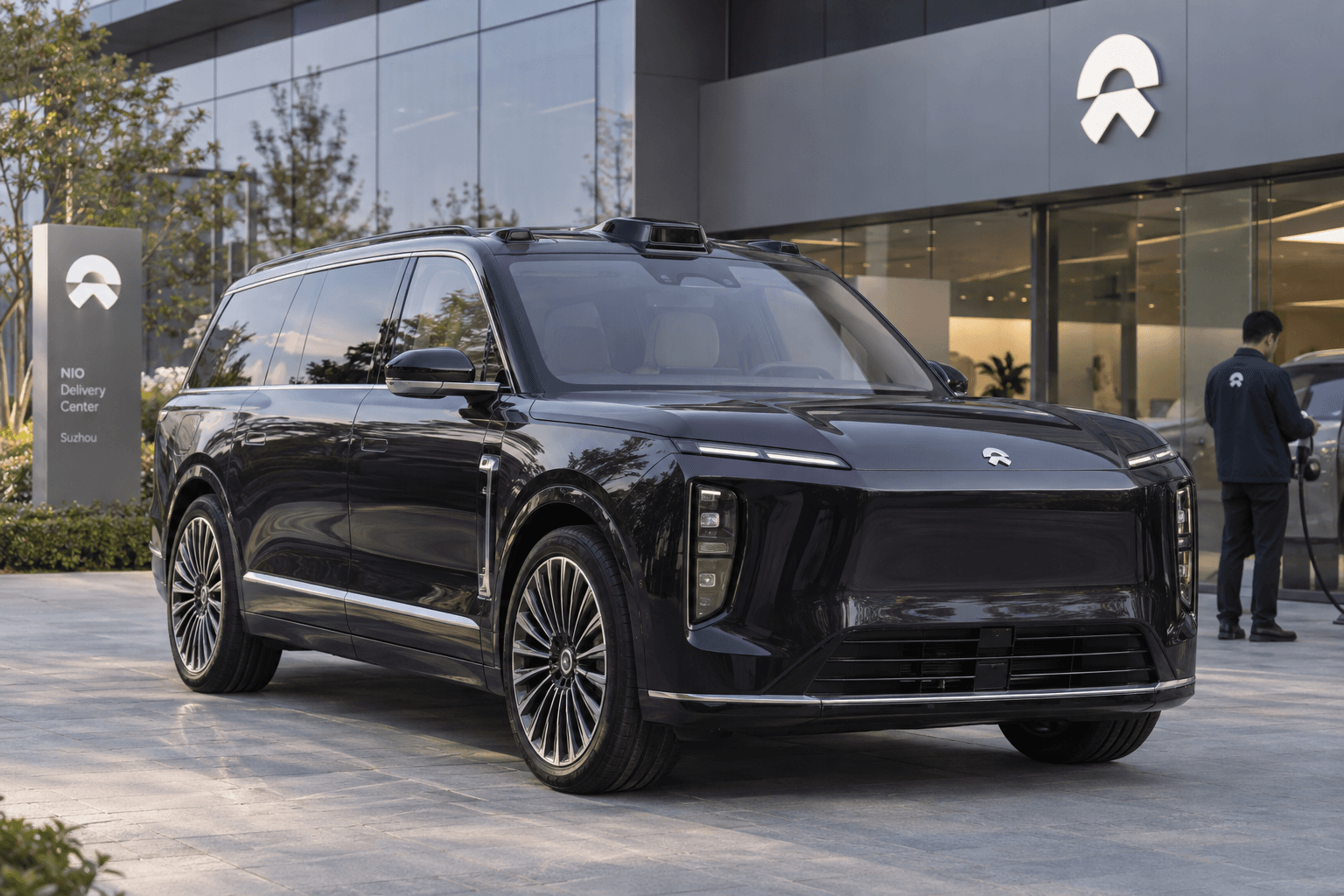
The Nio ES9 reached the 30,000-vehicle mark just 119 days after deliveries began. The first customers received the electric luxury SUV on May 28, 2026, and the milestone vehicle was handed over in the Chinese city of Suzhou on September 23.
The pace of the latest deliveries is particularly noteworthy. Nio delivered the first 10,000 vehicles by June 26 and had reached 20,000 units by August 8, while the company needed just 46 days for the next 10,000.
Thirty thousand ES9 deliveries in less than four months show how strong demand for premium electric SUVs has become in the Chinese domestic market.
ES9 Deliveries at a Glance
By the end of August, Nio had delivered a total of 24,497 ES9s. This means that a further 5,503 vehicles were delivered in September before the milestone was reached. This figure is an interim total, not a complete monthly figure.
| Period in 2026 | Nio ES9s Delivered |
|---|---|
| May | 3,108 |
| June | 8,595 |
| July | 6,315 |
| August | 6,479 |
| September through the milestone | 5,503 |
| Total | 30,000 |
The ES9 accounted for 6,479 deliveries in August. That was 2.6% more than in July and around 30.6% of all deliveries by the core Nio brand that month.
Large Electric SUVs Bolster the Core Nio Brand
Together with the slightly less expensive ES8, the ES9 reached 17,480 vehicles in August. The two large electric SUVs therefore accounted for 82.55% of deliveries by the core brand. This gives Nio a particularly strong position in the segment, but it also creates a clear dependence on two large model lines.
The success reflects the Chinese trend toward spacious six-seat premium vehicles with extensive comfort features. Competitors are also investing heavily in this class, including the Denza N8 with a 130-kWh battery and the technically sophisticated Xpeng G9L with an 800-volt system.
5.37 Meters Long with 900-Volt Technology
The Nio ES9 measures 5.37 meters in length and has a wheelbase of 3.25 meters. Its cabin is designed for six occupants, making the model primarily suited to families and chauffeur-driven customers requiring plenty of space.
Technically, Nio uses a 900-volt architecture. The high system voltage can reduce charging losses and facilitate high charging rates, provided the battery, temperature, and charging station offer suitable conditions. The ES9 also supports Nio’s signature automated battery swapping, in which a depleted battery is exchanged for a charged one at a swap station.
In China, the ES9 launched at 498,000 yuan including the battery, equivalent to roughly €63,000. However, a direct price comparison with Germany, Austria, or Switzerland is of limited value because taxes, equipment, logistics, and local market positioning can differ significantly.
What the Milestone Means for Europe
The ES9 has also been delivered in Macau since early September. There has not yet been a confirmed launch in the DACH region—Germany, Austria, and Switzerland. Given its dimensions and the infrastructure required for battery swapping, a European launch would also be more challenging than one in its Chinese domestic market.
The sales milestone is nevertheless significant. It shows that Nio can sell premium-priced electric cars in substantial numbers and has established a clear profile with its combination of 900-volt technology, six seats, and battery swapping. The key question now is whether the rapid pace of deliveries will continue after the initial wave of orders.