Polestar 2 approaches a generational change—and this time, the foundations are changing
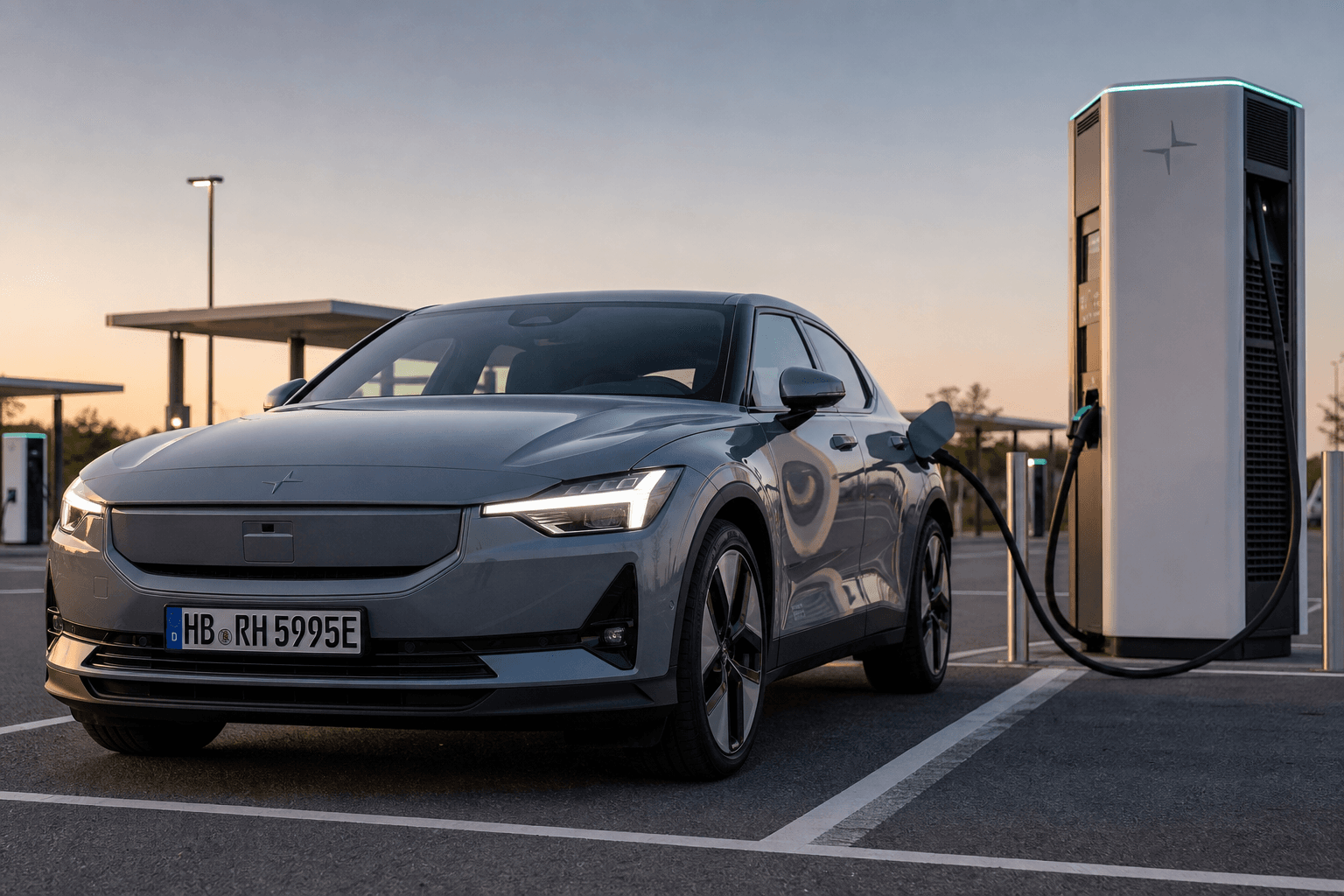
The Polestar 2 has served as something of an electric flagship for the brand, but the current generation increasingly feels like a technological stopgap. This is less about individual updates than the underlying platform: the Polestar 2 still uses an architecture derived from the Volvo-Geely modular platform, which was not originally designed as a dedicated, uncompromising EV platform.
That is precisely what is expected to change with the next generation. A complete switch to a dedicated EV platform is anticipated, including 800-volt technology. For buyers in the DACH region—Germany, Austria, and Switzerland—the main benefits would be faster charging and greater everyday usability on long journeys.
Why 800 volts in the Polestar 2 is more than just a specification
In practice, 800 volts means less current is needed to deliver the same charging power, reducing the load on cables and power electronics and making it easier to sustain high charging rates. The result is often better fast-charging performance, particularly above 200 kW, provided the battery and thermal management system can support it.
A DC charging rate of at least 300 kW is considered realistic for the next-generation Polestar 2. For comparison, Polestar 3 variants offer peak fast-charging rates of 310 kW and 350 kW, respectively. Whether the new Polestar 2 will match those figures exactly depends on the final battery layout and cell chemistry, but the direction is clear: significantly faster charging than today.
For a broader perspective on the 800-volt debate, see our overview 800V vs. 400V EV architectures in 2026.
More space, better efficiency, fewer compromises
A dedicated EV platform offers benefits beyond charging. It generally provides more flexibility for the wheelbase, cabin, and packaging because the drivetrain and battery are incorporated into the design from the outset. This is one area where the current Polestar 2 can no longer fully compete with newer designs.
Two improvements are therefore plausible for the new generation: more cabin space and noticeably greater on-road efficiency. Both directly affect range, noise levels, and long-distance comfort—the factors that truly distinguish midsize EVs in everyday use.
Software-defined vehicle: more OTA updates and more remote functionality
The software architecture is also expected to become significantly more advanced with the generational change. Polestar is likely to move further toward a “software-defined vehicle,” with functions added and improved through over-the-air updates. This applies not only to apps or infotainment but could eventually include vehicle functions such as suspension logic, steering parameters, and lighting features.
Polestar is expected to stay true to its existing approach to controls: the infotainment system and driver display are based on Android Automotive. For users, this generally means good Google integration, while the key question remains how much of its own user experience and feature depth Polestar will add on top.
Positioning and price: Could the Polestar 2 move upmarket?
In Germany, the Polestar 2 currently starts in a price range where buyers also consider alternatives such as premium sedans and models built on new EV platforms. If the platform, charging performance, and body are all upgraded, the Polestar 2 could well move upmarket in terms of price rather than become more affordable.
That would not be an unusual strategy: such a major technological leap comes at a cost, and it would allow Polestar to position the Polestar 2 even more clearly in the premium segment. A later SUV project is considered the more likely candidate for a lower-priced, high-volume Polestar model.
Assessment: Competitive pressure is increasing, but Polestar has a clear opportunity
The segment is becoming crowded as more new models adopt 800-volt systems, high efficiency, and rapid charging across a broad state-of-charge range. A Polestar 2 built on a new dedicated EV platform could become fully competitive again, particularly if it can sustain high charging power over a wide range rather than reaching its peak only briefly.