Moia’s search for funding partners remains difficult
Volkswagen’s mobility subsidiary Moia has reportedly been unsuccessful so far in its search for external investors for its autonomous driving business. It is not known which companies were approached, how much funding is being sought, or how Volkswagen intends to respond.
The report should therefore not be equated with an immediate withdrawal from the robotaxi business. However, it shows how difficult it is even for a major automotive group to raise additional capital for a technology that is expensive to develop and whose commercial breakthrough remains difficult to predict.
A stalled search for investors is a warning sign, but it does not yet amount to Volkswagen abandoning its autonomous mobility strategy.
Why autonomous driving consumes so much capital
A driverless shuttle service requires far more than an automated vehicle. In addition to the technical platform, it needs sensors, computing power, software development, safety certification, remote assistance, fleet operations, and local operating infrastructure.
The transition from a working prototype to a scalable service is particularly expensive. A system must perform reliably not only under favorable conditions, but also around roadworks, in bad weather, in unusual traffic situations, and when people make mistakes.
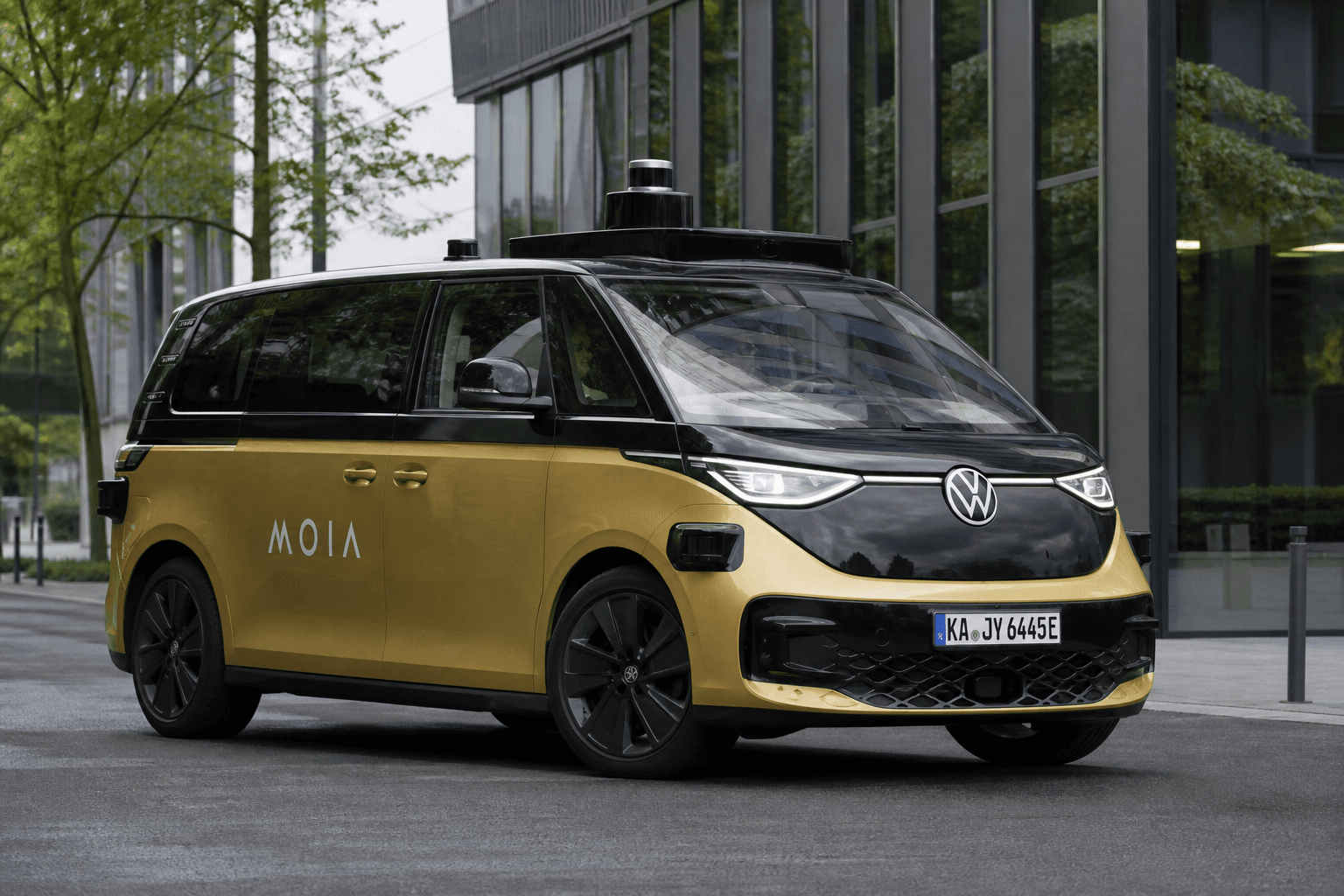
Moia is relying on an automated version of the Volkswagen ID. Buzz. However, the vehicle is only one part of the overall package. The key question is whether the technology and operating costs can be reduced enough for a driverless service to compete economically with taxis, private-hire vehicles, and public transportation.
Moia’s existing ride service is not automatically at risk
Moia already operates a ride-pooling service in which several passengers with similar routes travel together. This existing business must be distinguished from the development of fully autonomous vehicles.
The apparent failure to find an external investor for the autonomous driving division therefore does not automatically mean that the current Moia vehicles will soon disappear from Hamburg. Volkswagen could still provide the funding, expansion could proceed more slowly, or the company could focus more heavily on individual cities and clearly defined operating areas.
What could deter external investors
- High capital requirements before broad commercial deployment
- Uncertain timelines for approvals and scaling
- Operating costs for autonomous fleets that are difficult to predict
- Strong competition from technology companies and other manufacturers
What still works in Moia’s favor
- Direct access to Volkswagen’s vehicle development and corporate resources
- Experience in real-world ride-service operations and fleet management
- A vehicle concept suited to shuttle services
- Practical knowledge gained from operating in major German cities
Europe requires a different robotaxi approach
Robotaxi development is often measured against US companies. However, conditions are different in Germany, Austria, and Switzerland. Cities are denser, road layouts are often more complex, and vehicle approvals and operating permits must comply with the relevant legal frameworks.
Germany has created a legal framework for highly automated vehicles in designated operating areas. However, that alone does not produce an immediately scalable business model. A limited operating area → less technical complexity, but also fewer potential trips and less revenue.
Competition nevertheless remains intense. Tesla is pursuing a different approach with its camera-based strategy and the planned further development of FSD and robotaxi technology. Chinese providers are also picking up the pace, as demonstrated by the new capabilities of Xpeng VLA 2.0.
What the stalled funding means for Volkswagen
Volkswagen must now decide how much strategic value it places on Moia’s autonomous driving program. Funding it entirely from within the group would preserve control, but would also continue to tie up substantial resources. A technology partner could share the costs and risks, but would gain influence over the software, data, and commercialization.
A more focused strategy involving only a few operating areas and clearly defined use cases is another possibility. Airport transfers, transportation for trade fairs, or fixed zones could become commercially viable sooner than a freely operating robotaxi service covering an entire major city.
The crucial question is therefore not merely whether Moia finds an investor. More important is whether Volkswagen can present a viable path from autonomous trial operations to a commercially sustainable fleet service. Until specific decisions are announced, it would be premature to write off the project.