VW sharpens up its first electric GTI
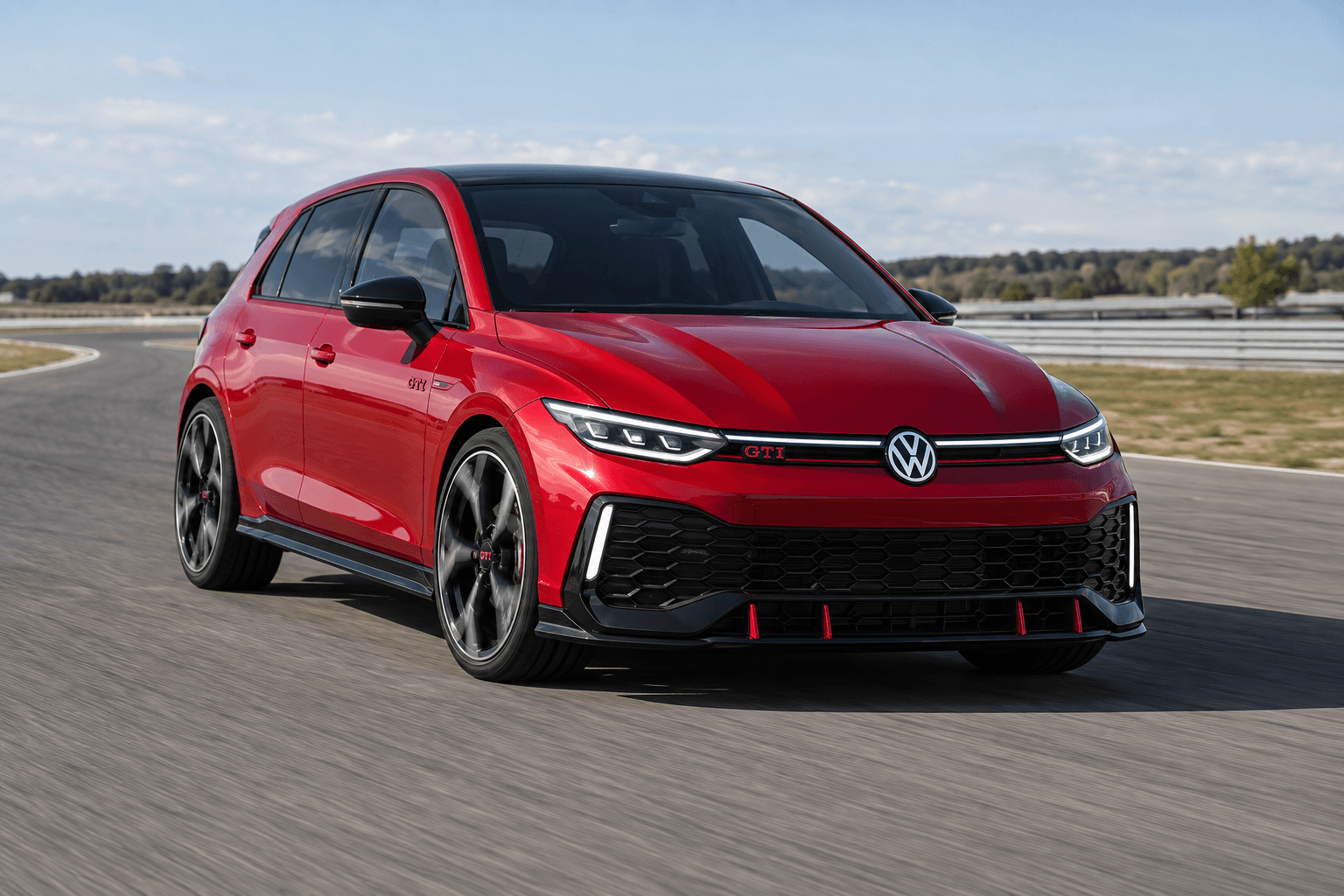
The VW ID. Polo GTI will be faster than initially announced. Instead of being limited to 175 km/h, Volkswagen’s first all-electric GTI will now be electronically capped at 190 km/h.
VW is thus addressing one of the main criticisms of the previous configuration. The difference from the standard ID. Polo is now more pronounced, as that model has a top speed of 160 km/h.
| Variant | Top speed | Acceleration |
|---|---|---|
| VW ID. Polo | 160 km/h | Not yet announced |
| ID. Polo GTI, original plan | 175 km/h | 0–100 km/h in 6.8 seconds |
| ID. Polo GTI, latest specification | 190 km/h | 0–100 km/h in 6.8 seconds |
Software determines its character
In an electric car, power delivery can be significantly influenced through software. This includes maximum torque, power output at higher speeds, thermal management and the electronic speed limiter.
A higher top speed therefore does not automatically require a completely different electric motor. Even so, the limit cannot be raised arbitrarily: Higher sustained speeds increase energy consumption and heat generation → the cooling system, battery and powertrain must remain within their designed operating limits.
Raising the limit to 190 km/h creates more distance from the base model without tuning the ID. Polo GTI entirely for maximum performance.
In everyday use, the change is likely to be of particular interest to drivers on Germany’s Autobahn network, some sections of which have no general speed limit. In Austria and Switzerland, general speed limits largely prevent drivers from making practical use of the higher maximum. Even in Germany, it is more a matter of positioning and living up to the GTI name than a decisive advantage on every journey.
6.8 seconds remains the bigger talking point
According to the latest information, the 0–100 km/h sprint remains at 6.8 seconds. That is quick for a small electric car, but it does not seem exceptional compared with many high-performance EVs.
However, a GTI does not have to impress solely with the most brutal possible launch from a standstill. Suspension tuning, steering, brakes, traction and repeatable performance may be more important to driving enjoyment than a few tenths of a second. Whether VW brings these elements together convincingly can only be assessed after independent testing.
VW must maintain its distance from the ID.3
The model hierarchy is also likely to play a role in the configuration. The ID. Polo GTI is intended to be sporty, but it must not come too close to future, more powerful versions of the VW ID.3.
This explains why VW is not approving a top speed above 200 km/h despite an output of more than 147 kW. At the same time, the limit protects range and thermal reserves during longer motorway journeys.
An even more powerful Clubsport version would be technically and strategically conceivable, but has not yet been officially confirmed. Volkswagen could use such a model to offer more power, more aggressive suspension tuning and a clearer distinction from the standard GTI at a later date.
The ID. Polo GTI needs more than speed
The new top speed is a sensible step because it more clearly distinguishes the sporty derivative from the standard ID. Polo. The crucial question, however, will be whether the GTI also feels distinctive beyond the specifications sheet.
Interest in the group’s new compact EVs is already high. VW must now build on the momentum surrounding the new entry-level EVs from VW, Skoda and Cupra with a credible electric interpretation of the GTI formula.