Porsche 550 J Reinterprets the 550 Spyder as an EV
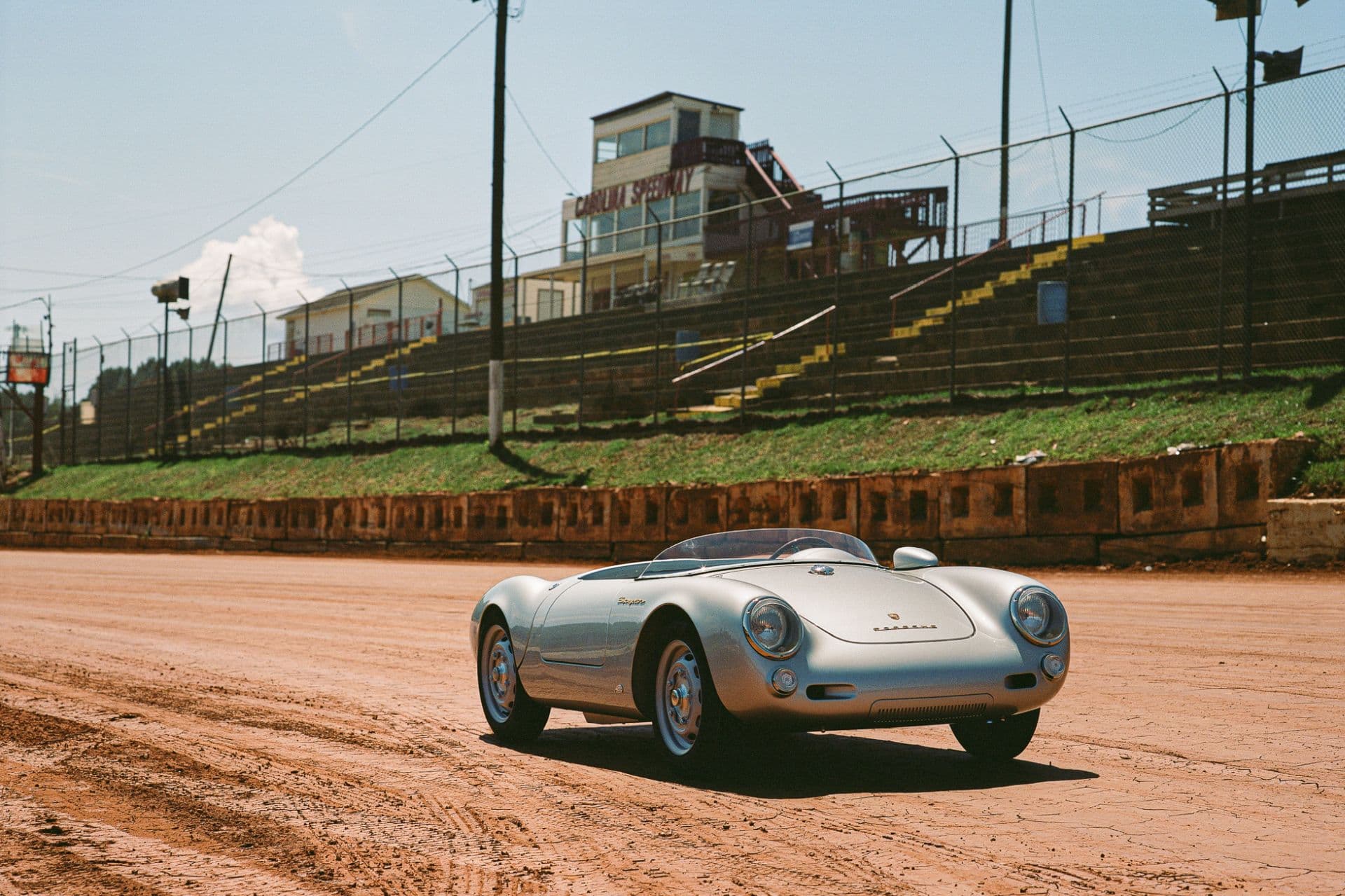
With the Porsche 550 J, a motorsport icon returns as a compact electric two-seater. Developed in collaboration with Porsche, the collector’s vehicle measures just 2.90 meters and is therefore around 80% of the original size of the historic 550 Spyder.
Production is limited to 250 examples. Orders can already be placed, with the first vehicles scheduled for delivery in spring 2027. The starting price is approximately €81,000 plus applicable local taxes.
The Porsche 550 J is not a conventional electric car, but a drivable collector’s item for private property and closed circuits.
Two Electric Powertrains Delivering Up to 16 kW
The base version uses an 8 kW electric motor with a 48-volt system. A compact lithium-ion battery is positioned behind the two seats. This gives the 550 J a top speed of 65 km/h and a maximum claimed range of 50 km.
An RS package is planned for buyers seeking more performance. Additional battery capacity and a 16 kW powertrain increase the top speed to 80 km/h, while the stated range rises to as much as 80 km. The package also includes drilled brake discs and adjustable Bilstein dampers.
| Specification | Porsche 550 J | Porsche 550 J RS |
|---|---|---|
| Power | 8 kW | 16 kW |
| Top speed | 65 km/h | 80 km/h |
| Range | up to 50 km | up to 80 km |
| Suspension | Bilstein and Eibach | adjustable Bilstein dampers |
| Brakes | Brembo | Brembo with drilled discs |
These figures may seem modest compared with a modern electric car, but they suit the vehicle’s intended purpose. The 550 J is not designed for highway journeys, but to deliver a lightweight and direct driving experience on private property. Compact battery → lower weight and a closer connection to the pared-back race-car concept.
Carbon-Fiber Body Meets Historic Scale
To recreate the shape, original vehicles from the Porsche Museum were captured in three dimensions and technical drawings from the brand’s archives were analyzed. As a result, the reinterpretation adopts not only the proportions but also characteristic details such as the louvers above the area where the original car’s four-cylinder boxer engine was located.
Beneath the body is a tubular space frame made from high-strength, TIG-welded steel. Its design is based on the later Porsche 550 A. Instead of aluminum, the exterior body panels are made from carbon fiber, continuing the historic lightweight construction philosophy with modern materials.
More than 1,300 components were newly developed for the vehicle. These include the wheels, suspension, controls and specially tuned Continental tires. Bilstein struts, Eibach springs and Brembo brakes complete the technical equipment.
Interior Features Clever References to the Original
The cockpit is deliberately minimalist. Bucket seats, three circular instruments and a wood-rimmed Nardi steering wheel evoke the character of the historic race car. The former choke lever now serves as the driving-mode selector, while the battery charge level is displayed in place of the fuel gauge.
Buyers can choose historic paint finishes or use the extensive Paint to Sample program. This allows each of the 250 vehicles to be configured largely to individual specifications. The 550 J will be built by hand in Oxfordshire.
The Original Made Porsche History
The Porsche 550 Spyder made its motorsport debut in 1953 and was the first Porsche developed specifically as a race car. Its most important achievements include a class victory in the 1954 Carrera Panamericana and the overall victory of the more advanced 550 A in the 1956 Targa Florio.
Together with its successors through to the 718 RSK, the model series accumulated more than 1,000 race victories. This heritage also plays an important role in the planned electric revival of the Porsche 718, which is intended to be a regular road-legal production model.
Lack of Road Approval Clearly Limits Its Use
The biggest drawback is not the limited range, but the lack of approval for use on public roads. The Porsche 550 J may therefore only be driven on private property or closed circuits. It is not intended for spontaneous drives on public roads.
This makes the project fundamentally different from road-legal Porsche EVs such as the Porsche Taycan. Instead, the 550 J is aimed at collectors who want to combine historic styling, the exclusivity of a limited production run and electric driving in an unusual format.
Its world premiere is scheduled to take place in Dubai at the end of November 2026. The order book for the total production run of 250 examples will remain open until the planned start of production in spring 2027.