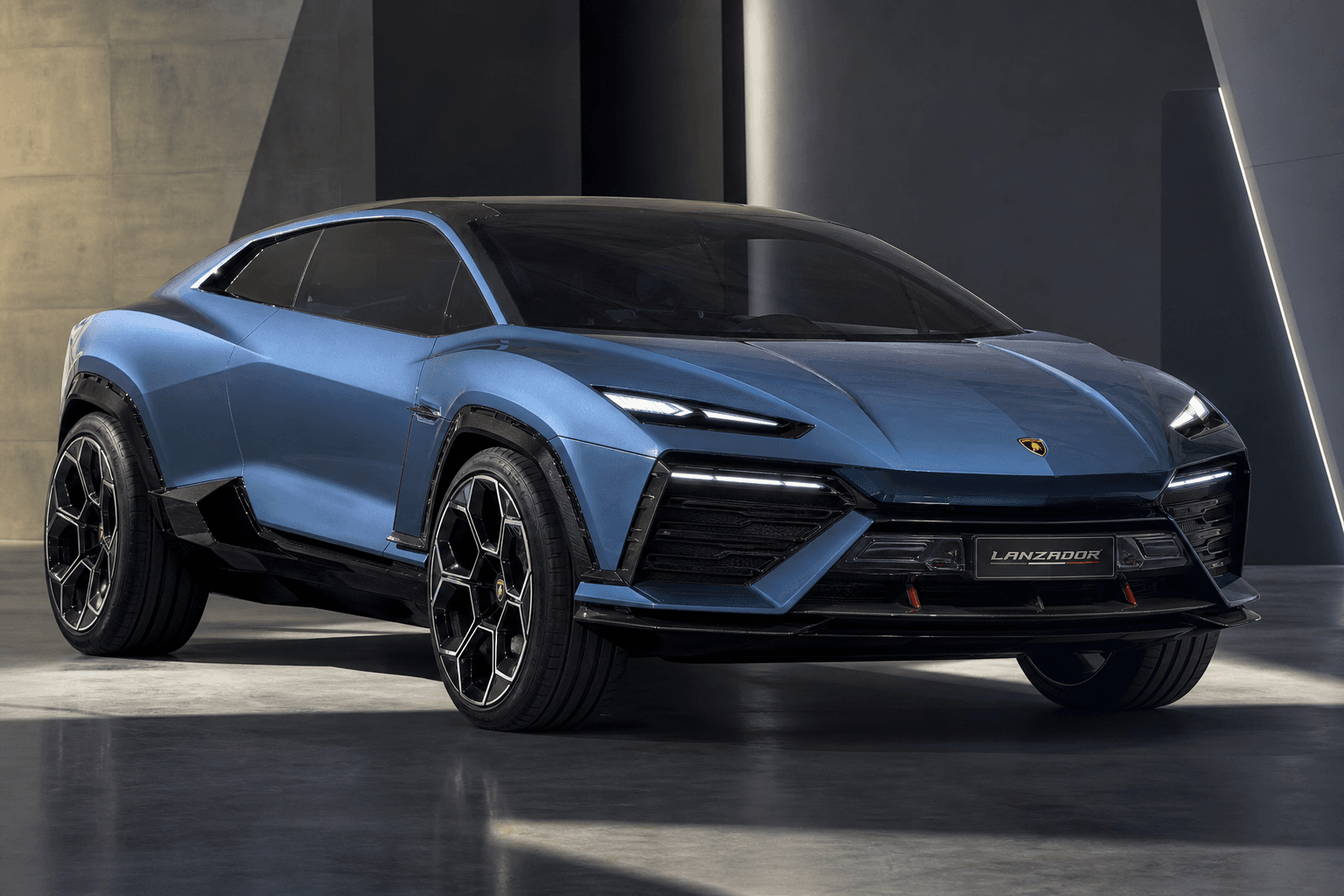
Lamborghini Hits the Brakes on Its Electric Supercar
Lamborghini has significantly slowed its electric ambitions for the time being. Its most important project to date for a fully electric Lamborghini has been pushed back rather than entering production in the near term. The brand is following a trend also seen among other performance manufacturers: electrification, yes, but not at any price and not at the expense of the brand’s DNA.
For the DACH market—the German-speaking region comprising Germany, Austria and Switzerland—this is particularly interesting as a signal: In the upper price segments, some customers remain strongly attached to the combustion-engine experience. Not because of a “fear of electricity,” but because sound, mechanical feedback and drama are part of the product here.
China Is Bringing Premium EVs to Europe More Frequently, Including Sports Cars
While European manufacturers reorganize their product plans, fresh premium models are arriving from China in rapid cycles. Brands associated with BYD are deliberately pushing into segments that were once considered “untouchable,” with sports-car styling, high total system output and an increasingly compelling software story.
Two names are mentioned particularly often as a challenge to the established sports-car world: Denza with the Denza Z and Yangwang with the U9. Both epitomize the Chinese approach: maximum performance figures, plenty of technology for the money and intense pressure to innovate within the product.
If you are interested in these Chinese performance ambitions in detail, we have already published a dedicated overview of the Denza Z: Denza Z Makes Its Case as an Electric Supercar.
Why Lamborghini Does Not Feel Threatened—Yet
Lamborghini’s core argument draws a clear distinction: Numbers are not everything. The brand continues to see its strengths in areas where an electric car traditionally scores less “naturally”: emotion, sound and the distinctive driving experience of a high-revving powertrain.
This is not a blanket dismissal of EVs, but a matter of positioning: Even if a Chinese electric sports car is extremely fast on paper, that does not automatically mean it appeals to the same customer base. The message, in essence, is that until an electric Lamborghini can stand as a “masterpiece,” it is better to arrive later than too soon.
What This Means in Practice
- Product timing is becoming more conservative: Production will only become realistic once the battery, weight, thermal management and sound design reach the desired level.
- Software is essential, not optional: Modern driver assistance, UI/UX and updates are becoming expected even in the supercar segment.
- Performance is being redefined: It is no longer just about 0 to 100 km/h, but also repeatability, durability on the track and the overall package.
Context: Luxury and Performance Brands Are Searching for the Right Moment to Go Electric
The move fits into the bigger picture: Particularly in expensive segments, electrification is less a question of “if” than of “when” and “how.” The Volkswagen Group is also publicly discussing how quickly the end of combustion engines will actually take hold in the premium segment.
At the same time, Porsche is showing that electric performance can succeed in the market when the overall package is right. Anyone who wants to see how an established sports-car manufacturer is already scaling its electric strategy can find the key specifications on our Porsche Taycan model page as a starting point for comparison.
What Chinese Electric Sports Cars Will Still Demand of Lamborghini
Even if Lamborghini does not currently see a threat, the competitive pressure remains real. China is quick to capitalize on its strengths: rapid development, aggressive value-for-money positioning and increasingly mature software. This also forces Europe’s iconic brands to clearly justify their own roadmaps.
And an electric sports car does not have to “sound like a V12” to win over buyers. Tesla, for example, has shown that raw, repeatable acceleration and a software ecosystem can already create an emotional product for many customers—just in a different way. For a point of reference, it is worth looking at the Tesla Model S, which has been regarded as a performance and technology benchmark in the EV sector for years.
In the supercar segment, it is not just about performance, but about the feeling a car creates on every drive.
Conclusion: No Panic, but a Clear Mission
Lamborghini is sticking to its position and taking its time to meet its own standards for an electric model. That is understandable because the brand makes its money from identity, not spec sheets. At the same time, China is raising the bar—not only for performance, but also for software, features and the pace of model updates.
For fans, this means the first true electric Lamborghini is likely to arrive later, but with the ambition of being more than simply “electric too” and instead making a statement in its own right.