Geely unveils 12C battery with extremely short charging time
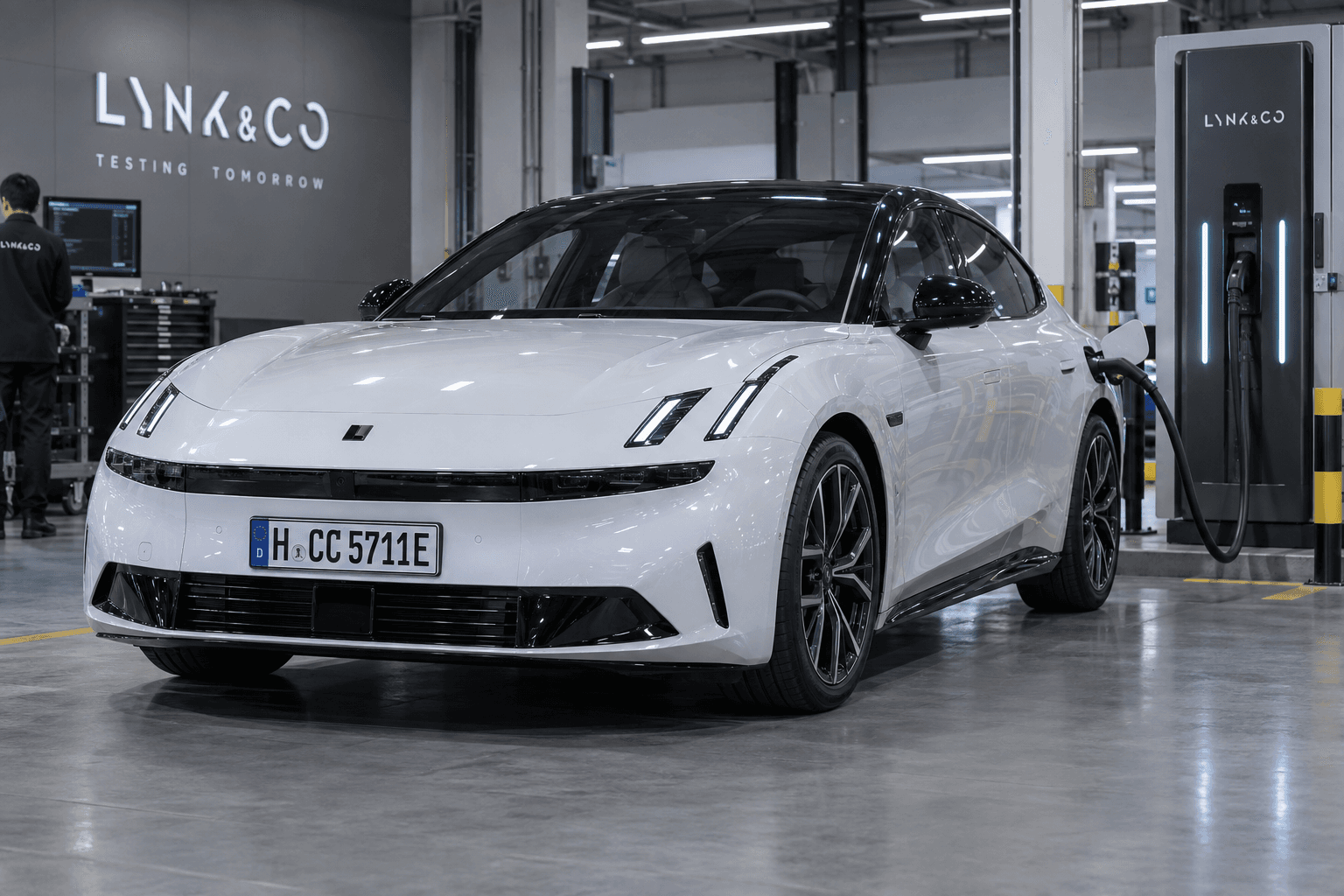
Geely is making major advances in fast charging. During a demonstration, the new Golden Battery in an electric Lynk & Co 10 achieved a charging rate of 12C. Under normal temperature conditions, the state of charge rose from 8% to 70% in 4 minutes and 30 seconds.
The test vehicle took 8 minutes and 40 seconds to charge from just under 10% to 97%. According to Geely, it briefly reached 1,064 kW of charging power during this run. Even at an 80% state of charge, it reportedly still drew more than 450 kW.
The manufacturer’s figures are impressive, but so far they come from a controlled demonstration rather than an independent real-world test.
What a 12C charging rate means
The C-rate expresses charging power in relation to battery capacity. In theory, a constant rate of 12C would be sufficient to charge a battery fully in five minutes. In practice, power decreases as the state of charge rises, which is why the charging curve matters more than a single peak figure.
Geely appears to have made progress with precisely this charging curve. More than 450 kW at 80% would be particularly relevant for short stops on long journeys, as today’s electric cars generally maintain their highest power only within a limited charging window.
| Metric | 12C Golden Battery | 6C battery |
|---|---|---|
| Target segment | Flagship models | Mid-range |
| Charging time to 70% | 4 minutes 30 seconds, starting at 8% | 8 minutes 25 seconds |
| Reported peak power | 1,064 kW | Not specified |
| Energy density | 192 Wh/kg | Not specified |
Cooling becomes crucial for megawatt charging
Power levels like these generate enormous amounts of heat in the battery, charging cable and connector. Geely therefore uses an integrated cooling system that monitors and regulates five areas of the charging process. An AI-assisted control system is intended to keep temperatures throughout the entire energy chain within the optimal range.
According to the manufacturer, electrical impedance has been reduced by 30% compared with the previous battery generation. This results in lower losses and less heat. Geely puts the reduction in heat generation at 10%, while the cells are also said to be more compact, with an energy density of 192 Wh/kg.
Technically, the development is consistent with the industry-wide shift to higher voltages. Our comparison of 800-volt and 400-volt architectures shows the benefits of moving from 400 to 800 volts. Within the Geely Group, the Zeekr 7X also uses a 900-volt platform.
The matching charging station is still larger than the car
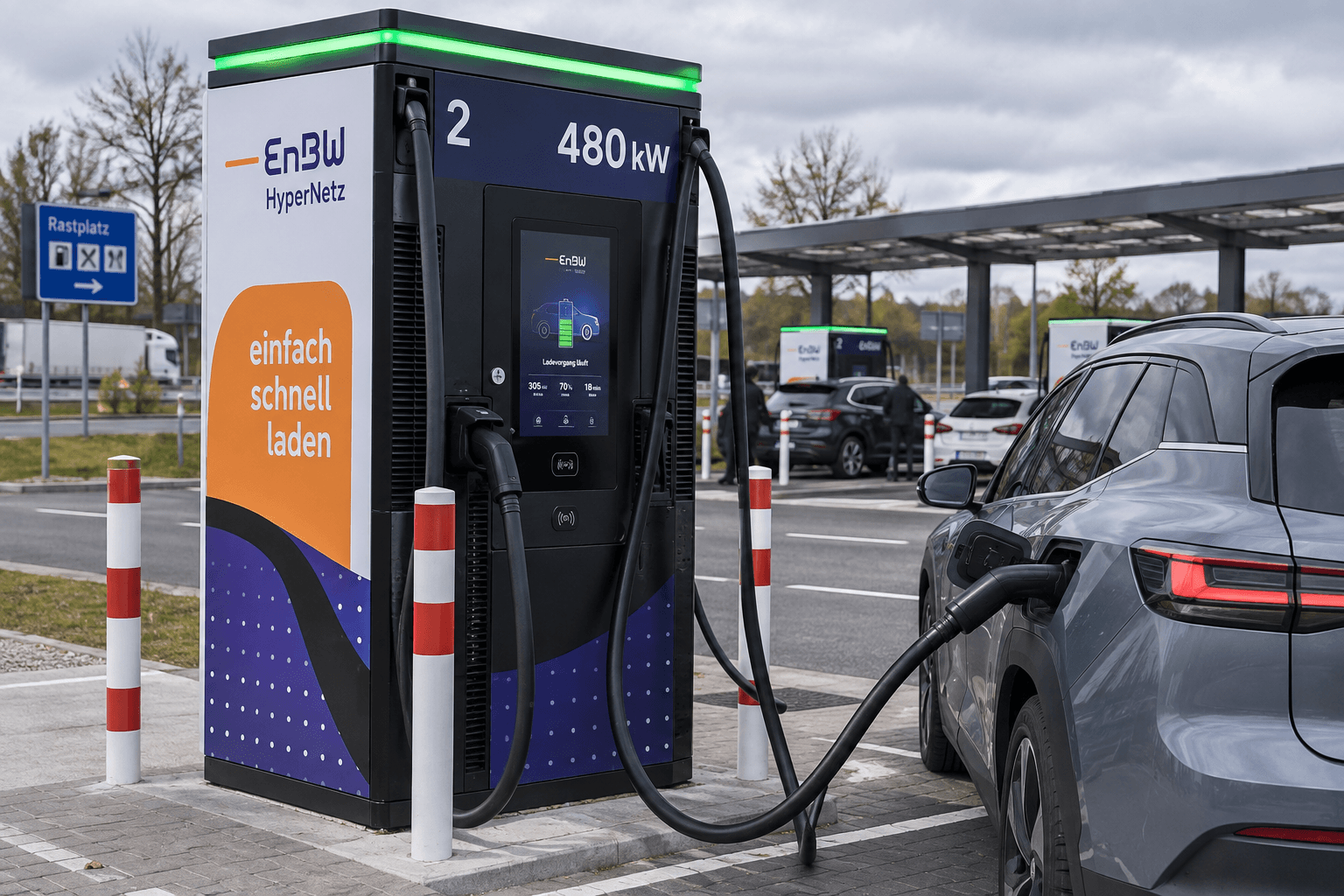
Geely has also unveiled charging technology that operates at up to 1,500 volts and 1,500 amperes per connector. This results in a theoretical output of more than 2,200 kW. That is currently far more than a single passenger car needs, but it provides headroom for future vehicles and high-powered charging hubs.
In the DACH region—Germany, Austria and Switzerland—such connectors would initially be rare. In addition to cooled cables and suitable connector systems, they require high-capacity grid connections or large stationary buffer batteries. A battery capable of fast charging → the charging hub and power supply must also be able to provide the required power.
BYD is also advancing the technology, combining its Flash Charging battery in the BYD Seal 06 with particularly powerful infrastructure. However, direct charging-time comparisons remain difficult as long as battery size, starting temperature and charging windows differ.
How the Golden Battery could change everyday driving
Under ideal conditions, a charging stop would take about as long as a short refueling stop. For drivers, the high peak figure alone would not be decisive; what matters is a consistently strong charging curve well beyond 70%. This is precisely where Geely’s demonstration appears particularly promising.
However, details about specific production models, prices and a broad rollout outside China are still lacking. Geely describes the technology as a mass-market solution, but it must first substantiate that claim with production vehicles and a sufficiently dense charging infrastructure. The additional 6C battery for the mid-range segment at least shows that the concept is not intended to remain limited to expensive flagship models.