Bentley Torcal launches a new model line
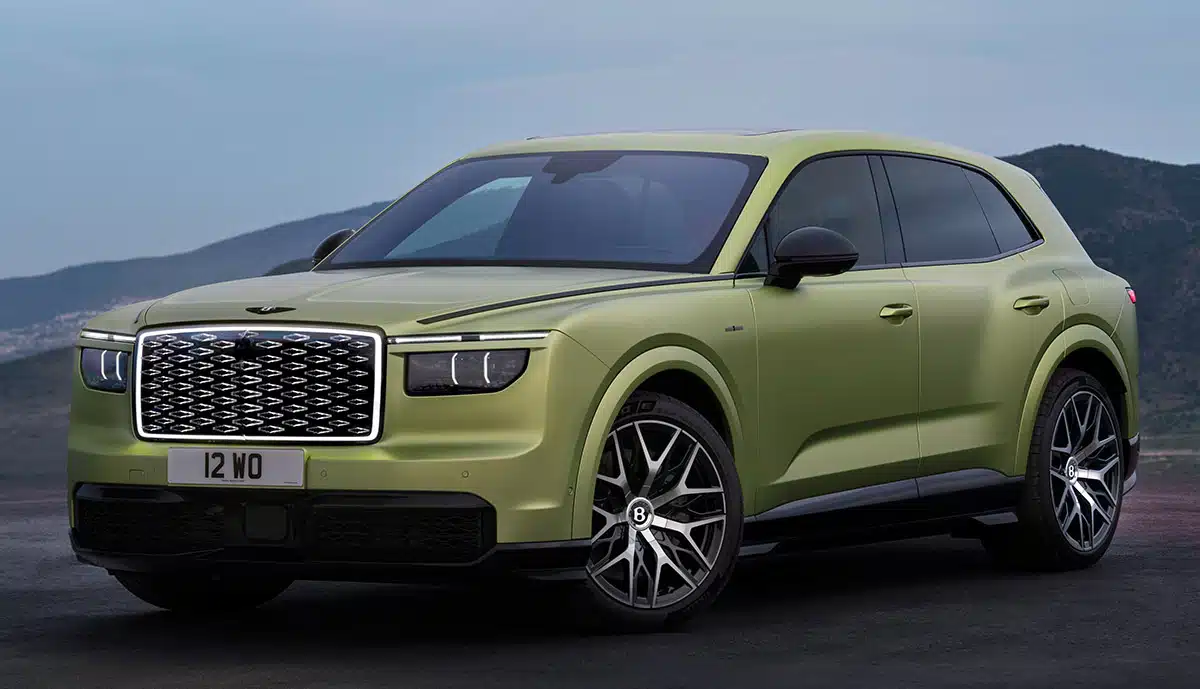
Bentley will launch its first all-electric production model in 2027. Measuring around five meters long, the Bentley Torcal will become the brand’s fourth standalone model line alongside the Continental GT, Flying Spur and Bentayga.
Development and final assembly will take place at the company’s historic headquarters in Crewe, UK. The electric SUV will be positioned below the Bentayga plug-in hybrid, although a UK starting price equivalent to around €200,000 already makes a clear statement in the luxury segment. Pricing for Germany, Austria and Switzerland has yet to be announced.
Two motors and up to 653 kW of power
Two all-wheel-drive versions, each with two electric motors, are planned for the market launch. Even the base version delivers 604 kW, while the Torcal S produces up to 653 kW and 1,350 Nm.
| Specification | Torcal | Torcal S |
|---|---|---|
| Powertrain | Two electric motors, all-wheel drive | Two electric motors, all-wheel drive |
| Power | Up to 604 kW | Up to 653 kW |
| Torque | Not yet specified | 1,350 Nm |
| 0 to 100 km/h | Not yet specified | 2.9 seconds |
| Top speed | Not yet specified | 260 km/h |
These figures make the Torcal S the most powerful production model in the brand’s history. Accelerating to 100 km/h in 2.9 seconds puts it in supercar territory, despite the Bentley being a large luxury SUV.
113 kWh battery and charging at up to 400 kW
The Torcal combines a battery with a capacity of 113 kWh and an 800-volt architecture. At a sufficiently powerful fast-charging station, it should be able to reach a peak charging rate of up to 400 kW. Charging from 10% to 80% is expected to take around 16 minutes under suitable conditions.
In everyday use, this speed will depend on factors including battery temperature, state of charge and the available output of the charging station. The peak figure alone is therefore less important than maintaining a high charging curve. Nevertheless, the specification shows that Bentley intends to enter the electric-car market at the highest technical level.
Readers who would like a more detailed explanation of the differences from conventional high-voltage systems can find one in our comparison of 800-volt and 400-volt architectures.
WLTP range of around 600 km
Bentley is targeting a range of up to approximately 600 km under WLTP, the standardized European vehicle-testing procedure. For a large, powerful luxury SUV, that would be a competitive figure. Until final homologation, however, it should be regarded as a manufacturer target.
A huge battery alone does not guarantee exceptional long-distance capability. Aerodynamics, vehicle weight, energy consumption and the charging curve also play a central role. In the Torcal, the combination of usable range and very short charging stops is likely to make the key difference.
PPE platform with Bentley-specific tuning
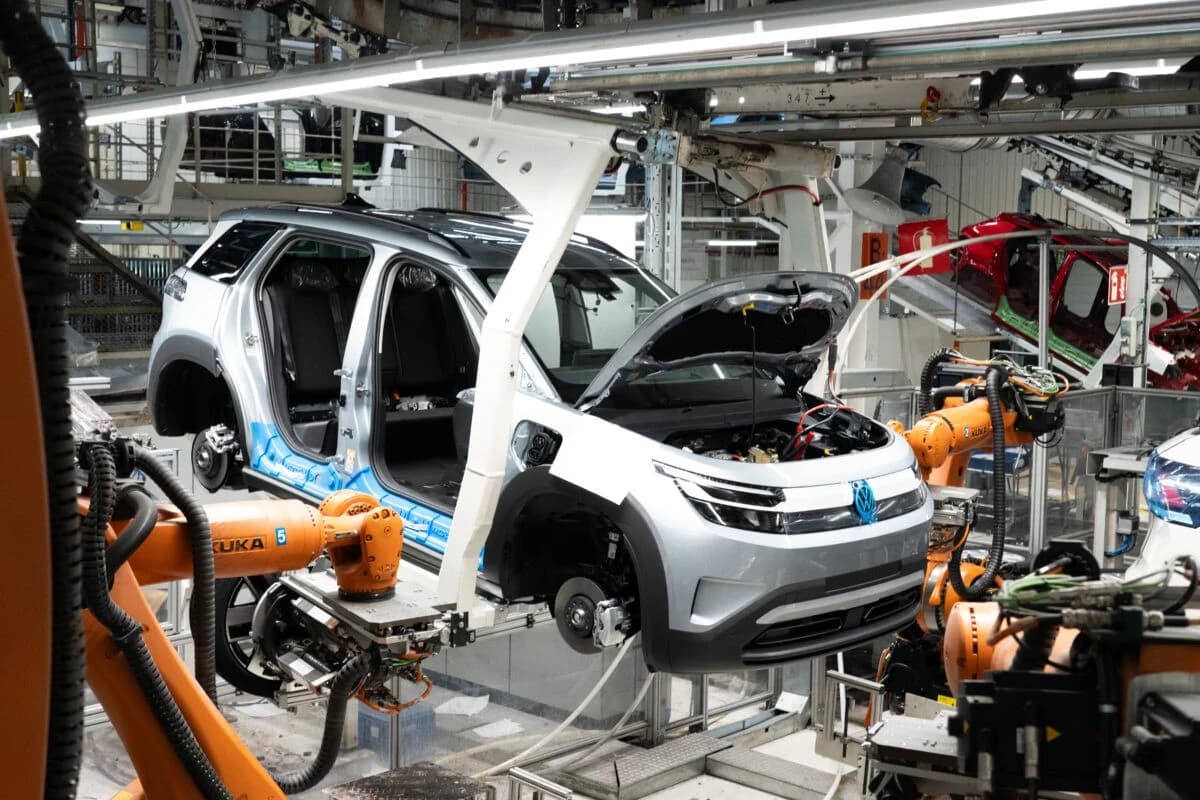
The technical basis is the Volkswagen Group’s Premium Platform Electric. This architecture is already used by the electric Porsche Macan and the Audi Q6 e-tron. However, the Torcal will receive its own tuning, intended to meet Bentley’s standards for both comfort and highly dynamic handling.
The chassis technology includes fully active suspension without conventional anti-roll bars and rear-wheel steering as standard. The active control system can selectively reduce body roll without having to sacrifice ride comfort through particularly stiff anti-roll bars. The steering rear axle also improves maneuverability at low speeds and stability when driving quickly.
OLED meets traditional controls
Inside, Bentley combines a curved OLED display with physical controls. This is a sensible combination in the luxury segment, as frequently used functions remain directly accessible while digital displays can be adjusted flexibly.
The brand is also experimenting with new materials. In addition to merino wool, it uses multilayer wood surfaces made from walnut offcuts and recycled paper. The aim is to demonstrate more sustainable material use in the cabin without sacrificing the handcrafted character of a Bentley.
Electrification with a revised timetable
The Torcal is arriving against the backdrop of a revised electric-vehicle strategy. Bentley had originally aimed for a fully electric model range by 2030, but abandoned that target because demand was developing more slowly than expected. Combustion-engine models and plug-in hybrids will therefore remain on sale alongside electric cars for longer.
Nevertheless, interest in the first battery-electric Bentley appears to extend beyond the company’s existing customer base. According to the company, around half of the inquiries received so far have come from people who do not currently drive a Bentley. The Torcal could therefore represent not only a new powertrain for the brand, but also a gateway to a new group of buyers.
The Torcal is not intended to be simply an electric Bentayga, but Bentley’s standalone interpretation of an exceptionally powerful luxury electric car.