Olinia Carga: Mexico’s 7,600-Euro Electric Van Targets City Centers
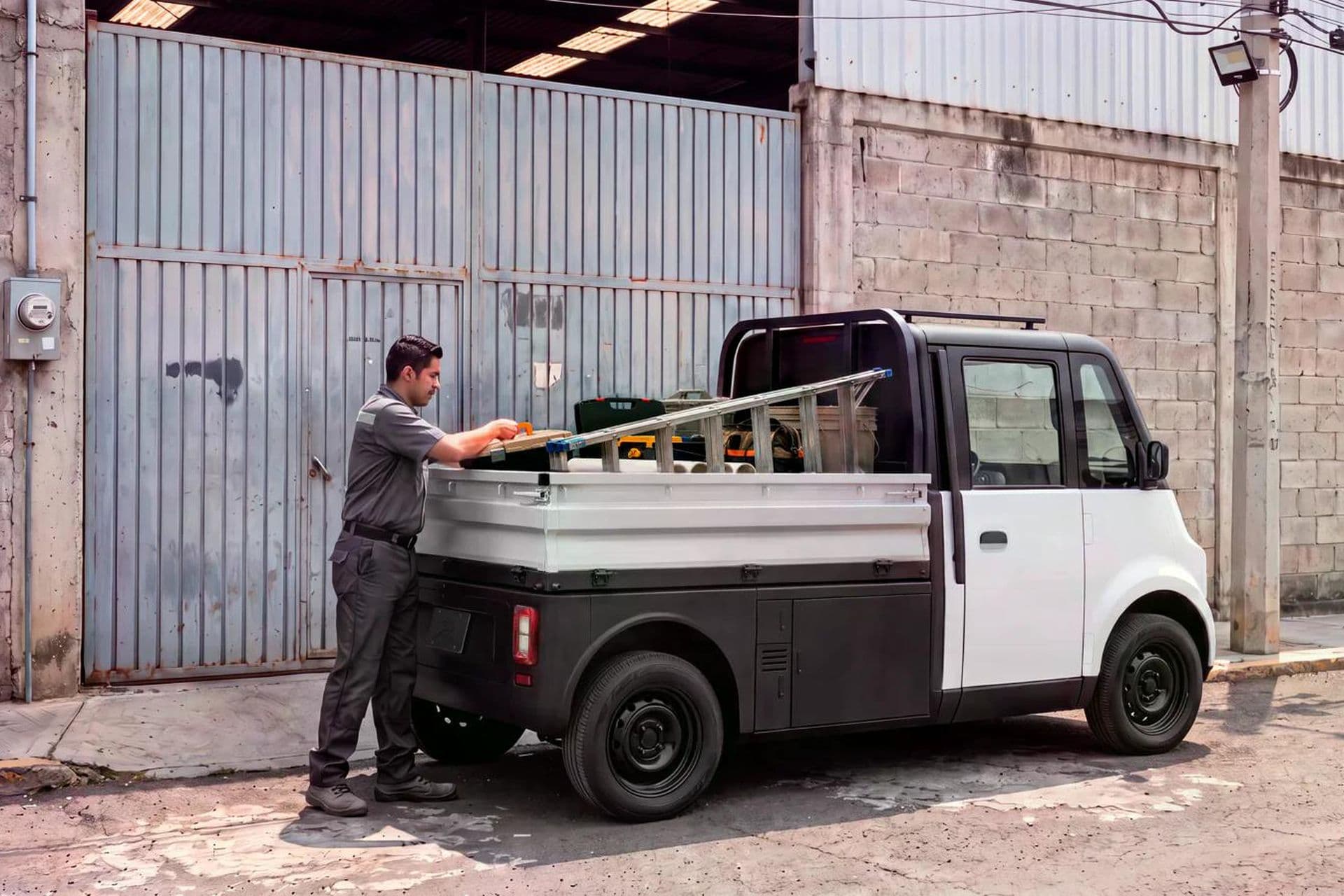
With the Olinia Carga, Mexico plans to launch an electric commercial vehicle designed primarily to ease the burden on small businesses, retailers and delivery drivers. The compact light truck was presented as a prototype in Mexico City and, according to government statements, is scheduled to go on sale in late 2027.
The planned price is the real headline: around 150,000 pesos, equivalent to approximately 7,600 euros. That would put the Olinia Carga far below the usual cost of light commercial vehicles, even before factoring in equipment, body configurations or financing.
What the Vehicle Is Expected to Offer: 650 kg Payload and 120 km Range
Technically, the Olinia Carga is clearly intended as an urban workhorse. The stated specifications include a payload of up to 650 kg and a range of 120 km. That suits typical urban and local transport profiles: frequent stops, short journeys, predictable routes and a return to the depot in the evening.
That is precisely the idea: to bridge the gap between two-wheelers with limited cargo capacity and conventional vans, which offer greater capabilities but are often significantly more expensive to buy and operate. In short, affordable electric mobility for the last mile without immediately requiring a “large” fleet budget.
Everyday Benefits for Delivery Services and Tradespeople
If the price actually remains close to this level, it could create an attractive opportunity for businesses that currently use second-hand combustion vehicles, small panel vans or cargo bikes. Electric drive can offer practical advantages, particularly in city centers: less noise, smoother stop-and-go operation and potentially lower maintenance requirements. At the same time, a range of 120 km means this is not an all-purpose van, but a specialist vehicle for predictable routes.
More Than a Vehicle: Mexico Wants to Establish Domestic EV Production
The Olinia Carga is not intended as a stand-alone project, but as one component of a broader strategy. Mexico’s government explicitly links the initiative to its goal of establishing domestic electric vehicle manufacturing. It had previously announced the “Olinia 1,” a small domestically produced electric car that is expected to reach the road sooner.
This places the light truck in a role familiar from other markets: an affordable entry-level product is intended to generate volume, build expertise and anchor a supply chain within the country. Similar industrial objectives can currently be seen in Europe, particularly for battery and cell factories, although they are driven much more strongly by the private sector there.
Production Plan: Initially 10,000, Later Up to 50,000 Vehicles per Year
A relatively cautious production ramp-up is planned initially. The stated starting output is 10,000 units per year. In the medium term, partnerships could increase this to as many as 50,000 vehicles annually, provided suitable domestic and international industrial partners come on board.
A tender process is to be launched to target partners with manufacturing experience and a long-term value-creation strategy. One thing is clear: without industrial expertise, a supplier network and quality assurance, a prototype remains just a prototype.
The Tough Challenge: Batteries, Their Share of Costs and Local Value Creation
As is so often the case, the key issue is the battery. The government acknowledges that existing battery capacity is currently insufficient. At the same time, the plan is to at least assemble batteries domestically and gradually develop the supply chains.
A key figure from the project shows why this is so crucial: battery costs are expected to account for around 40% of the vehicle’s value. Affordable and readily available batteries → stable vehicle price. Scarce or expensive batteries → the 7,600-euro target quickly becomes little more than a marketing figure.
Perspective from Germany, Austria and Switzerland: Interesting, but Not (Yet) a European Issue
For Germany, Austria and Switzerland—the region often referred to as DACH—the Olinia Carga is currently above all a signal of how aggressive pricing can become when a vehicle is consistently optimized for a specific use case and government industrial policy acts as an accelerator. Whether the model will ever come to Europe remains unclear and, given registration, safety and homologation requirements, should not be taken for granted.
The bottom line: If Mexico can resolve the battery issue and successfully scale production, Olinia could become a genuine alternative for urban logistics in its domestic market, at a price that could reshape the debate over “affordable electric commercial vehicles” in many countries.