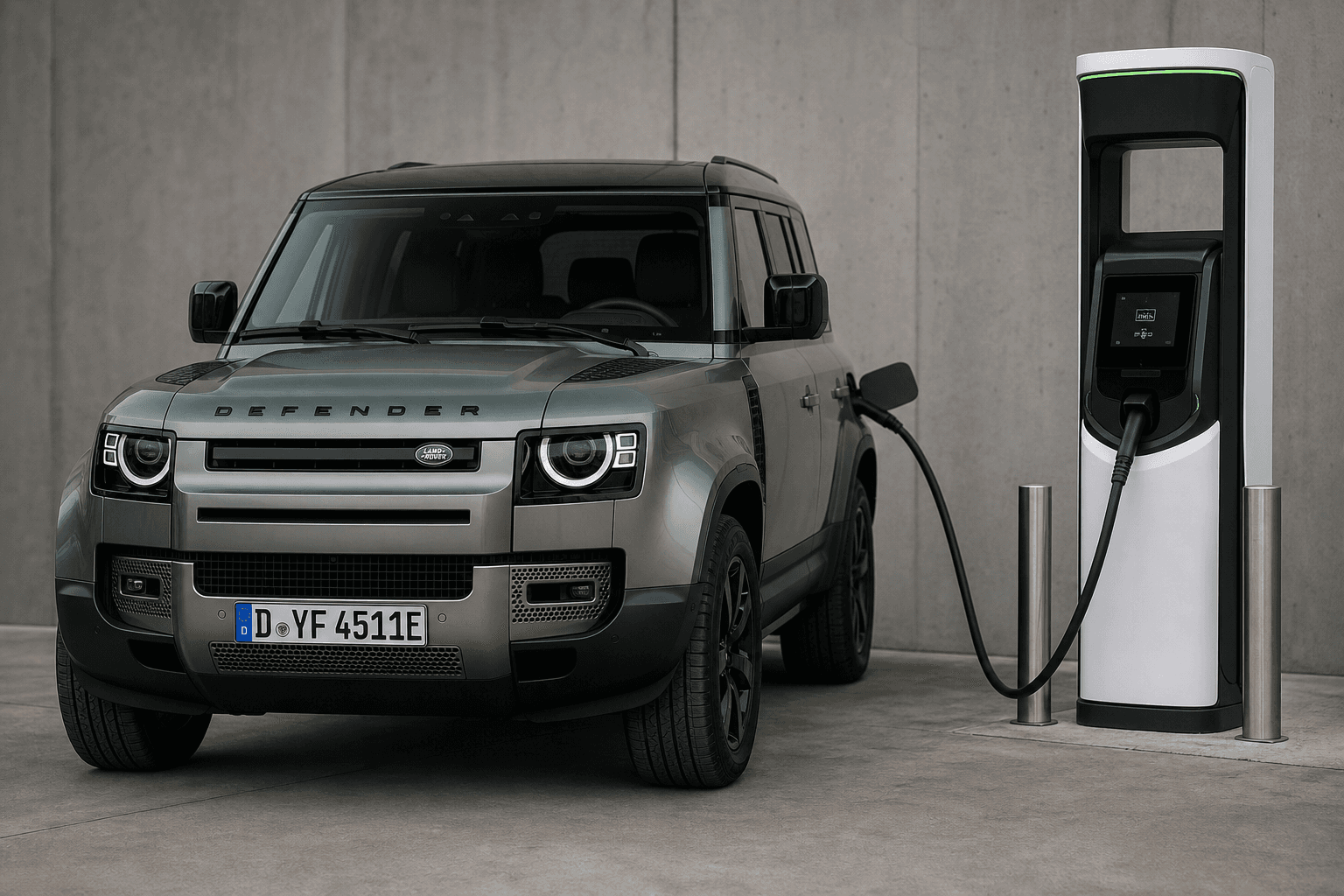
Electric Defender Apparently Not Launching Until the Early 2030s
Anyone hoping for a fully electric Land Rover Defender will apparently need to be patient. According to a report, Jaguar Land Rover (JLR) plans to delay the Defender’s next major overhaul by around two years. As a result, a completely new Defender—and therefore a realistic basis for a battery-electric version—would not reach the market until the early 2030s at the earliest.
JLR itself does not publicly comment on such timelines and has not issued a statement regarding the report. At the same time, the manufacturer points to continued strong global demand for the current Defender.
Why the Current Defender Cannot Simply Go Electric
The sticking point is the technology: The current Defender is based on the D7X platform. According to the information in the report, this architecture was not designed to accommodate a fully electric powertrain. In practical terms, that means a “Defender EV” based on the existing model is not merely unlikely but virtually impossible.
A genuine electric Defender would therefore have to be built on a new vehicle architecture. And that is precisely what takes time, as development, validation—including off-road durability, thermal management and sealing—and production planning would all have to be set up from scratch.
The Defender Remains JLR’s Best-Seller, and That Affects the Timeline
Strategically, the Defender is extremely important to JLR. According to the report, the off-roader accounted for around one-third of JLR sales between April and June. At just under 26,700 units, it was well ahead of the Range Rover Sport, which sold just under 17,000 units during the same period.
When a model contributes this much to a company’s performance, its replacement is often planned more conservatively. This also fits with JLR’s tradition of maintaining longer model cycles than is customary in the industry. A later successor could therefore also mean that the current Defender remains in the lineup for longer because it is selling well and JLR wants to carefully secure the investment in an entirely new platform.
Smaller Defender on New EMA Platform: EV and Hybrid Under Consideration
At the same time, JLR is reportedly working on a smaller Defender that could be offered both as an electric vehicle and with a hybrid powertrain. This model is expected to use the new EMA platform, which JLR has designated for its next generation of electrified vehicles.
That would at least allow a Defender derivative to be electrified sooner than the large core model. How quickly this happens and what form it takes, however, will also depend on traditional factors such as target costs, segment positioning and production locations.
Premium EV Demand, China and US Policy Create Additional Headwinds
Alongside the technical issues, the market plays a major role. Demand for EVs in the premium segment is developing unevenly across regions, and the political and economic environment is becoming more challenging in the United States, one of JLR’s most important markets. Other factors include a weaker luxury market in China and tougher competition from local manufacturers, which are also promoting concepts such as range extenders—a large battery combined with a small combustion engine to provide additional range.
In the United States, JLR also faces the issue of import tariffs. The Defender is built in Slovakia and is therefore subject to a 15% tariff on vehicle imports from the EU. According to the report, JLR is also planning a model jointly developed with Stellantis for the US market under the Defender name, in an effort to at least partially circumvent the trade barrier. However, this vehicle is expected to compete in a different segment from the current Defender, which would continue to be imported.
Perspective: What This Means for Electric Off-Road Fans in the DACH Region
For buyers in the DACH region—Germany, Austria and Switzerland—the main takeaway is that anyone expecting a no-compromise electric off-roader in the Defender’s size class will probably have to wait several more model years. At the same time, the situation demonstrates how strongly platform decisions shape electrification. Without a suitable architecture, there is no quick solution of “simply installing a battery.”
If you are interested in product cycles like these and how they affect the selection of EVs, it is also worth taking a look at the ranking of compact electric SUVs in Germany. And if range in large vehicles is your concern, our guide to EV range anxiety examines common concerns and realistic strategies.