BYD Sets Its Sights on the Global Market
BYD apparently intends to expand its business outside China much more rapidly. According to analyst reports, management has set a target of more than 2.5 million overseas vehicle sales for 2027. However, the manufacturer has yet to officially confirm the figure.
For 2026, forecasts already call for 1.9 to 2 million vehicles. That would be roughly twice as many as in the previous year and would demonstrate how strongly BYD is now focusing on international markets.
| Period | Planned Overseas Sales | Context |
|---|---|---|
| 2026 | 1.9 to 2 million vehicles | About twice as many as in the previous year |
| 2027 | More than 2.5 million vehicles | Further growth of at least 25% |
The term overseas sales is crucial here. In the future, not all vehicles are expected to be exported from China, as BYD is simultaneously building production capacity in other countries. Local manufacturing, exports, and regional supply chains are all likely to count toward the target.
BYD’s Own Ships Remove a Major Bottleneck
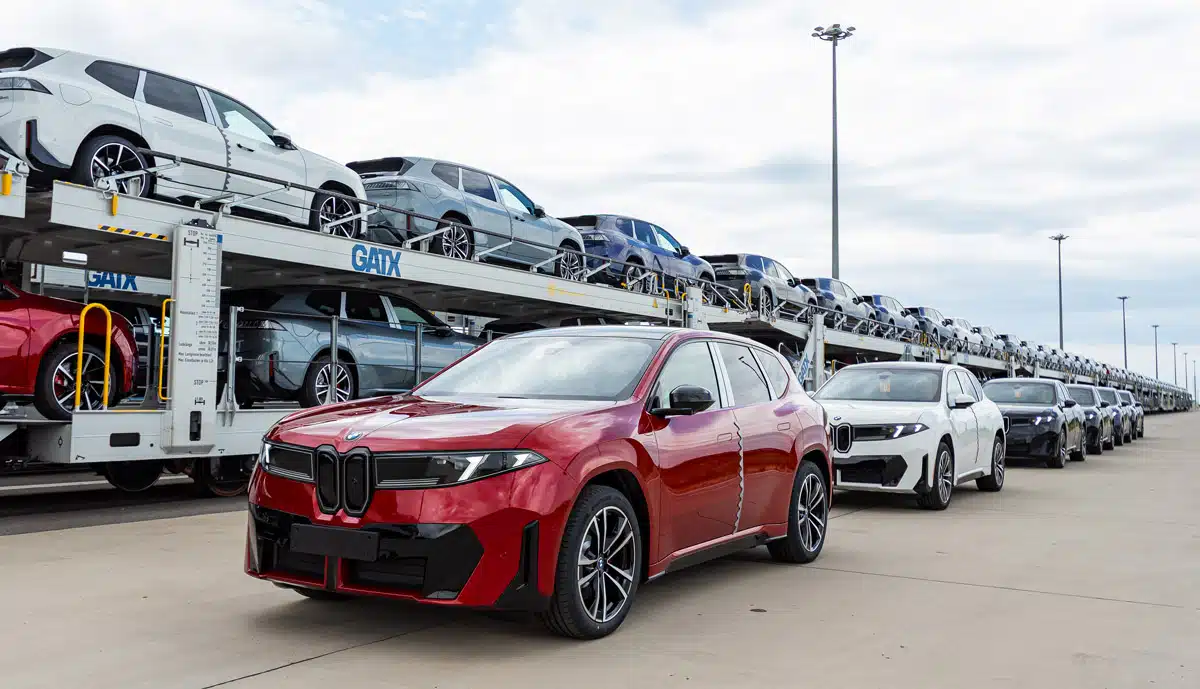
Until now, growth has not been constrained solely by demand and dealer networks. BYD also points to limited maritime transport capacity. Additional vehicle carriers of its own are expected to significantly ease this bottleneck in 2027.
Having its own fleet gives BYD greater control over schedules, costs, and available cargo space. This is particularly relevant when vehicles need to be delivered simultaneously to Europe, South America, and other growth markets.
More ships alone will not be enough: To sustain high overseas sales, BYD also needs local factories, spare-parts supplies, service networks, and competitive financing offers.
Hungary Becomes Central to BYD’s European Strategy
Vehicle assembly at BYD’s new factory in Hungary is scheduled to begin by the end of 2026. Additional international production sites are under consideration. This step is particularly important for the European market because locally manufactured vehicles are not treated in the same way as finished imports from China.
For BYD electric cars imported from China, the standard import tariff and the additional EU countervailing duty add up to around 27%. According to the available calculations, European production could eliminate costs of just under €5,000 per vehicle. The actual savings will depend on factors including supply chains, capacity utilization, and the share of locally sourced components.
Regional manufacturing could also help BYD respond more quickly to demand in the DACH region—Germany, Austria, and Switzerland. At the same time, pressure on established manufacturers is increasing, as Europe’s electric car market is already growing rapidly, as shown by the electric car boom in Europe.
90,000 Flash Charging Stations Planned by 2028
Alongside its vehicle business, BYD also plans to massively expand its charging infrastructure. The plan calls for a total of 90,000 Flash Charging stations by the end of 2028. However, the figures released to date do not indicate how many of these will actually be built outside China.
| Year | New Stations | Cumulative Target |
|---|---|---|
| 2026 | 20,000 | 20,000 |
| 2027 | 30,000 | 50,000 |
| 2028 | 40,000 | 90,000 |
The technology is designed for peak outputs of up to 1,500 kW. In everyday use, a vehicle can only take advantage of this output if its battery, voltage, temperature, and charging curve are suitable. High station output → short charging stops, but only with appropriately equipped vehicles and a high-capacity grid connection.
BYD is already working on an extensive 1,500 kW charging network with Flash Charging. For Europe, factors beyond charging output will be crucial, including whether the stations are reliably available, accessible to vehicles from all brands, and sensibly distributed along major travel routes.
Price War in China Increases Pressure to Expand
The international expansion is no coincidence. China’s domestic market is characterized by fierce price competition that is putting pressure on many manufacturers’ margins. Nevertheless, in the market analysis cited, BYD increased its share from around 8% at the beginning of the year to 18% in July and is targeting 25% over the long term.
Growing overseas sales could reduce BYD’s dependence on the price war in China. At the same time, building new factories, ships, dealer networks, and charging stations requires substantial initial investment. The crucial question is therefore not only whether BYD reaches 2.5 million vehicles, but whether it can scale its international business profitably.
What the Target Means for Europe
If BYD reaches its target, competitive pressure in Europe is likely to increase significantly. The company combines low-cost battery technology with an increasingly broad model range while simultaneously investing in production and charging infrastructure.
For now, the figure of 2.5 million vehicles remains a reported management target rather than an official forecast. Nevertheless, the strategic direction is clear: BYD intends to evolve from a Chinese exporter into a globally operating vehicle manufacturer with local production. This is also likely to result in more models, greater price pressure, and more intense competition in Germany, Austria, and Switzerland.