China’s battery market reaches a new annual high
EV batteries with a combined capacity of 79.0 GWh were installed in Chinese electric vehicles in August 2026. That was 5.9% more than in July and 26.3% more than in the same month last year. It was also the highest monthly figure recorded so far this year.
CATL remained the clear market leader. However, BYD grew significantly faster month over month and narrowed the gap with the industry leader for the third consecutive month.
Together, CATL and BYD controlled 62.43% of China’s EV battery market in August.
CATL leads as BYD gains market share
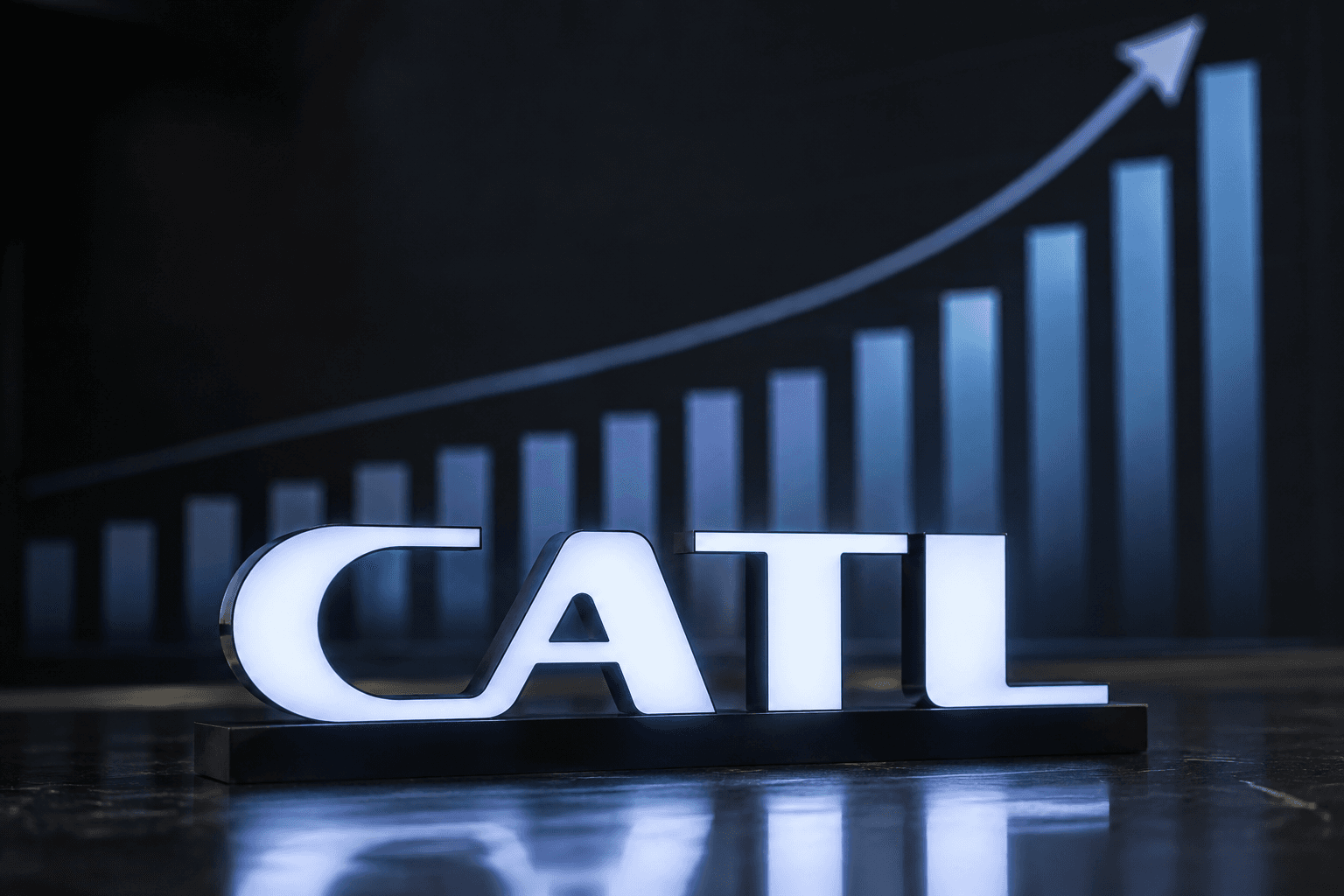
CATL installed 32.54 GWh in August, giving it a market share of 41.45%. Volume increased by around 3.6% compared with July, but its market share still fell by 0.89 percentage points. In other words, the overall market grew faster than CATL.
BYD reached 16.47 GWh, increasing its monthly volume by around 15.5%. As a result, its market share rose by 1.75 percentage points to 20.98%. The gap with CATL narrowed to 20.47 percentage points.
| Manufacturer | Installations | Market share | Change from July |
|---|---|---|---|
| CATL | 32.54 GWh | 41.45% | down 0.89 percentage points |
| BYD | 16.47 GWh | 20.98% | up 1.75 percentage points |
| CALB | 5.11 GWh | 6.51% | down 0.45 percentage points |
| Eve Energy | 4.67 GWh | 5.95% | down 0.10 percentage points |
| Gotion High-tech | 4.61 GWh | 5.87% | down 0.42 percentage points |
| Rept Battero Energy | 2.72 GWh | 3.47% | down 0.45 percentage points |
| Sunwoda | 2.71 GWh | 3.46% | down 0.13 percentage points |
| Zenergy | 1.87 GWh | 2.39% | down 0.05 percentage points |
| Energee | 1.80 GWh | 2.30% | up 0.07 percentage points |
| Svolt Energy | 1.80 GWh | 2.29% | up 0.46 percentage points |
CALB retained third place but lost both volume and market share. Eve Energy moved up to fourth place, narrowly overtaking Gotion High-tech. Together, the five largest suppliers accounted for 80.76% of the market.
LG Energy Solution also recorded notable growth. Although the South Korean manufacturer remained outside the top 10 with a 2.03% share, it increased its installations from 0.73 to 1.60 GWh.
LFP cells reach an 85.6% market share
The real structural shift is taking place in cell chemistry. Lithium iron phosphate batteries reached 67.6 GWh in August, giving them a record market share of 85.6%. Installed volume increased by 7.0% compared with July.
In the previous month, LFP had already reached 84.6% of China’s battery market. August was therefore the third consecutive month to set a new record.
| Cell chemistry | Installations | Market share | Change from July |
|---|---|---|---|
| LFP | 67.6 GWh | 85.6% | up 7.0% |
| Ternary batteries | 11.0 GWh | 14.0% | down 1.0% |
LFP cells do not use nickel or cobalt in the cathode. They are considered inexpensive, thermally robust, and durable, while their lower energy density is increasingly being offset by more efficient cell integration. For many everyday vehicles, they now offer the more attractive overall package.
BYD relies entirely on LFP
CATL also led China’s LFP segment with 25.17 GWh and a market share of 37.31%. BYD followed with 16.47 GWh and 24.41%. All Chinese BYD installations recorded in August used LFP batteries, including the well-known BYD Blade Battery.
CATL remained dominant in ternary batteries, with 7.4 GWh and a 66.8% share. However, its market share fell significantly compared with July, while LG Energy Solution returned to second place with 14.5%. Ternary cells, which usually have nickel-containing cathodes, are particularly strong in applications where high energy density is especially important.
What the figures mean for Europe
The statistics cover only EV batteries installed in China. They therefore cannot be applied directly to Germany, Austria, or Switzerland. Nevertheless, the trend is relevant because the enormous scale of the Chinese market influences cell costs, production strategies, and vehicle platforms worldwide.
The growing share of LFP is increasing pressure on manufacturers to offer affordable electric cars with robust batteries that can be produced quickly. BYD’s gains also demonstrate the advantage that can come from combining in-house cell manufacturing with vehicle production. CATL remains clearly ahead, but competition at the top is visibly tightening.