BYD Racco: An electric kei car designed to win on packaging, not horsepower
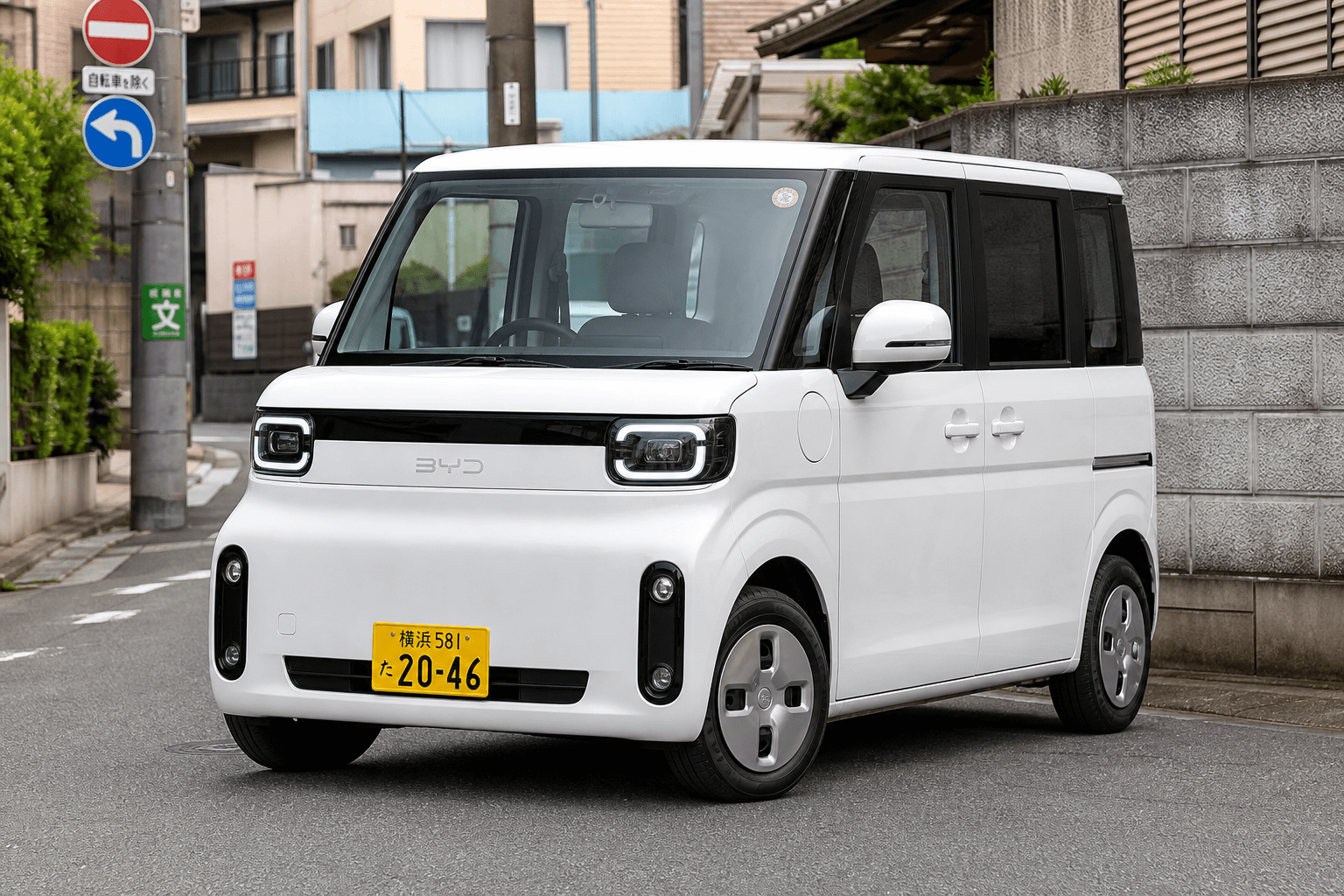
Anyone who associates Chinese EVs with maximum power, huge screens, and lots of range for the money may need to adjust their expectations for the BYD Racco. In Japan, the model competes in the kei-car class, a regulated category of compact vehicles subject to strict limits on dimensions and power. Those constraints force BYD to adopt a different strategy: everyday usability, easy access, good all-round visibility, and an interior that can serve as a small multipurpose vehicle.
The context is also noteworthy: The Racco is considered the first purpose-built kei passenger car from a major non-Japanese mass-market manufacturer. In a segment shaped so heavily by local preferences, that represents a real test.
What the Racco is like in everyday use: tall, boxy, and surprisingly spacious
An early driving impression from Japan paints a clear picture: The Racco takes the kei-car brief very seriously. Its tall, boxy body makes getting in easier, while the sliding rear doors are intended to make entry and exit particularly straightforward in tight parking spaces. Especially in Japanese city traffic, with its narrow streets, this is not a gimmick but a genuinely useful feature.
The driving position is high, and visibility is good. Although the exterior dimensions are necessarily small, the rear seats receive particular praise, offering plenty of legroom and a level of comfort that, according to the initial impression, could even rival some significantly larger SUVs.
An interior without the showmanship, but with sensible choices
Rather than overloading everything with effects, BYD appears to have given the Racco deliberately simple, easy-to-understand controls. These include physical climate controls and a small touchscreen with Apple CarPlay. That restraint could ultimately be a strength: less distraction, fewer layers of menus, and faster operation in everyday use.
Versatility: from city car to mini cargo van
Another priority is modularity. The seats can reportedly be folded down, folded forward, or adjusted to accommodate bulkier or longer items. With the seats folded, the Racco effectively becomes a small electric van with as flat a floor as possible and a box-shaped, practical cargo area. This is especially important in the kei class, where every bit of the vehicle’s footprint must be used as efficiently as possible.
Driving impression: adequate power, slightly sharp brakes
On the road, the Racco is described as very well suited to its surroundings: The steering is tuned more for comfort, while acceleration is “enough” for city driving, where low speed limits and narrow roads limit the need for power anyway. One criticism from the initial impression is that the brakes may respond a little too aggressively, feeling sharp rather than easy to modulate smoothly.
It is important to put this into context: This segment is rarely about sportiness. If a kei EV is quiet, easy to see out of, and simple to operate, that is often worth more than a few additional newton-metres.
Compared with the Nissan Sakura: similar performance, but more battery options
The Nissan Sakura is considered its main rival and has for years been Japan’s best-selling electric car in its segment. Both models must comply with kei regulations, so their power and footprint are comparable. One notable difference is that the Racco is expected to stand around 145 mm taller than the Sakura, fitting well with its emphasis on a spacious feel.
| Feature | BYD Racco | Nissan Sakura |
|---|---|---|
| Battery sizes | 22.4 kWh or 35.8 kWh | 20 kWh |
| Range (WLTC) | 210 km (22.4 kWh) or 320 km (35.8 kWh) | 180 km |
| Torque | 160 Nm | 195 Nm |
| Body height vs. rival | around 145 mm taller | Reference |
In short, the Sakura is likely to feel more responsive thanks to its higher torque, while the Racco’s larger battery option gives it a clear advantage in claimed range. For urban commuters in particular, that could mean fewer charging stops per week → less time spent organizing charging in everyday life.
Price: an affordable entry point, but Japan remains a special case
In Japan, the Racco is expected to start at the equivalent of around €12,000 before incentives. Local subsidies must also be taken into account, and these can vary depending on the model and its country of origin. In other words, the basic list price tells only half the story, as the Sakura may benefit from more generous incentives for domestically produced models.
For the DACH region—Germany, Austria, and Switzerland—the Racco is interesting primarily from a market perspective. Kei cars remain a niche topic there, but the broader lesson is universal: When a manufacturer is forced to design within tight constraints, the result is often particularly clever use of space and pleasantly gimmick-free controls.
Why this is also relevant to Europe
The Racco shows that BYD can do more than simply offer “bigger, faster, and more range.” It can also develop vehicles tailored to local needs, with practicality taking priority. That is precisely the kind of thinking that is once again becoming more important in Europe for affordable electric city cars and compact family vehicles.