China’s Car Exports Hit a Record Ahead of Schedule
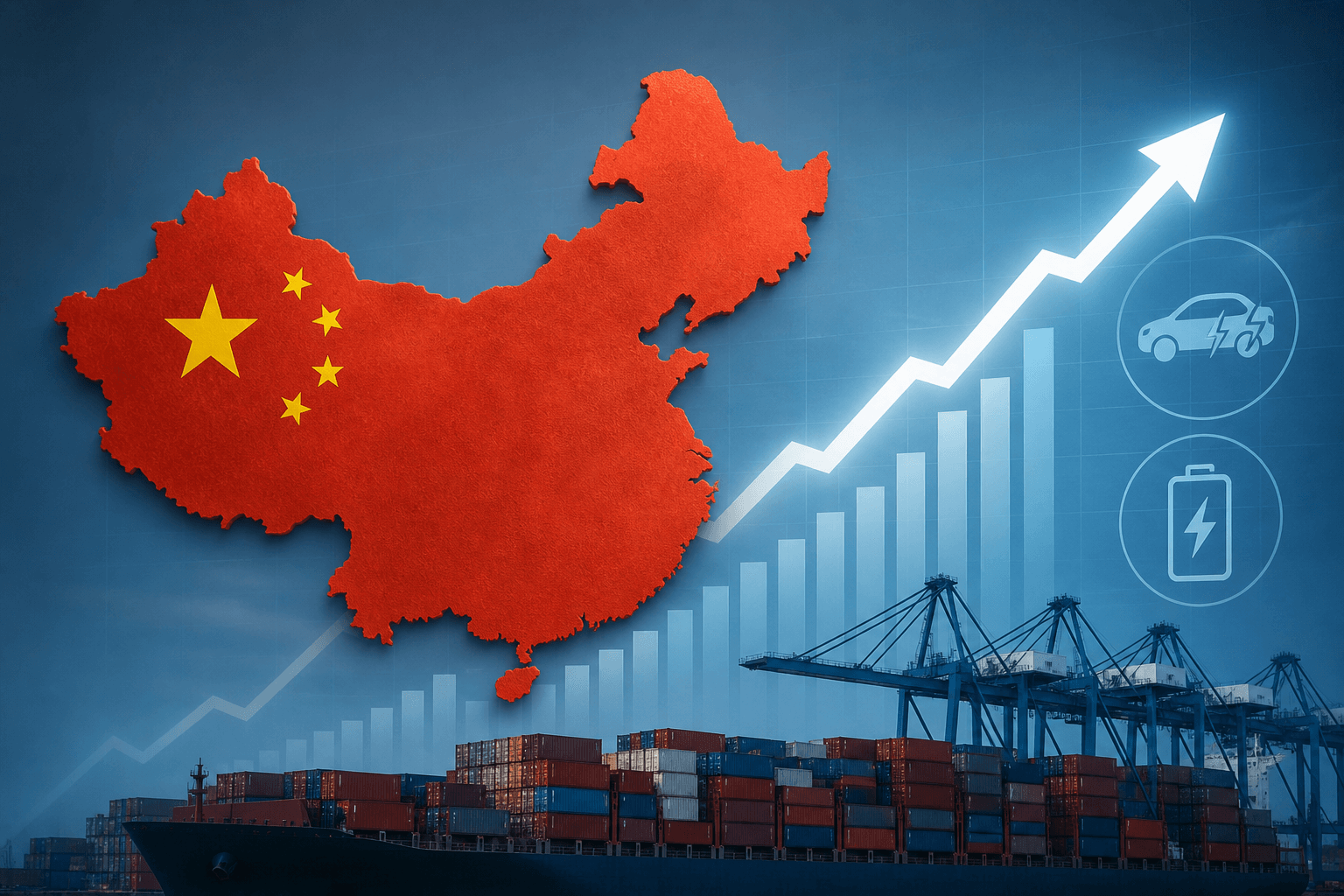
China’s automotive industry is increasingly shifting its focus abroad. According to the Chinese manufacturers’ association, around 6.2 million passenger cars were exported from January through August 2026. The country has therefore already exceeded the nearly 6 million passenger cars exported during the whole of 2025.
In August alone, around 890,000 vehicles were shipped abroad. That represents an increase of 67.1% compared with the same month last year. Electric cars and plug-in hybrids are playing a central role in this growth.
China’s export record is not only a sign of growing demand but also an outlet for enormous production capacity and the fierce price war in its domestic market.
Export Figures at a Glance
| Period | Metric | Volume |
|---|---|---|
| Full year 2025 | Vehicles of all classes | around 7.1 million |
| Full year 2025 | Passenger cars exported | nearly 6 million |
| January through August 2026 | Passenger cars exported | around 6.2 million |
| August 2026 | Vehicle exports | around 890,000 |
It is important to distinguish between the statistics. The 7.1 million vehicles recorded in 2025 include vehicle classes other than passenger cars. By August 2026, China had surpassed the previous year’s figure for exported passenger cars, but not necessarily the total export volume for all vehicle types.
Weak Domestic Market Increases Export Pressure
While exports are booming, China’s domestic market is losing momentum. Passenger car sales in August were around 25% below the previous year’s level. Vehicles powered solely by internal combustion engines are under particular pressure as Chinese buyers increasingly switch to electric cars and plug-in hybrids.
For manufacturers, the calculation is clear: high factory capacity plus weaker domestic demand → more vehicles must be sold in international markets. Profit margins abroad are also often higher than in China’s extremely aggressive price war.
Brands such as BYD, Geely, MG, Leapmotor and other manufacturers are therefore launching new models in international markets in rapid succession. The development of global electric car sales in 2026 also shows how quickly the balance of power is shifting.
Electric Cars and Plug-In Hybrids Drive Growth
Chinese manufacturers benefit from an unusually broad range of models. From affordable electric city cars and family SUVs to luxury vehicles, electrified options are now available in almost every segment. At the same time, the build quality, software and charging technology of many models have improved considerably.
One example of China’s established export models is the BYD Atto 3. Vehicles like this combine competitive battery technology with extensive equipment and prices that put European manufacturers under pressure.
Alongside all-electric cars, plug-in hybrids are becoming increasingly important. They are particularly attractive in markets where public charging infrastructure is not yet widely available. They also give Chinese manufacturers access to regions where all-electric cars are subject to additional trade tariffs.
Europe Remains Important but Politically Challenging
China has already significantly expanded its market share in Europe, Southeast Asia, Latin America and Australia. In Australia, Chinese brands now account for nearly one-third of the automotive market combined. Mexico is also developing into a major sales market.
However, conditions vary greatly. The United States shields its market from Chinese cars with very high tariffs. Canada is opening up only to a limited extent, while the European Union imposes additional countervailing duties on electric cars and is also monitoring the growing imports of plug-in hybrids.
For Germany, Austria and Switzerland, the export boom nevertheless means more choice. Chinese brands are accelerating the pace, particularly in affordable electric cars, modern 800-volt platforms and lithium iron phosphate (LFP) batteries. The rising electric car market share in Europe shows that demand for such vehicles is growing across the region.
The Record Intensifies Global Competition
Whether China can sustain its current growth will depend on trade barriers, local production and the acceptance of new brands. Some manufacturers are therefore likely to build more factories and assembly capacity outside China so that they can produce closer to their sales markets.
One thing is already clear: electric cars and plug-in hybrids are turning China’s automotive industry into an increasingly powerful exporter. European manufacturers must respond not only with lower prices but, above all, with efficient production, faster model updates and competitive charging technology.