BYD wants to massively expand production in Europe
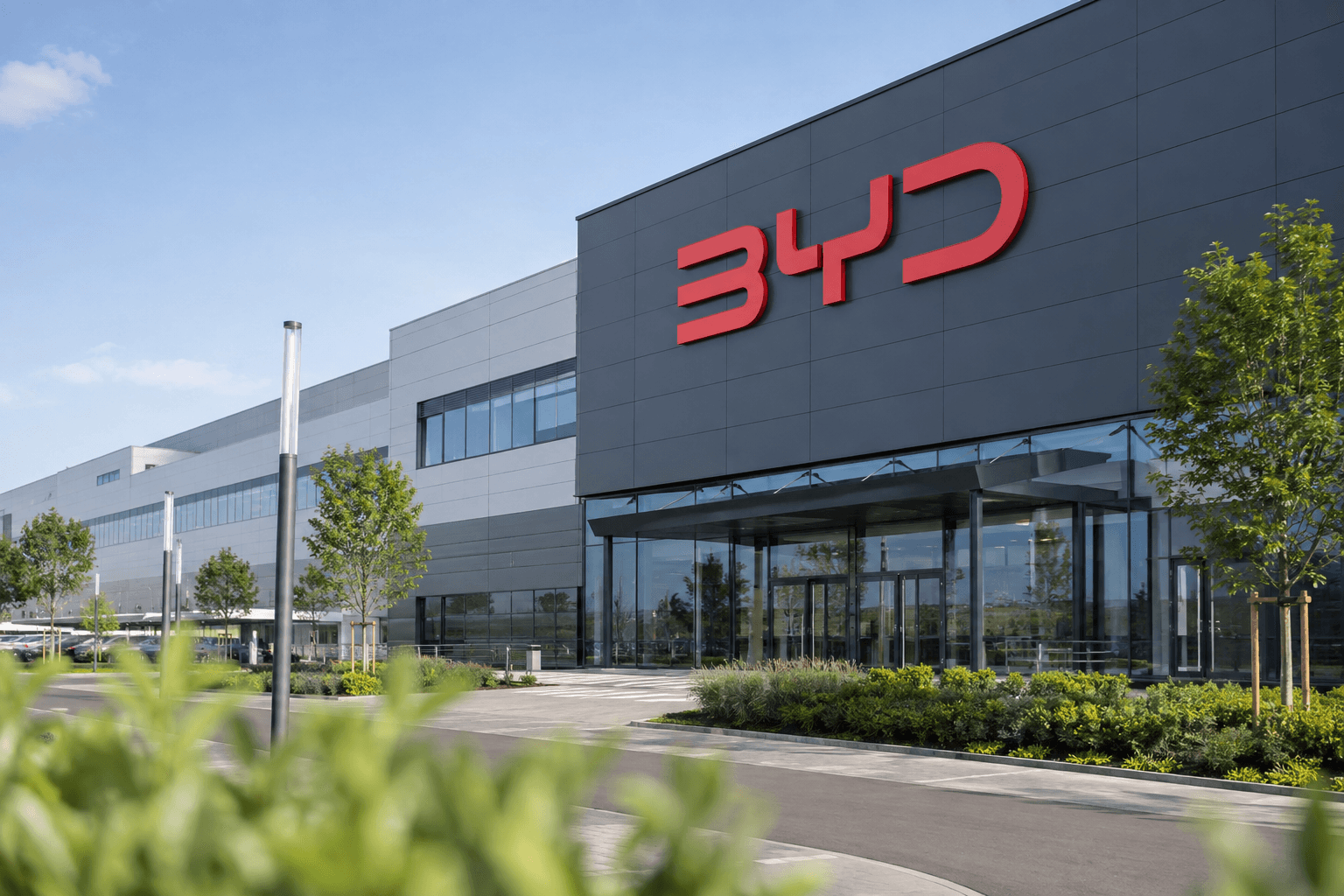
BYD is preparing the next step in its European expansion. In the long term, the Chinese manufacturer could need three vehicle plants and a battery factory in the region, according to its European adviser.
The additional capacity is intended to support rising sales and help meet European requirements for local manufacturing. However, this does not mean that construction of all four sites is planned in the short term; rather, this is the production network expected over the long term.
Local production will be key for BYD to continue growing in Europe regardless of trade disputes.
Location of second BYD plant to be decided by year-end
BYD is expected to decide on the location of its second European assembly plant by the end of 2026. Spain and France are considered particularly promising candidates.
Rather than building an entirely new factory, BYD apparently prefers to acquire and modernize an existing site. The company is holding talks with European automakers and governments about plants that are not operating at full capacity.
This approach could speed up approvals and the start of production. Acquiring an existing plant → conversion time and investment risk may be lower than for a new greenfield facility.
Italy remains a possible alternative
Italy also remains in the running, although it is currently considered more of a fallback option for the second plant. Competitive conditions for energy, logistics, labor costs and government support are likely to be decisive.
| Project | Current status |
|---|---|
| First assembly plant | Production ramp-up in Hungary |
| Second assembly plant | Decision expected by the end of 2026, with Spain and France favored |
| Third assembly plant | Planned for the long term, location not yet determined |
| Battery factory | Long-term part of the European strategy, details not yet determined |
EU tariffs increase pressure for local manufacturing
For BYD, establishing European plants is not just about supply routes. The EU imposes additional tariffs on electric cars produced in China. Proposed requirements concerning "Made in Europe" could make local production even more important in the future.
Possible restrictions on Chinese hybrid imports are also under discussion. If no political agreement is reached, plug-in hybrids could also face greater trade pressure. This affects an important part of BYD’s portfolio, as the brand sells both battery-electric vehicles and plug-in hybrids internationally.
Manufacturing within Europe could reduce tariff risks, shorten transport routes and bring BYD closer to regional suppliers. At the same time, the manufacturer would have to shoulder high initial investments and ensure sufficient capacity utilization at its plants.
International business is becoming increasingly important for BYD
BYD’s expansion comes amid rapidly growing international sales. In the first eight months of 2026, BYD sold 1,162,260 vehicles outside China, an increase of 85.72% compared with the same period of the previous year.
In August alone, 189,466 vehicles were sold in international markets. This represented 43.03% of total monthly sales. These figures cover all markets outside China and should therefore not be equated with Europe-only figures.
BYD is now targeting 1.9 million to 2 million international sales in 2026. The figure is expected to exceed 2.5 million vehicles in 2027. Revenue outside China surpassed domestic revenue for the first time in the first half of 2026.
Europe plays a central role in this, as the region’s EV market is once again growing significantly. Our article on the EV boom in Europe provides an overview.
A dedicated battery factory would be strategically important
A European battery factory would make BYD less dependent on imports of complete battery packs. The company develops and produces its Blade batteries in-house, giving it control over a particularly valuable part of the supply chain.
BYD has extensive experience with LFP technology, which dominates in China. A look at the Chinese LFP battery market shows how much this cell chemistry has grown.
For European customers, regional battery production could mean more stable supply chains and more predictable vehicle prices over the long term. It is not yet known whether BYD would initially produce cells, modules or complete battery systems there.
Denza to complement BYD in Europe’s luxury market
Alongside its core brand, BYD is also establishing Denza in Europe. New showrooms in Turin and Paris underline that the company is targeting not only mass-market models but also a foothold in higher-priced segments.
With models such as the Denza N8, the subsidiary could compete with established premium manufacturers. A European production network would give BYD and Denza greater flexibility on pricing, delivery times and model adaptations.
A major plan, but no complete timeline yet
Three vehicle plants and a battery factory would represent a clear commitment to the European market. So far, however, not all locations have been selected, nor have specific timelines for the complete network been confirmed.
The next crucial step is therefore selecting the second assembly plant. If the decision is indeed made by the end of 2026, it should quickly become clear how aggressively BYD intends to expand its local manufacturing.