BYD Formula S takes on the sedan market
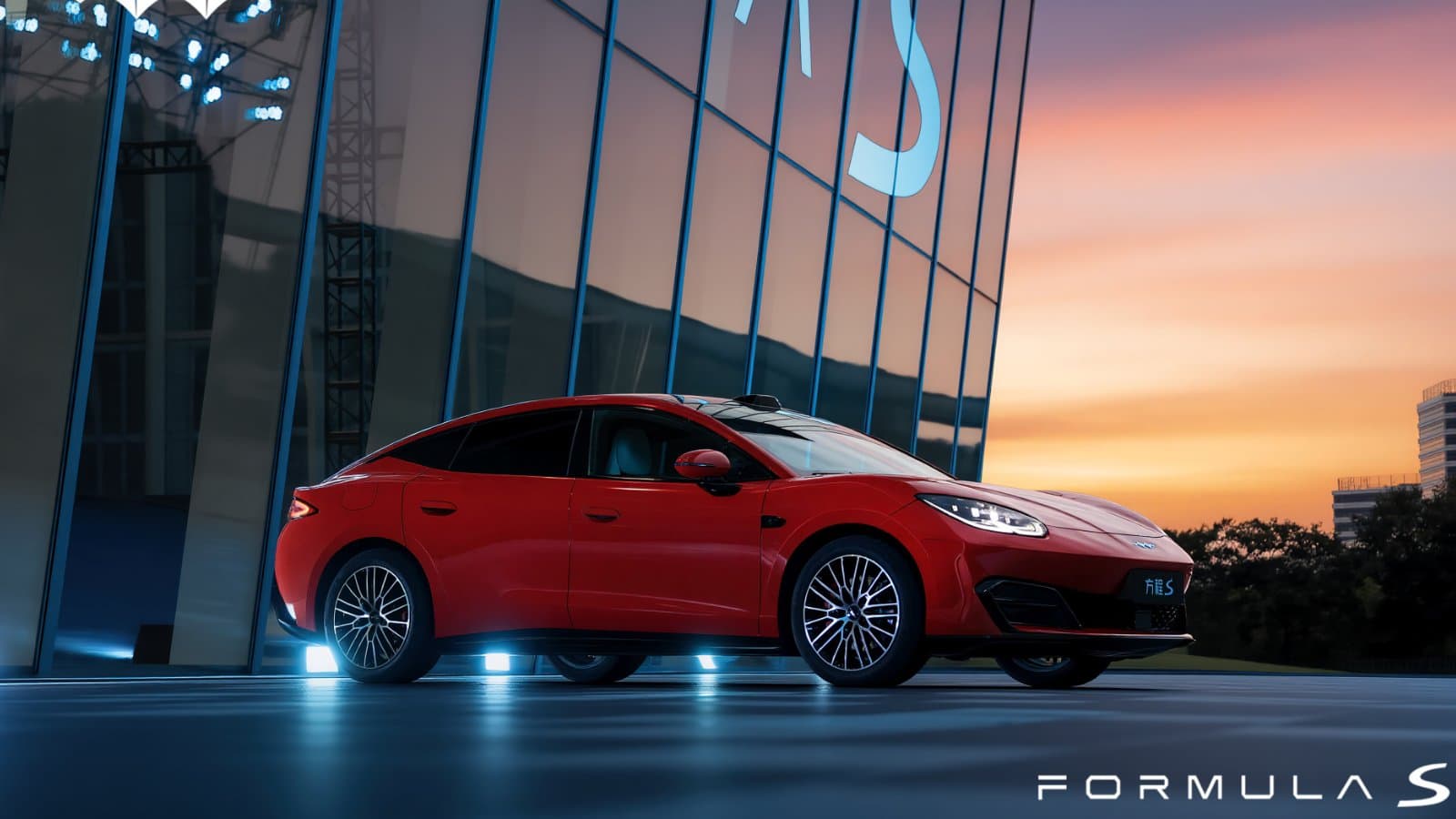
BYD is expanding its Fang Cheng Bao brand with an entirely new model range. Alongside the conventional Formula S sedan, the previously spotted BYD Formula S GT is launching as an electric shooting brake. This takes Fang Cheng Bao beyond its previously SUV-dominated territory.
In China, the Formula S range starts at 189,900 yuan, equivalent to around €23,900. The official entry price is therefore about 17% below the initially announced presale range. However, this figure cannot be applied directly to Germany, Austria or Switzerland, as transport, homologation, taxes and potential tariffs would be added, among other costs.
| Model | Formula S | Formula S GT |
|---|---|---|
| Body style | Sedan | Shooting brake |
| Variants | 5 | 4 |
| Price in China | 189,900 to 229,900 yuan | 219,900 to 239,900 yuan |
| Converted price | around €23,900 to €28,900 | around €27,700 to €30,200 |
| Battery | 76.7 or 92.1 kWh | 92.1 kWh |
| Maximum CLTC range | 900 km | 850 km |
| Drivetrain | Rear-wheel drive or all-wheel drive | Rear-wheel drive or all-wheel drive |
| Power output | 245 to 490 kW | 300 to 490 kW |
Up to 900 km of range, but under CLTC
The base Formula S combines rear-wheel drive, a 76.7 kWh battery and DiSus-C suspension. It achieves 730 km under China's CLTC test cycle. The longer-range rear-wheel-drive variant gets a 92.1 kWh battery and, according to the manufacturer, delivers 900 km of CLTC range.
The larger battery is standard in the Formula S GT. The specifications list up to 850 km with rear-wheel drive, while the all-wheel-drive version achieves 730 km. The Formula S sedan offers up to 750 km in its all-wheel-drive configuration.
CLTC figures are generally more optimistic than WLTP figures. It is not yet possible to derive a reliable European standardized range from them.
In China, BYD is positioning the Formula S against models including the Xiaomi SU7 and the Tesla Model 3. At 5.06 m long with a 2.96 m wheelbase, however, the new BYD sedan is significantly larger than the Tesla. The 5.03 m GT has a more practical rear end without fully adopting the proportions of a conventional station wagon.
Flash Charging comes with every variant
Both body styles receive the second generation of the Blade Battery and Flash Charging. BYD claims a charging time of 5 minutes from 10% to 70%. Charging from 10% to 97% is said to take 9 minutes.
BYD is also promising similar charging times for the Seal 06 with its new LFP battery. In everyday use, such figures depend on battery temperature, the charging curve and the available charging power. BYD did not specify at launch what maximum charging power the Formula S can sustain.
Two suspension systems at the same price
The new DiSus-M suspension is particularly interesting from a technical perspective. It uses a magnetorheological fluid whose damping characteristics can be changed within milliseconds. This is intended to enable rapid responses during dynamic driving without unnecessarily compromising everyday ride comfort.
Alternatively, BYD offers DiSus-A with dual-chamber air suspension and adaptive dampers. Variants with the same drivetrain and range cost the same regardless of whether they have DiSus-A or DiSus-M. Buyers are therefore choosing between air suspension and particularly fast-adjusting damping, rather than between different power levels.
490 kW and LiDAR for the top models
Depending on the version, the rear-wheel-drive sedans produce 245 or 300 kW. The rear-wheel-drive Formula S GT delivers 300 kW. Both all-wheel-drive models achieve a combined system output of 490 kW.
Standard equipment also includes the LiDAR-based God's Eye B assistance system. It supports navigation on highways and in urban traffic, as well as automated parking. Despite the extensive sensor suite, this remains a driver-assistance system: attention and responsibility remain with the human driver.
European launch remains uncertain for now
Fang Cheng Bao is growing rapidly in China. The brand sold 41,568 vehicles in August, around 156% more than in the same month last year. From January through August, it reached 242,255 units, already exceeding its total sales for the previous year.
A launch of the Formula S family in Germany, Austria and Switzerland—the DACH region—has not yet been confirmed. However, its high charging speed, large battery and flexible choice of suspension systems would also appeal to European customers. Ultimately, the decisive factors would be realistic WLTP figures, the available charging network and a price that remains competitive after import costs.