VW ID.3 GTI electrifies the performance badge
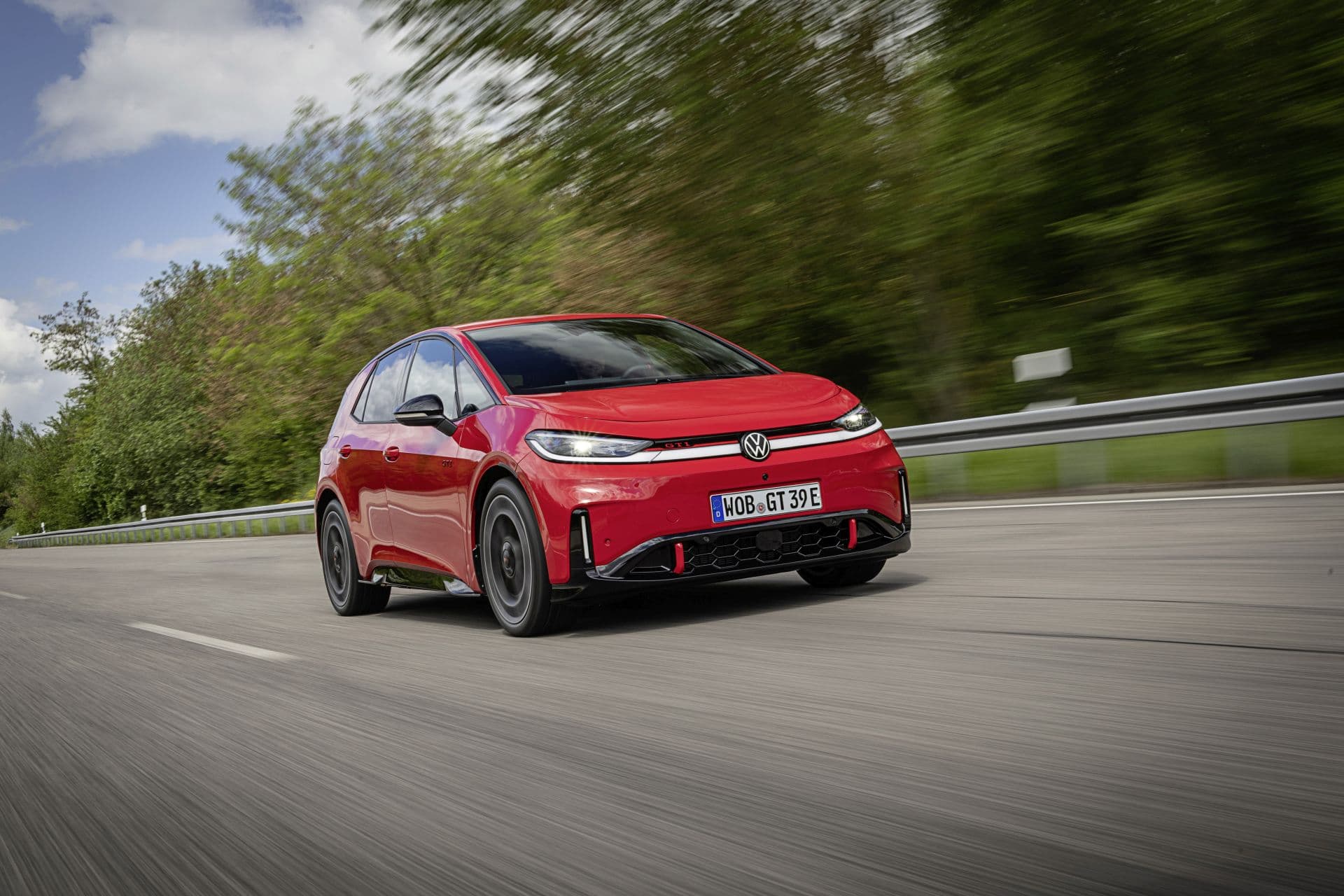
Volkswagen is taking the GTI into a new era. The VW ID.3 GTI is scheduled to launch in the first quarter of 2027 and, with 240 kW and 545 Nm, will become the most powerful production GTI in the brand’s history.
At least as significant is the drivetrain layout: for the first time, a GTI sends its power exclusively to the rear wheels. This not only distinguishes the new flagship model technically from its front-wheel-drive predecessors, but should also provide a noticeably different driving experience.
It is based on the enhanced MEB+ architecture. At the same time, the electric GTI adopts the new cockpit generation from the regular VW ID.3, but receives a more powerful drivetrain, bespoke suspension tuning and extensive GTI styling.
Key specifications of the VW ID.3 GTI
| Specification | Preliminary figure |
|---|---|
| Power | 240 kW |
| Torque | 545 Nm |
| Drivetrain | Rear-wheel drive |
| Acceleration from 0 to 100 km/h | 5.6 seconds |
| Top speed | 200 km/h |
| Usable battery capacity | 79 kWh |
| WLTP range | Up to 601 km |
| DC charging power | Up to 183 kW |
| Charging time from 10% to 80% | Around 29 minutes |
| AC charging power | 11 kW |
| Market launch | First quarter of 2027 |
These figures are still Volkswagen projections. Pricing and final equipment details have not yet been confirmed.
Rear-wheel drive changes the character
The ID.3 GTI uses a permanent-magnet synchronous motor from the APP550 family. The motor is mounted on the rear axle, where it is intended to provide confident traction, especially when accelerating out of corners.
With Launch Control activated, the sporty compact car is expected to accelerate to 100 km/h in 5.6 seconds. An electronic limiter intervenes at 200 km/h. Volkswagen is therefore stopping short of extreme performance figures, instead clearly positioning the GTI as a fast compact car that remains suitable for everyday use.
The switch to rear-wheel drive is more than a minor technical detail: it gives the electric GTI a character of its own instead of merely copying the previous formula.
Adaptive suspension comes as standard
Standard equipment includes adaptive DCC sports suspension with GTI-specific tuning. Volkswagen combines a MacPherson front axle with a five-link rear axle and specifically adapts the springs, dampers, anti-roll bars and elastokinematics.
Progressive steering and specially tuned tires are also included. As standard, the ID.3 GTI rides on 20-inch wheels with 225-width tires, while 235-width tires are expected to be available as an option.
In the Individual profile, the damping can be adjusted from comfortable to sporty. This is crucial in everyday use because a GTI must perform not only on a winding country road, but also on long highway journeys and in urban traffic.
601 km of range meets 183 kW charging
The battery offers a usable capacity of 79 kWh. Volkswagen projects a WLTP range of up to 601 km. Under real-world conditions, range will depend on speed, temperature, tires and driving style, but this figure should make the GTI fundamentally suitable for long-distance travel.
At a compatible fast-charging station, a maximum of 183 kW should be possible. Charging from 10% to 80% is expected to take around 29 minutes. That is solid, but does not set a new benchmark in the compact segment.
For charging at home and at work, 11 kW AC charging is available. One-pedal driving and vehicle-to-load are also planned, allowing the battery to power external electrical devices when needed.
A VW ID.3 with 220,000 km on the odometer already demonstrates how durable the model line can be over the long term. However, the GTI’s final energy consumption and range figures remain to be seen.
GTI mode combines the sporty settings
A dedicated GTI driving mode can be activated using an illuminated button on the sports steering wheel. It sharpens the power delivery, progressive steering and DCC suspension while also preparing Launch Control.
The displays also change character. The ambient lighting turns red, the Digital Cockpit receives GTI graphics with a central power meter, and a synthetic engine sound responds to speed, accelerator position and drive torque.
This artificial sound is likely to remain a matter of taste. However, it shows that Volkswagen does not want to define the emotional side of the GTI through acceleration figures alone.
Traditional GTI design without a grille
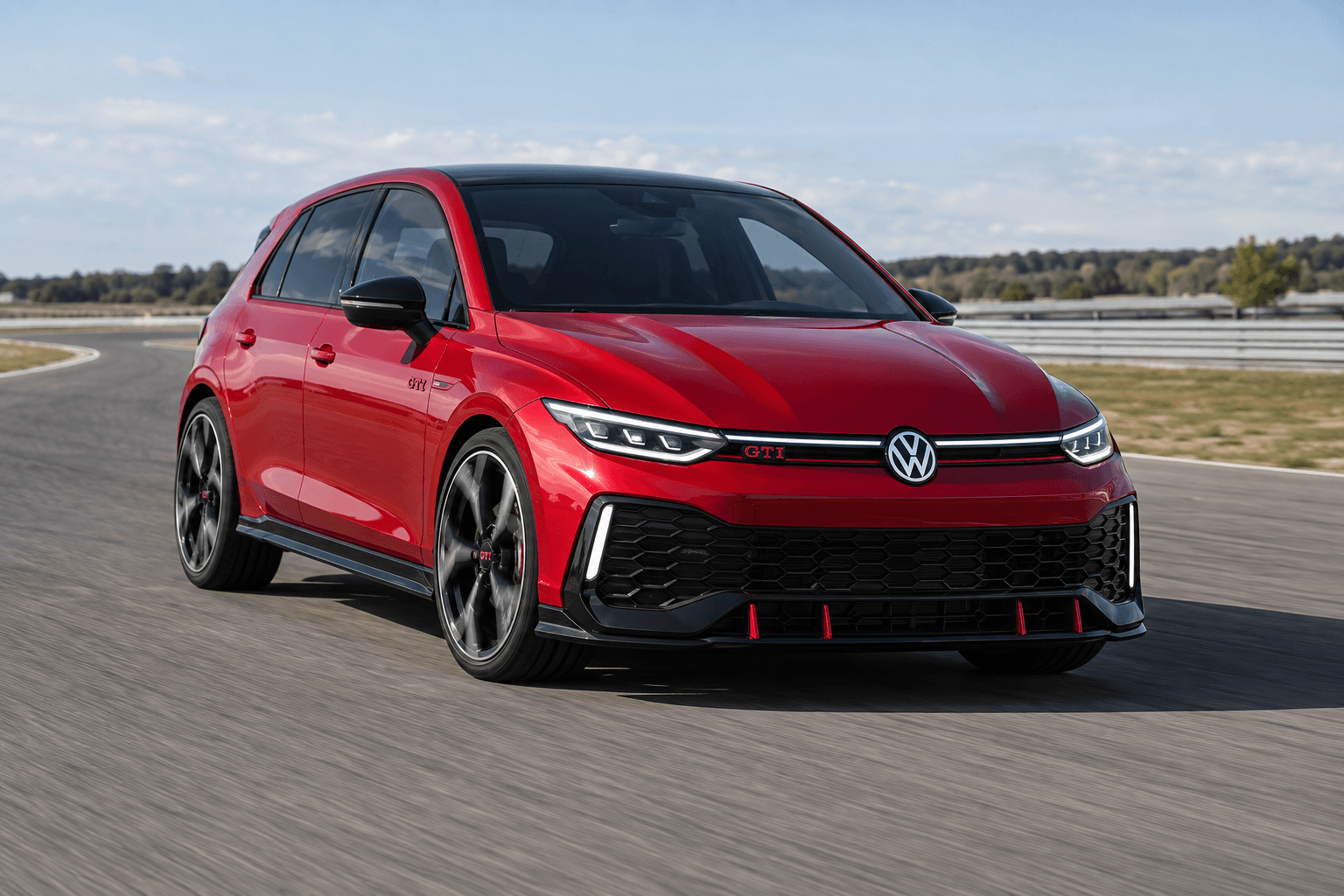
The front features IQ.LIGHT LED matrix headlights, an illuminated light strip with a lit VW logo and the classic red GTI stripes. A black honeycomb grille, red accents and a splitter-style front spoiler further distinguish the model from the regular ID.3.
The 20-inch alloy wheels are named Wörthersee, recalling Austria’s long-standing GTI culture. The paint options will also include the return of Tornado Red, a color closely associated with the history of the Golf GTI.
Red and black dominate the interior. Sports seats with a reinterpreted check pattern, red decorative stitching and a center marker on the steering wheel reference familiar GTI themes without making the cockpit feel artificially retro.
Greater ease of use in the new cockpit
The digital instrument cluster measures 10.25 inches, while the central infotainment system is operated through a 12.9-inch touchscreen. Volkswagen is once again adding physical climate controls, as well as a rotary dial for volume and skipping tracks.
Optional features are expected to include a panoramic roof, a 360-degree camera, a Harman Kardon sound system, an augmented-reality head-up display and electrically adjustable seats with memory and massage functions.
A GTI for enthusiasts and long-distance drivers
The ID.3 GTI does not attempt to recreate a Golf GTI with an electric motor. Instead, rear-wheel drive, a 79 kWh battery and adaptive suspension form a distinct technical concept, while the design and interior deliberately draw on GTI heritage.
Whether this combination proves convincing will largely depend on the price, real-world energy consumption and final suspension tuning. With 240 kW, up to 601 km of WLTP range and a significantly improved control concept, the electric GTI has a promising foundation.